




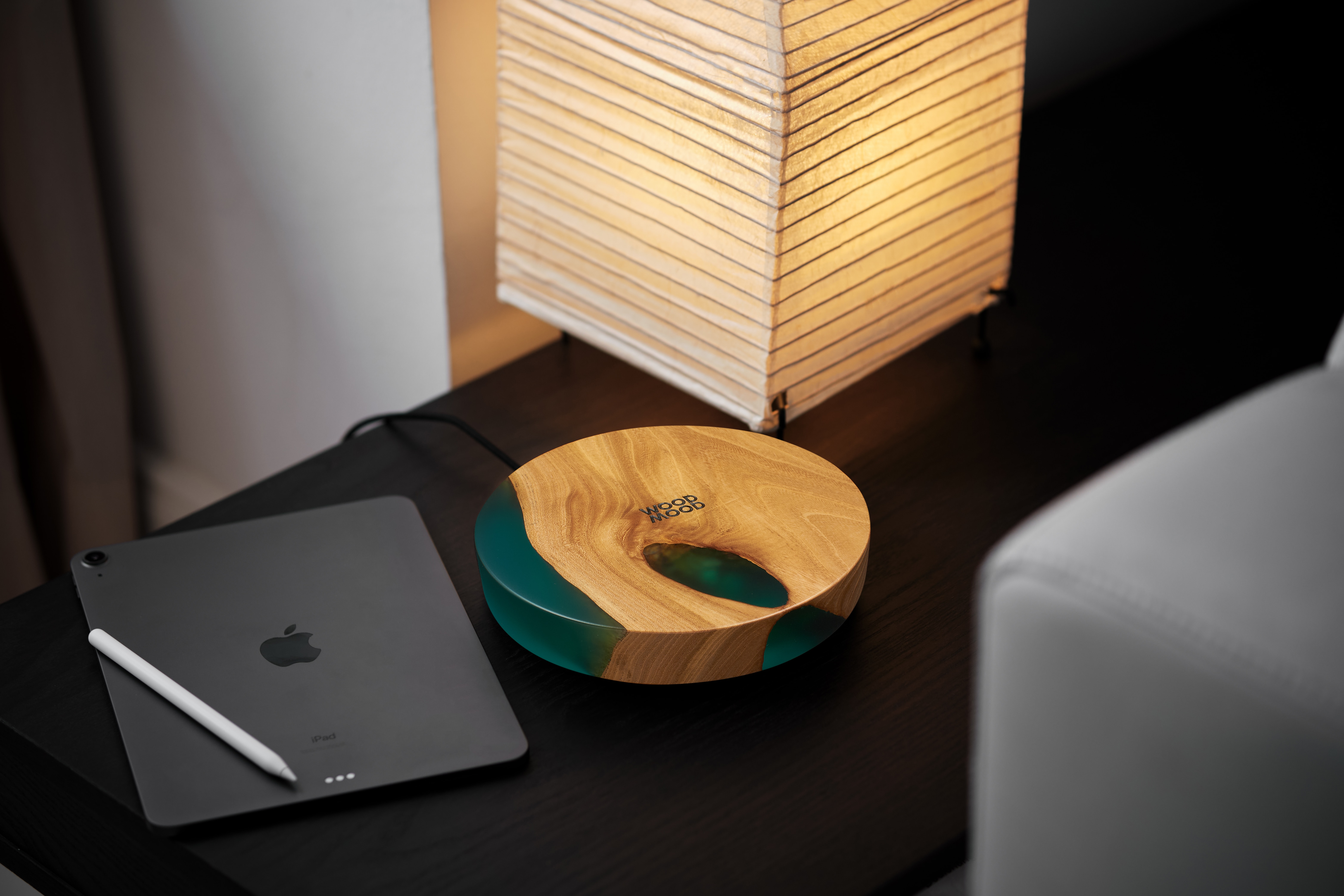
You cannot turn on wireless charging with a menu toggle or setting. On any compatible phone, wireless charging activates automatically the moment you place the device correctly on a powered Qi charger, there is no "on" switch to find.
How do I turn on wireless charging?
The direct answer is that you do not turn it on in the traditional sense. Wireless charging is an automatic function on phones that support it. Once your phone is placed on a connected, powered Qi-certified charging pad, the charging process begins within a few seconds. There is no setting to enable or disable standard wireless charging on iPhone or most Android phones.
Check your device compatibility
Before attempting to use wireless charging, confirm your phone supports it. Apple states that wireless charging works on iPhone 8 or later. iPhone works with Qi-certified chargers, and Apple also documents Qi-certified chargers for iPhone and AirPods. Samsung confirms that Galaxy A series, XCover series, and Galaxy Tab series devices are not compatible with wireless charging. For other Android phones, check the manufacturer’s specifications for "Qi wireless charging" support. No carrier-specific app or setting path is needed to verify compatibility.
Place your phone on the wireless charging pad
- Samsung says to plug the wireless charger’s power adapter into an outlet and the USB cable into the wireless charger, then place the phone on the center of the charger.
- Place the charger on a level, stable surface.
- Position your phone face-up on the center of the pad. Apple says best performance is with the phone centered on the charger or placed where the manufacturer recommends.
- On iPhone, a charging icon will appear in the status bar when the phone is properly aligned. Charging begins a few seconds after placement.
This is your phone wireless charging setup and compatibility check in action, no additional steps are required once the device is centered on the pad.
Monitor charging and remove when done
Once your phone is correctly placed, you can monitor charging progress through the on-screen battery indicator or the charging icon in the status bar (iPhone). Some charging pads also have an LED light that signals active charging. When your phone reaches full charge or the desired battery level, simply lift it off the pad. No special removal procedure is needed beyond picking the phone up normally.
Understanding wireless charging speeds and features
Standard Qi wireless charging for iPhone delivers up to 7.5 watts. For faster wireless charging or wired options, Apple offers MagSafe, which provides up to 15 watts for iPhone 15 and earlier models. Apple also documents faster wireless charging with MagSafe for newer iPhone models, including up to 50 percent in around 30 minutes on iPhone 18 Pro and iPhone 18 Pro Max with a 35W or higher adapter. Samsung documents PowerShare as a separate feature for supported Galaxy devices, not as the basic wireless charging function. Qi charging: what is it & is your phone qi-enabled? It is the universal standard for wireless charging, and most compatible phones use it automatically without any user intervention.
Frequently Asked Questions
Do I need to turn on wireless charging on iPhone?
No. Apple documents no setting to enable wireless charging. It starts automatically when the iPhone is placed on a Qi-certified charger.
Can I use a phone case with wireless charging?
Yes, but thick cases or cases with metal components may reduce charging efficiency. Slim, non-metallic cases generally work best.
Why is my phone not charging wirelessly?
Most often the phone is not centered on the pad, or the charger is not plugged into power. Ensure the pad is connected to an outlet and the phone is placed face-up in the center of the charging area.
Is wireless charging slower than wired charging?
Standard Qi wireless charging (up to 7.5W for iPhone) is typically slower than wired charging. MagSafe offers faster wireless speeds, but wired charging still provides the highest power delivery for most devices.
Do all Samsung phones support wireless charging?
No. Check your specific model’s specifications.