




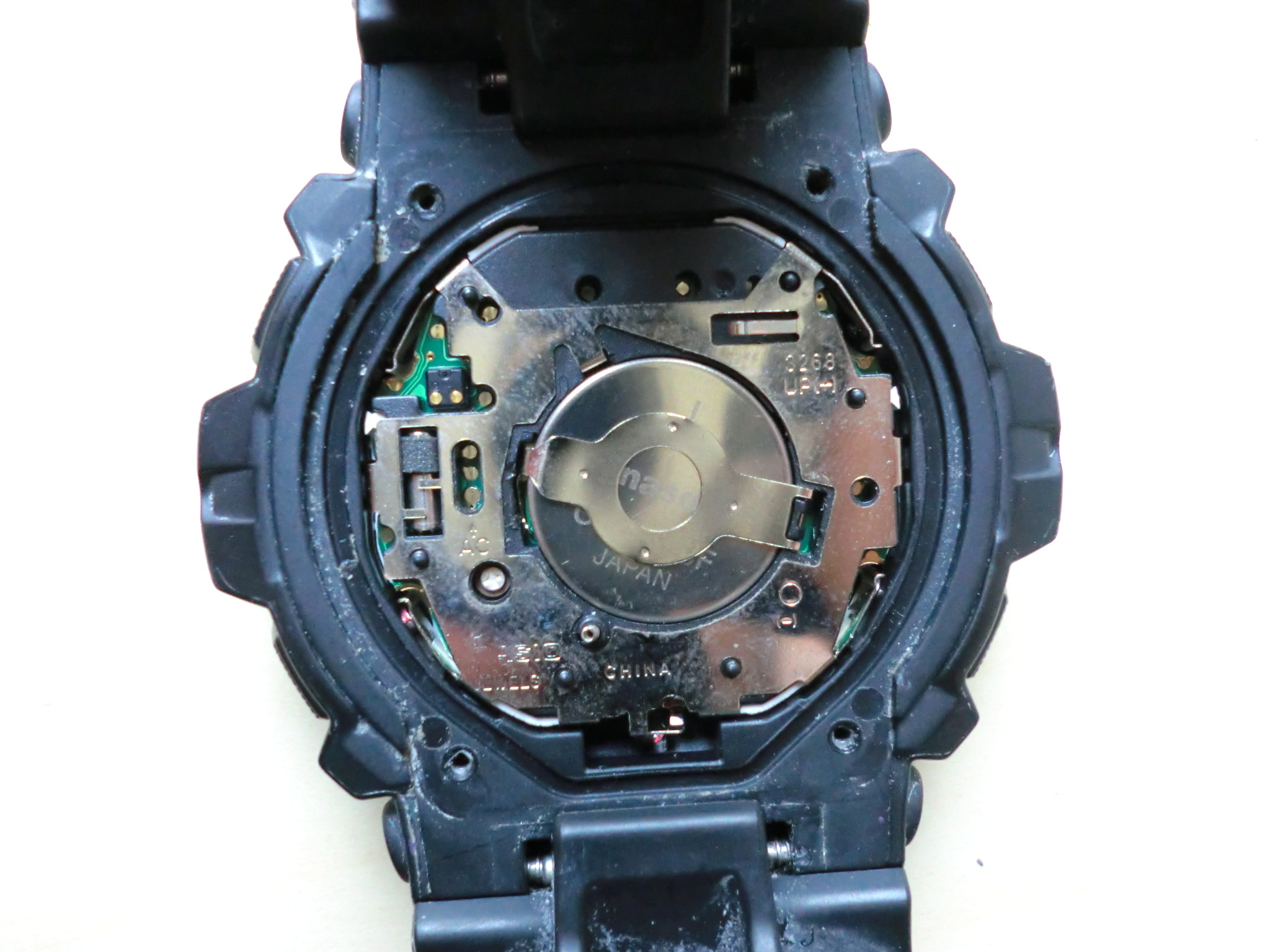
To change g-shock watch battery, you must first understand that Casio officially recommends having this service performed by an original retailer or an authorized service center. Attempting a DIY battery change carries a high risk of compromising your watch's water resistance and will void your warranty if it is still active.
Before you change your G-SHOCK watch battery: a critical warning
Casio's official recommendation is that battery replacement be performed by your original retailer or an authorized CASIO service center. This is not merely a suggestion; it is based on the technical reality that maintaining water resistance requires specialized tools and expertise. A trained technician will inspect the watch and replace the gaskets whenever the battery is changed. Gaskets, which are vital for water resistance, should be replaced periodically, approximately every two to three years. DIY battery replacement carries a high risk of compromising the G-SHOCK's water resistance, as proper sealing and pressure testing are difficult to achieve without specialized tools and expertise. Additionally, DIY battery replacement generally voids the watch's warranty if it is still active. Setting these expectations accurately is critical before any DIY steps are considered.
Signs your G-SHOCK battery needs replacing
Your G-SHOCK will provide clear signals when its battery is running low. Specific low-battery indicators include a large timekeeping error, a dim display, or a blank display. It is important to act on these warnings promptly, as operating the watch with low battery power can lead to malfunction. Replace the battery as soon as possible to avoid damage to the watch's internal components.
How to find the correct replacement battery
Using the wrong battery can damage your watch. To find the exact battery type, locate the module number on the back cover of your watch. Then, visit the Casio support site and use that module number to find the "Specifications" or user manual, which will list the correct battery. Common G-SHOCK battery types include CR2016, CR1220, CR2025, CR2032, SR726W, SR927W, CTL1616, and CTL920, with the specific type varying by model. Always verify the exact type required for your specific module number.
Tools you will need for a DIY battery change
If you choose to proceed with a DIY battery change despite the risks, you will need the following essential tools:
- Small Phillips head screwdriver
- Anti-static tweezers
- A new battery of the correct type
- Silicone grease
- A soft, lint-free cloth
- Plastic or rubber gloves
- Use a case knife or wrench as an alternative case opener tool.
Step-by-step guide to changing the battery
- Prepare a clean, well-lit workspace. Place the soft cloth on the surface to prevent scratches.
- Discharge static electricity by touching a grounded object before handling internal components.
- Remove the case back. Locate the screws on the back of the watch and use the small Phillips screwdriver to unscrew them counterclockwise. Carefully lift off the case back and remove the rubber gasket, setting both aside.
- Identify and remove the old battery. Take note of its position and orientation. Using the anti-static tweezers, carefully lift the old battery out of the compartment. Avoid touching metal contacts with your fingers.
- Insert the new battery. Ensure it is the correct model and size. Carefully place it into the compartment, matching the polarity markings (+ and -) with the markings inside the watch.
- Inspect the gasket. Examine the rubber gasket for any cracks, tears, or deformation. Apply a light coat of silicone grease to the gasket to help maintain the seal.
How to reassemble your watch to maximize any remaining seal
- Properly seat the gasket in its groove on the case back or watch body, ensuring it is not twisted or pinched.
- Place the case back over the watch and align it with the screw holes.
- Screw the case back down evenly, tightening the screws in a crisscross pattern to ensure uniform pressure is distributed correctly around the seal. Do not overtighten.
- Check if all functions are working properly after reassembly, including the date, time, alarms, and backlight.
The reality is that after a DIY battery change, your watch is no longer guaranteed to be water-resistant. Without professional pressure testing, you cannot be certain the seal is intact.
Why professional G-SHOCK battery replacement is the safer choice
Choosing an authorized service center offers several significant benefits. It preserves your warranty, ensures proper gasket replacement with genuine parts, includes pressure testing to confirm water resistance, and guarantees that your watch remains water-resistant as intended. This is the recommended path for anyone who values the durability and water resistance their G-SHOCK was designed to provide. Professionals have extensive experience in replacing watch and device batteries and can handle the delicate components and sealing requirements correctly.
Frequently Asked Questions
How often should I change the battery in my G-SHOCK watch?
Battery life varies by model and usage, but you should change it when you see signs of low power such as a dim display or large timekeeping errors. The gasket should be replaced every two to three years regardless of battery life to maintain water resistance.
Can I use any brand of battery in my G-SHOCK?
You should use a battery that matches the exact type specified for your watch's module number. While high-quality replacement batteries can work, genuine Casio batteries are recommended for optimal performance and compatibility.
Why is my G-SHOCK battery dying faster than expected?
The initial battery installed in a new G-SHOCK is for factory testing and may have a shorter lifespan than the rated battery life; replacement of this battery is typically charged, even within the warranty period. Excessive use of power-consuming features like the backlight or alarms can also shorten battery life.
Will changing the battery myself void my warranty?
Casio recommends having the battery replaced by an authorized service center to maintain warranty coverage.
What should I do if my watch stops working after a battery change?
If the watch does not function after a battery change, you may have inserted the battery with incorrect polarity, damaged a component, or failed to properly reseat a connection. Take the watch to an authorized service center for diagnosis and repair.
For the wider topic, see replacing watch and device batteries.