




How Long Does the Nest Doorbell Battery Life Really Last?
The Nest Doorbell battery life typically ranges from one to six months on a single charge, depending entirely on how much activity your doorbell sees each day. For most households, you can expect around 2.5 months of use before needing to recharge, which is a solid baseline for planning your maintenance routine.
How long does the nest doorbell battery life really last?
The most accurate way to answer "how long does the nest doorbell battery life last" is to break it down by your daily activity level. Google has published verified estimates based on the number of recorded events your doorbell captures per day, and these three tiers give you a clear picture of what to expect.
For "Quiet" usage, where your doorbell records only 2-5 events per day, the battery can last up to about 6 months. For 'Quiet' usage, with 2-5 recorded events per day, the battery can last about 6 months. This scenario fits homes with low foot traffic, few visitors, and minimal motion near the front door. If you live in a peaceful neighborhood or have a driveway that rarely sees activity, this is the range you'll likely experience.
For "Typical" usage, which covers 13-16 recorded events per day, the battery lasts approximately 2.5 months. For 'Typical' usage, with 13-16 recorded events per day, the battery lasts about 2.5 months. This is the most common real-world scenario for average households: a few deliveries, some pedestrian traffic, and occasional visitors. If you're not sure where you fall, this middle tier is the safest assumption for planning your charging schedule.
For "Busy" usage, with 25-30 recorded events daily, expect the battery to last about 1 month. For 'Busy' usage, with 25-30 recorded events per day, the battery life is approximately 1 month. Homes on busy streets, near sidewalks, or with frequent package deliveries will see the fastest drain. If your doorbell is constantly being triggered, you'll be reaching for the charger roughly every four weeks.
Key factors that drain your Nest Doorbell battery
Understanding what actually consumes power helps you predict and manage your battery life. The single biggest factor is raw activity: every recorded event, every motion detection, and every live view session pulls from the same finite charge. But several other variables can accelerate the drain significantly.
Cold weather is one of the most impactful factors. When temperatures drop to 32°F (0°C) or below, the Nest Doorbell completely stops charging to protect the battery from damage. Near freezing, charging slows dramatically, meaning a wired installation won't keep the battery topped up in winter. Cold temperatures negatively impact battery life and prevent charging below 32°F (0°C), with slow charging near freezing. If you live in a cold climate, plan for shorter battery life during the coldest months, and be aware that the doorbell may need to be brought indoors to charge fully.
Wi-Fi signal strength also plays a major role. A weak or unstable connection forces the doorbell to work harder to maintain its link to your router, consuming extra power with every retry and handshake. If your doorbell is far from the router or separated by thick walls, the battery will drain faster than if it has a strong, stable signal.
Live View usage is another hidden drain. Every time you open the live feed to check on a delivery or see who's outside, the camera activates its full video processing and streaming capabilities. Frequent Live View sessions can shave days or even weeks off your battery life, especially if you're checking in multiple times per day. Frequent use of Live View and an unstable Wi-Fi signal can cause the battery to drain faster.
How to check your battery life and charging behavior
The Google Home app gives you a battery estimate, but it's not instant. After each full charge, the app needs approximately 48 hours to learn your usage patterns and provide an accurate prediction. This estimate then adapts over time, becoming more reliable the longer the doorbell is in place. The Google Home app provides an estimated battery life approximately 48 hours after each charge, which adapts over time for accuracy.
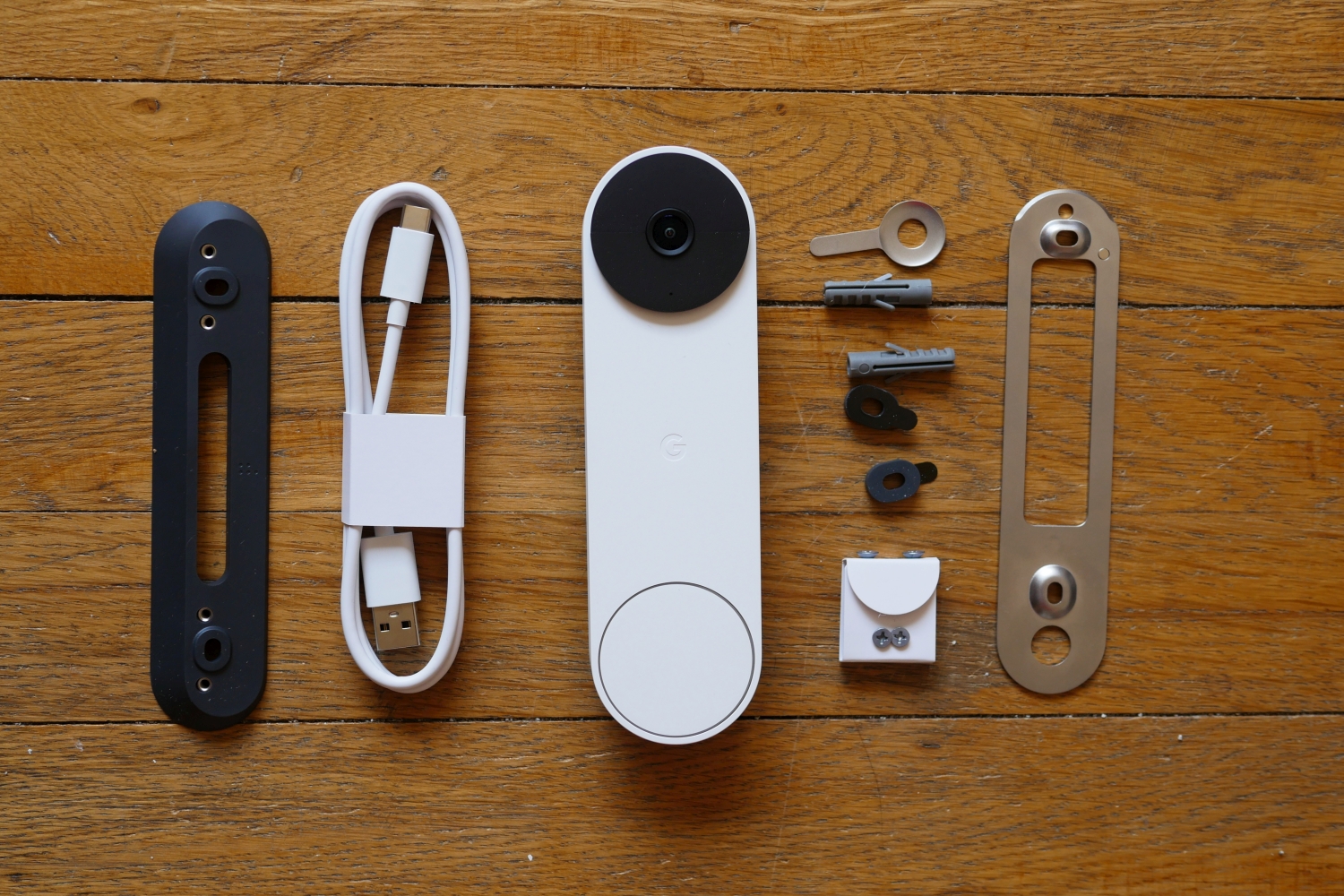
When it's time to charge, plan for about 5 hours to go from empty to full using a compatible 7.5W AC adapter, which is sold separately. It typically takes 5 hours to fully charge the battery using a compatible 7.5W AC adapter (sold separately). The doorbell's battery is removable, so you can take it inside to charge, which is especially useful in cold weather when outdoor charging may not work.
If you have your doorbell wired to an existing doorbell system, the behavior is different. The battery charges to 100% on initial installation, but then the system deliberately maintains the charge at up to 80% to extend the battery's overall lifespan. If the doorbell is wired to an existing doorbell system, the battery charges to 100% initially but then maintains a charge up to 80% to prolong its lifespan. This means a wired Nest Doorbell will show around 80% battery most of the time, which is normal and by design.
Proven tips to extend your Nest Doorbell battery
You don't have to accept the default battery life. A few targeted settings changes in the Google Home app can meaningfully extend how long the nest doorbell battery lasts between charges.
- Adjust video quality: Change the video quality setting to "Optimized" or "Low" in the Google Home app. Lower resolution means less data to process and transmit, which directly translates to longer battery life.
- Lower wake-up sensitivity: Reducing the wake-up sensitivity decreases the distance at which the doorbell senses activity and increases the time it takes to wake up. This cuts down on false triggers and unnecessary recordings.
- Create Activity Zones: Set up specific Activity Zones so the doorbell only monitors areas you care about, like your porch or walkway. This reduces recordings from passing cars or street activity that don't matter to you.
- Enable Automatic battery saver: Turn on the Automatic battery saver feature in the Google Home app. This lets the doorbell automatically optimize power usage when the battery level gets low, stretching out the remaining charge.
- Turn off motion events: If you don't need alerts for every person, vehicle, or animal that passes by, disable motion events (also called "seen events"). These recordings consume significant power, and turning them off can dramatically extend battery life. Turning off 'motion events' (also referred to as 'seen events') can significantly save battery, as these events consume more power.
For those who want maximum longevity, consider whether you really need high-quality video or continuous event recording. Every feature you enable has a battery cost, so choose deliberately based on what matters most for your home security.
What happens when the battery gets low
When your Nest Doorbell's battery drops to approximately 7 days of estimated life remaining (or 20% of charge), the system automatically enters a power-saving mode. This isn't a failure, it's a designed feature to keep the doorbell functional as long as possible.
In this low-battery state, the doorbell automatically optimizes video quality and stops recording non-emergency video events. That means it will no longer record people, vehicles, animals, or packages that trigger motion detection. This conservation mode ensures the doorbell can continue serving its primary security function even when power is critically low.
Critically, the doorbell still prioritizes what matters most. When someone presses the doorbell button, it will still record for about 20 seconds, even with low battery. Emergency events are also recorded at the default 3-minute clip length, so you won't miss important incidents. Even with low battery, the doorbell will record for about 20 seconds when the button is pressed, and emergency events will still be recorded at the default 3-minute clip length. This tiered approach means the doorbell sacrifices routine recordings to preserve its ability to capture what actually matters.
Frequently Asked Questions
Can I use my Nest Doorbell while it's charging?
Yes, you can use the Nest Doorbell while it's charging, but be aware that charging will take longer if the device is actively recording or streaming. For fastest charging, let it charge undisturbed.
How do I know when my Nest Doorbell needs recharging?
The Google Home app shows the current battery percentage and provides an estimated days of life remaining. You'll also receive a notification when the battery gets low, so you can plan your charging schedule.
Will extreme heat affect my Nest Doorbell battery?
Yes, excessive heat can shorten the battery's overall lifespan and cause it to drain faster during use. While cold weather is the bigger concern for charging, protecting the doorbell from direct, prolonged sunlight can help preserve battery health.
Can I replace the battery in my Nest Doorbell?
The battery in the Nest Doorbell is not user-replaceable. If the battery degrades significantly over time, you'll need to contact Google support for assistance, as the battery is designed to last for the life of the device under normal conditions.
For the wider topic, see AA and AAA battery specs.
Related reading: How Long Does The Nest Camera Battery Last and How Long Does A Ring Doorbell Battery Last.