




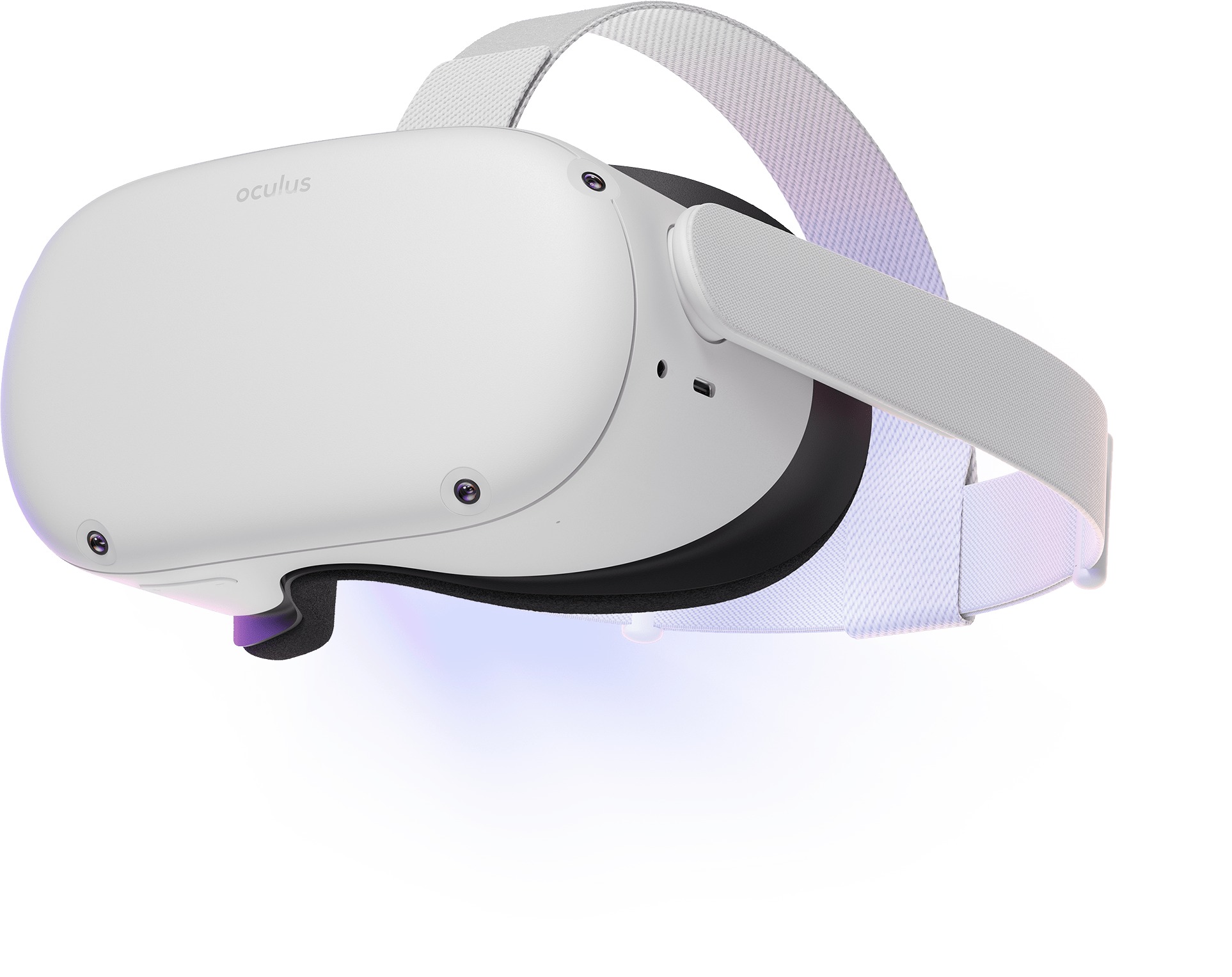
To adjust Oculus Quest 2 headset for a clear, comfortable VR experience, you need to master two physical adjustments: the lens spacing slider for visual clarity and the straps for a secure fit. Getting both right ensures you see crisp images without eye strain and the headset stays balanced during gameplay.
Adjusting the lens spacing (IPD) on Quest 2
The Quest 2 uses a physical slider, not software, to change the distance between the lenses. To adjust it, gently move the slider located under the headset, directly beneath the lenses, until the view appears clear and comfortable. This slider changes the lens spacing to match your interpupillary distance (IPD), which is the distance between your pupils.
Measuring your IPD
Meta documents two ways to estimate your IPD. The best documented method is to visit an optometrist for a precise measurement. For a self-measurement, use a mirror and a millimetre ruler:
- Stand in front of a mirror and hold a ruler above your eyes.
- Close one eye and line the end of the ruler over your open eye, centred on your pupil.
- Without moving the ruler, open your closed eye and place your finger over the ruler in line with your pupil.
- Read the millimetre measurement under your finger to estimate your IPD.
Matching your IPD to the three lens settings
The Quest 2 lens slider offers three specific positions: 58 mm (narrowest), 63 mm (middle), and 68 mm (widest). Meta suggests these settings based on your measured IPD:
- If your IPD is 61 mm or smaller, use setting 1 at 58 mm.
- If your IPD is between 61 mm and 66 mm, use setting 2 at 63 mm.
- If your IPD is 66 mm or larger, use setting 3 at 68 mm.
The headset best accommodates IPDs between 56 and 70 mm overall, but the three discrete settings provide the clearest image for most users.
Adjusting the headstrap for a secure fit
To balance the headset’s weight and keep it comfortably in place, use the top strap and the side straps. The top strap runs over your crown and takes weight off your face, while the side straps tighten via simple velcro or sliders to hold the headset snugly against your cheeks. Adjust the top strap first so the headset sits level, then tighten the side straps evenly until the fit is secure but not tight enough to cause pressure points. For fine-tuning, use the adjustment dial at the back of the headstrap: turn it clockwise to tighten and counterclockwise to loosen.
Frequently Asked Questions
Does Quest 2 have software IPD adjustment?
No. The Quest 2 uses only a physical lens spacing slider; there is no software IPD adjustment available on the device or in the mobile app. You must move the slider under the headset to change the lens distance.
Can I adjust the eye relief on Quest 2?
The headset’s primary visual adjustment is the lens spacing slider for IPD.
How do I pair headset to Oculus app?
To pair headset to Oculus app, you use the Meta Quest mobile app on iPhone or Android, but this process does not change the headset’s on-device physical adjustment steps. The app is used for initial setup and account linking, not for lens spacing or strap adjustments.
Can I wear glasses with the Quest 2?
Yes, the Quest 2 is designed to accommodate most glasses sizes. If you have particularly large frames, you may need to adjust the facial interface or consider prescription lens inserts for a more comfortable fit.
How should I clean the Quest 2 lenses?
Use a non-abrasive, lint-free cloth and gently wipe the lenses in a circular motion. Avoid applying liquids or cleaning solutions directly to the lenses, as this can damage the anti-reflective coating. If smudged, breathe lightly on the lenses to create moisture, then wipe clean.
What should I do if the Oculus Quest 2 headset is uncomfortable?
Take short breaks during longer VR sessions to reduce discomfort and prevent fatigue.
Can I use accessories with my Oculus Quest 2 headset?
Yes, compatible accessories include protective cases, VR covers, different head straps, hand controllers, or additional sensors.