




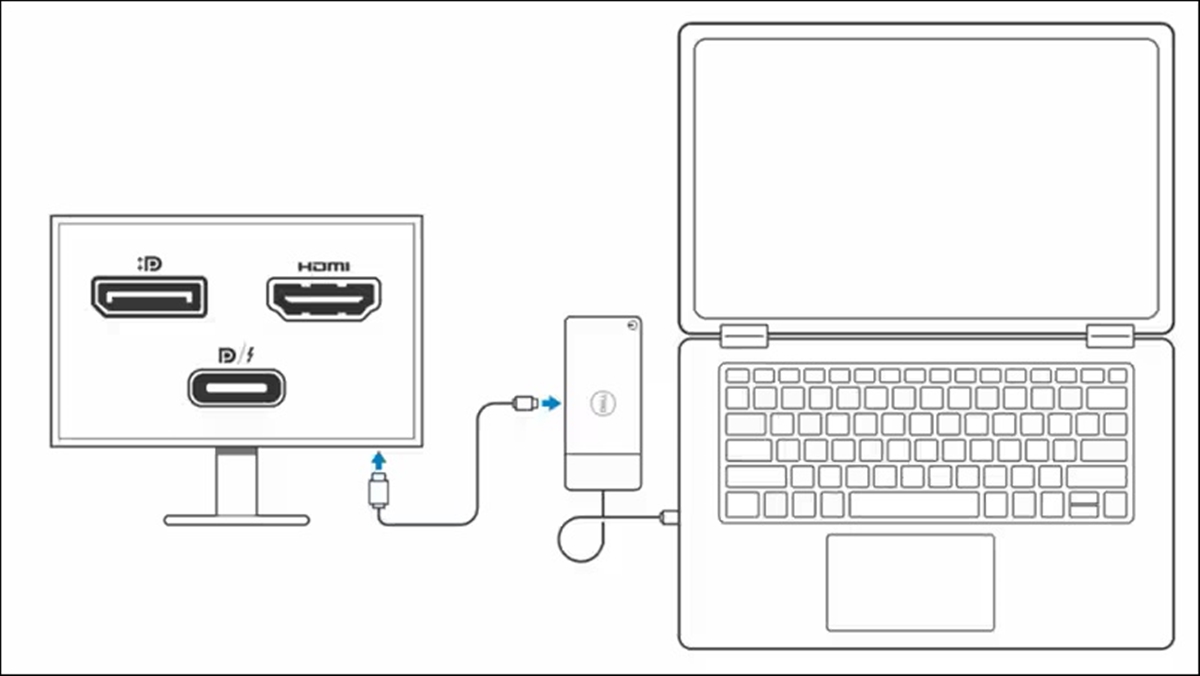
To connect a Dell docking station, first power the dock by plugging it into an outlet, then connect the dock's USB-C or Thunderbolt cable to your Dell laptop. This single-cable connection is the core of how laptop docking stations work, instantly turning your portable computer into a full desktop workstation.
Before you connect your Dell docking station: Prerequisite steps
Before plugging anything in, identify your dock model by its Service Tag, Express Service Code, or Model Number, which is printed on the dock itself. Then update your laptop's BIOS and drivers using Dell Update or Dell Command Update. Installing the latest system software before connecting the dock prevents most setup problems and ensures the laptop recognizes the dock immediately.
How to connect the dock to your laptop
Follow this sequence to establish a reliable connection between the dock and your laptop:
- Connect the power cable to the docking station and plug it into a wall outlet. The dock must have power before it can communicate with the laptop.
- Connect the dock's USB-C or Thunderbolt cable to the corresponding port on your Dell laptop. Dell docking stations include Wireless Docking Stations that connect via Wi-Fi or Bluetooth, eliminating physical connections.
- If prompted, install the latest drivers using Dell Update or Dell Command Update. This ensures all ports and features function correctly.
Connecting monitors and peripherals
Once the laptop is connected to the dock, attach your external displays, USB devices, Ethernet cable, and audio equipment to the dock's ports. The dock acts as a hub, so your laptop sees each connected device as if it were plugged directly in. For monitors, use the dock's HDMI, DisplayPort, or USB-C video outputs. Dell docking stations include Graphics Docking Stations equipped with dedicated graphics cards for superior graphics performance. Connect keyboards, mice, external drives, and other USB peripherals to the dock's USB-A or USB-C ports.
Troubleshooting common issues
If the dock does not work as expected, try these documented steps:
- No power: Verify the dock's power cable is securely connected to both the dock and a working wall outlet. Try a different outlet or power cable if needed.
- No display: Check that the dock's cable is fully inserted into the laptop's USB-C or Thunderbolt port. Reseat the cable by unplugging and reconnecting it. Ensure the external monitor is set to the correct video input source. If the laptop does not automatically detect the docking station, manually configure the connection in the laptop's display settings or device settings.
- USB ports not working: Update the dock's drivers using Dell Update or Dell Command Update. Restart the laptop after the update completes.
- Overheating: Overheating can occur when multiple devices are connected simultaneously; place the dock on a flat, well-ventilated surface and avoid covering it or placing it in confined spaces.
- Network connection problems via Ethernet: For network connection problems via Ethernet, check for loose cable connections and ensure laptop network settings are set to use the Ethernet connection from the docking station. If using a USB Ethernet adapter with the dock, install the necessary drivers for it to work correctly.
- Audio issues: Audio issues may be resolved by checking the dock's connection to the laptop's audio port and configuring laptop audio settings to use the dock's audio output.
Frequently Asked Questions
Can a Dell dock connect directly to an iPhone?
Apple documents iPhone-to-display connections using a cable or adapter from the iPhone's charging port to a monitor, TV, or projector, not a Dell dock-specific setup. Supported USB-C iPhone models include iPhone 15, iPhone 16 models except iPhone 16e, iPhone 17 models except iPhone 17e, and iPhone 18 Pro models. iPhone supports DisplayPort over USB-C for displays up to 4K at 60 Hz.
Can a Dell dock connect directly to an Android phone?
Are Dell docking stations compatible with non-Dell laptops?
Dell docking stations are primarily designed for Dell laptops. Some models may have limited compatibility with non-Dell laptops, but Dell does not guarantee full functionality. Check the dock's specifications before use.
Can I use multiple monitors with a Dell docking station?
Yes, most Dell docking stations support multiple external displays. The number of supported monitors depends on the specific dock model and your laptop's graphics capabilities.