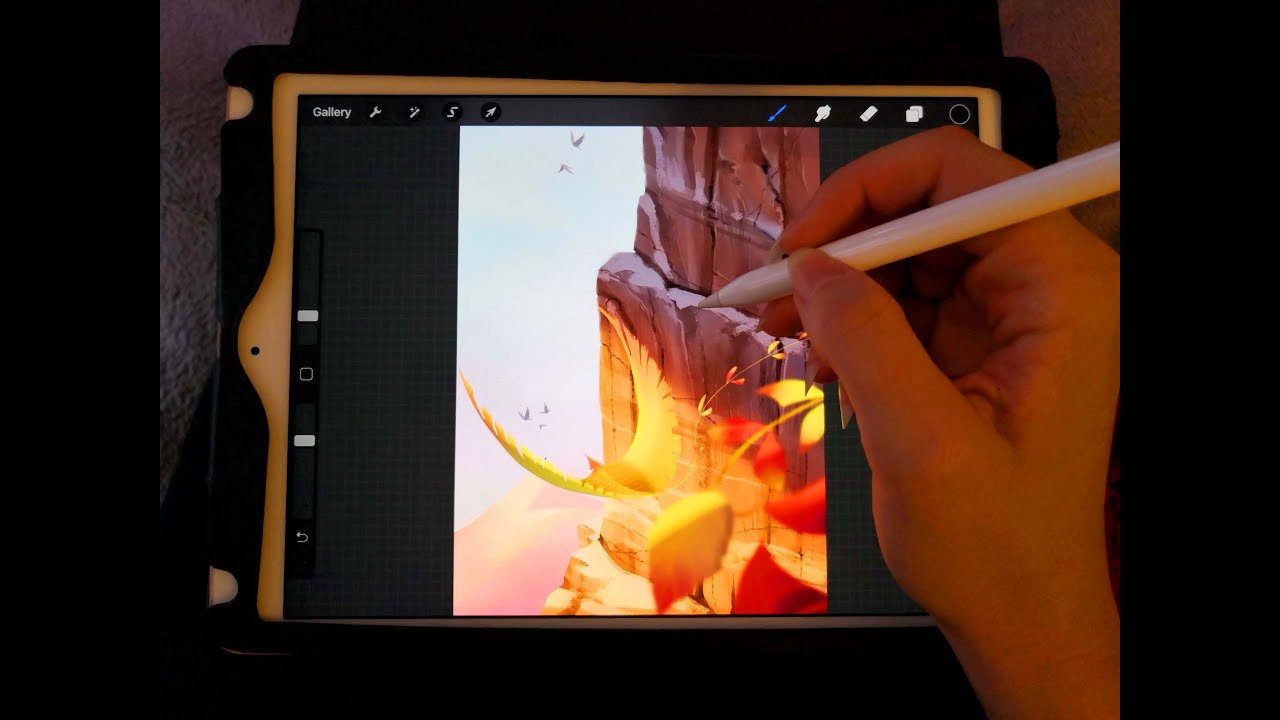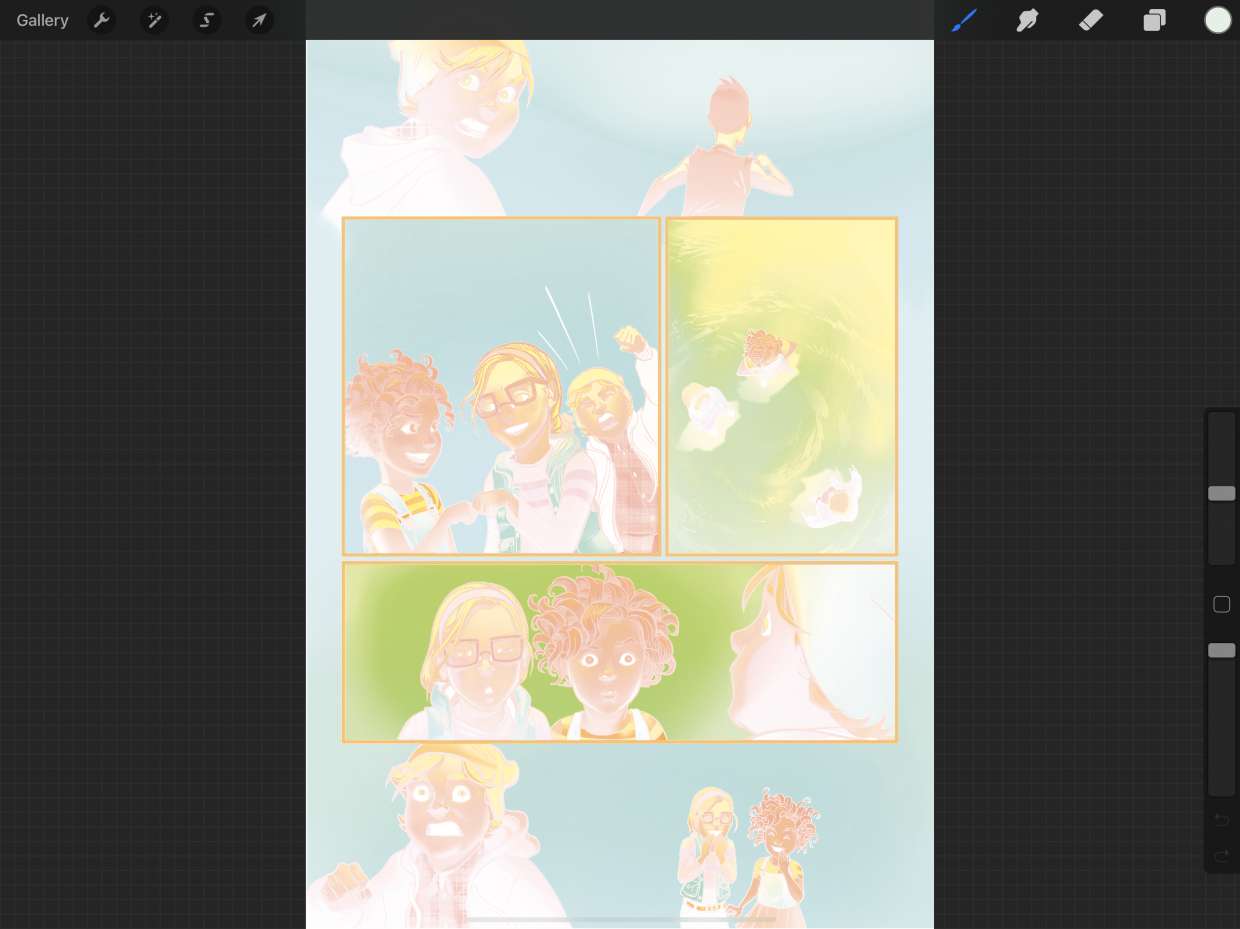





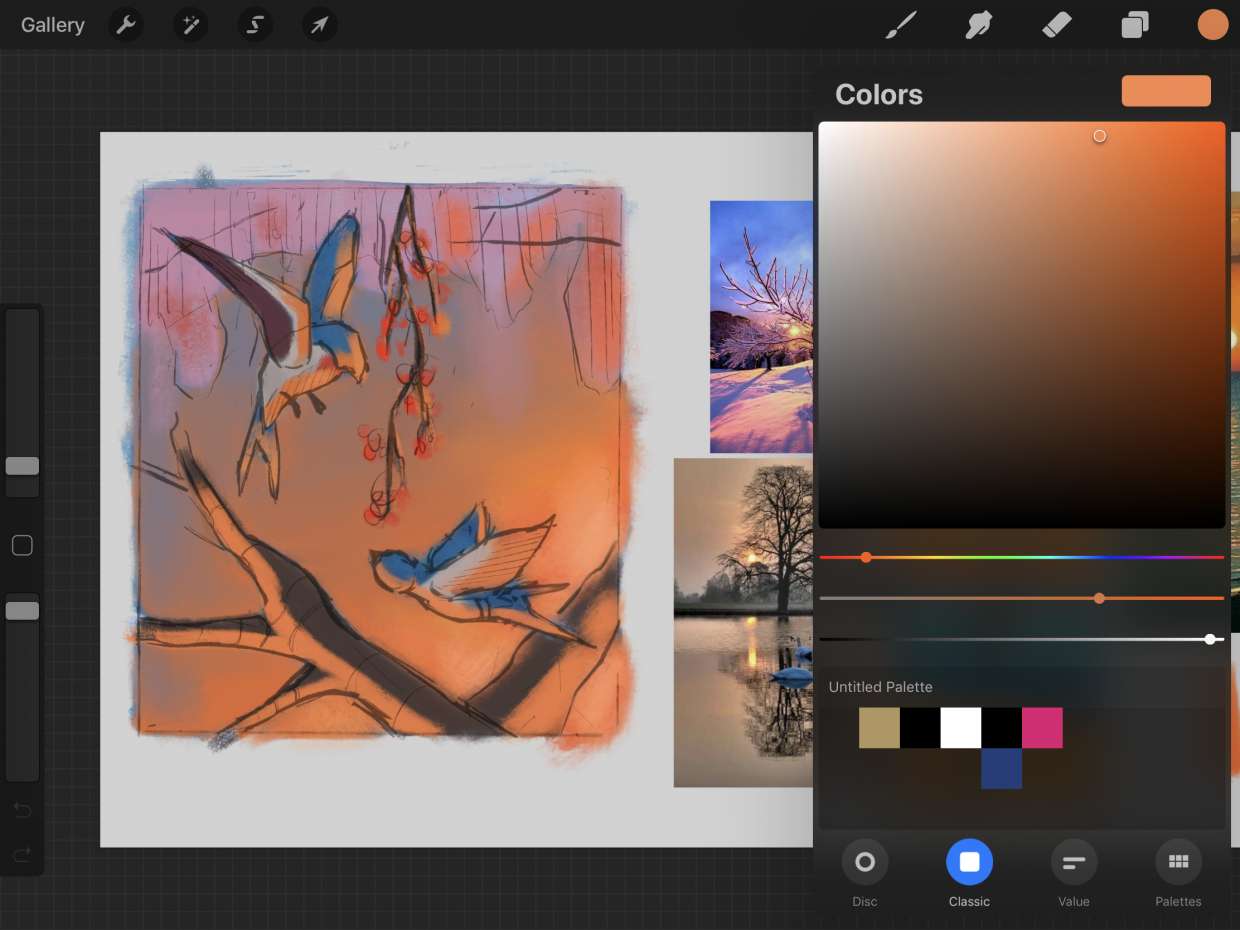
To change color on Procreate, tap the colored circle in the top-right corner to open the Color Panel, then select your active color using the Disc mode's outer hue ring and inner saturation disc. This is the core method for setting the color you will paint with, and it is the first step for all coloring, shading and rendering in Procreate.
How to change color on Procreate: the Color Panel
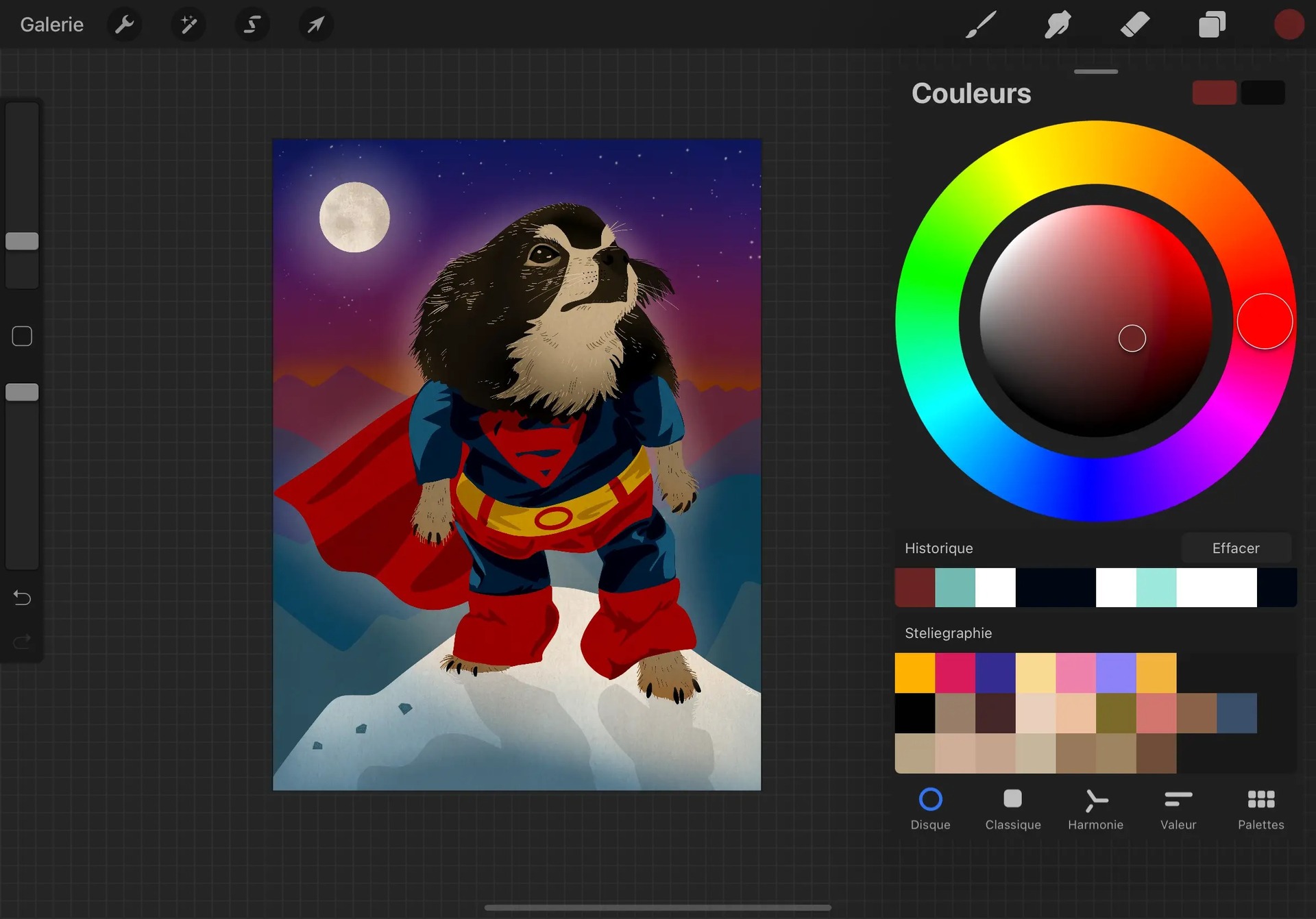
Tap the colored circle icon in the top-right corner of the Procreate interface to open the Color Panel. The panel offers five modes for color selection: Disc, Classic, Harmony, Value, and Palettes. For most quick selections, start with Disc mode. It features an outer Hue ring for choosing the base color and an inner Saturation disc where you can fine-tune the intensity and brightness of that hue. The inner Saturation disc is zoomable for fine control. Drag your finger around the ring to pick a hue, then drag inside the disc to adjust saturation and brightness. You can swipe left or right in the basic color selection to explore different shades and tones. This sets your active color, ready for painting or filling. Procreate offers a color history panel to easily access previously used colors.
Fill an area with ColorDrop
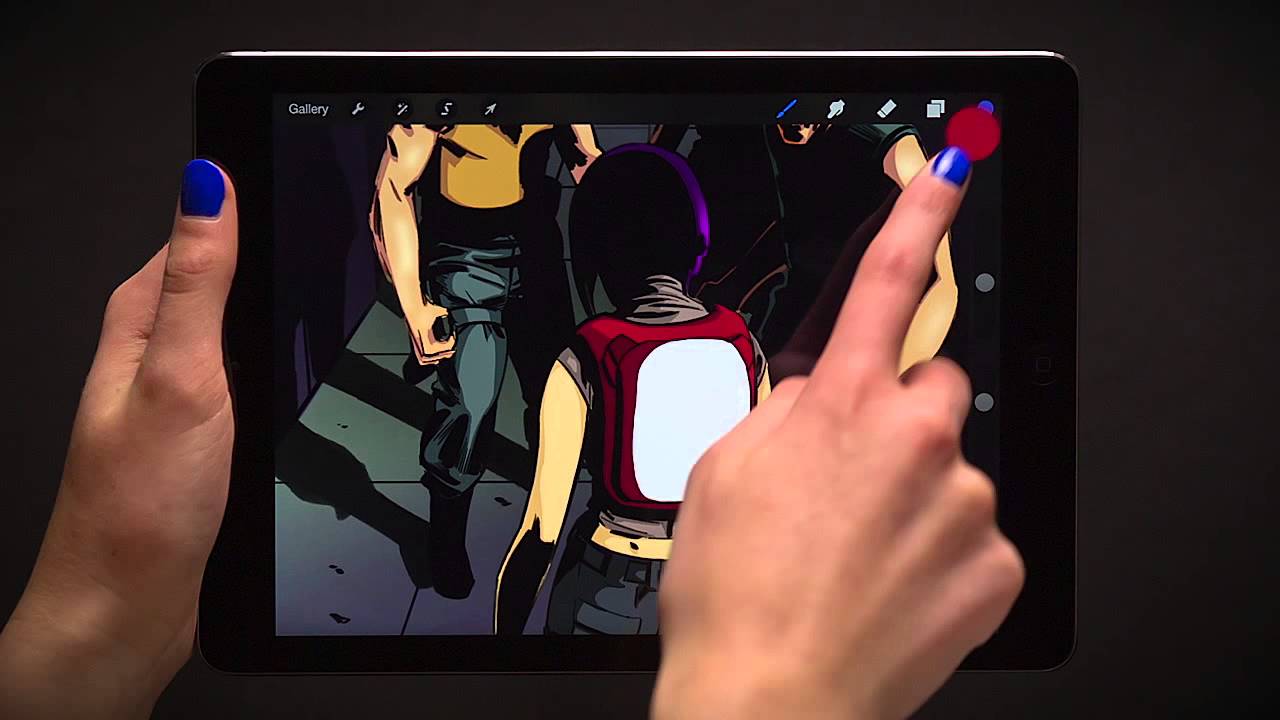
To fill a shape or area with your active color, drag the Active Color icon from the top-right corner directly onto the desired area on your canvas. While you keep holding down, drag your finger left or right to adjust the ColorDrop Threshold. This controls how aggressively the color fills and bleeds into edges, drag left for a tighter fill that stays inside lines, or right for a looser fill that may bleed into neighboring areas. Release to apply the fill.
Sample colors with the Eyedropper
Tap and hold anywhere on the canvas to invoke the Eyedropper tool. Drag the crosshairs to the exact color you want to sample, then release. That color becomes your active color, ready for painting or filling. This is invaluable for matching colors already in your artwork without guessing.
Change existing colors with the Recolor tool
Assign the Recolor tool to a QuickMenu button for easy access. To use it, drag the crosshairs to the area of color you want to replace, then tap the Active Color icon to select your new replacement color. Adjust the Flood slider to control how aggressively the fill spreads, lower values target only the exact color under the crosshairs, while higher values replace similar neighboring colors.
Fill an entire layer or selection
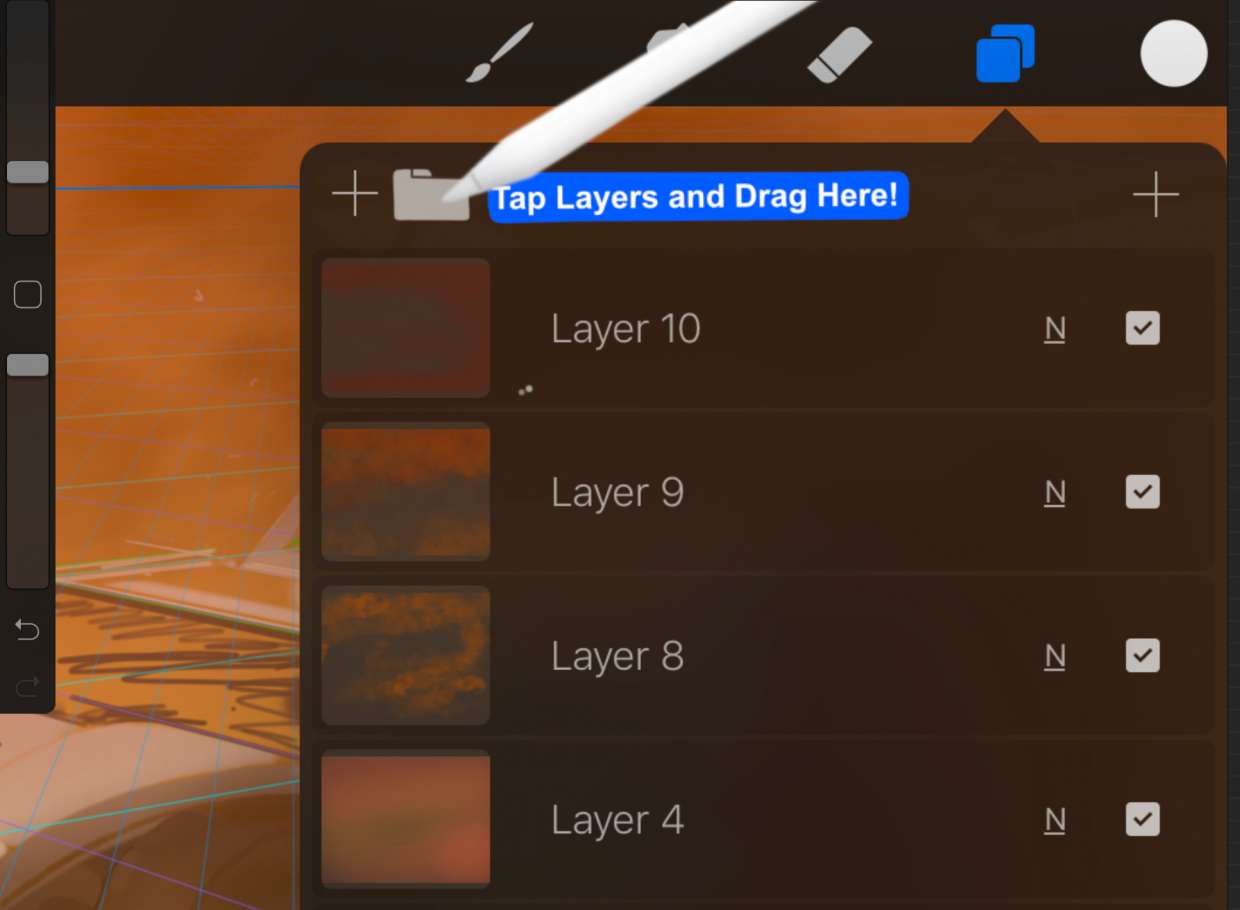
To fill an entire layer with the active color, open the Layers menu, tap the desired layer twice to open Layer Options, then select "Fill Layer." To fill only a selected area, tap "Selections" at the top, choose your preferred selection method (such as Freehand or Rectangle), ensure "Color Fill" is enabled (highlighted blue), and then make your selection. The selected area will be filled with your active color.
Switch between current and previous colors
Press and hold the Active Color icon in the top-right corner to quickly toggle between your current and previously used color. This shortcut saves time when you need to alternate between two colors frequently.
Use Classic, Harmony, and Value modes for precise color control
For fine-tuning, switch to Classic mode, which provides traditional Hue, Saturation, and Brightness (HSB) sliders along with a square color picker. To create a custom color, tap the color disc icon at the bottom right corner of the color panel to open a color wheel for free adjustment. Harmony mode suggests pleasing color combinations based on your currently selected shade, offering algorithms like Complementary, Split Complementary, Analogous, Triadic, and Tetradic. For exact color matching, use Value mode to enter numerical and hexadecimal values for RGBA, HSB, or HEX codes.
Adjust hue, saturation, and brightness of existing artwork
Tap the Adjustments menu (magic wand icon) and select "Hue, Saturation, Brightness." Use the sliders to modify colors across a layer or selection. This changes the color of existing artwork without repainting, ideal for shifting the mood or palette of an entire piece.
Create and manage custom color palettes
Tap the Palettes tab in the Color Panel. Use the "+" symbol to create a new palette, then add colors by selecting them from the Color Panel. You can lock transparency when using color palettes to easily blend and layer colors. You can also import palettes from photos, camera, or files. To save a custom color as a swatch, tap the three dots at the top right corner of the color picker and select 'Save Current Color'. Custom palettes keep your favorite colors organized and ready for quick access.
Frequently Asked Questions
Can I change the color of an imported image in Procreate?
Yes. Use the Adjustments menu (magic wand icon) and select "Hue, Saturation, Brightness" to modify the colors of an imported image layer. For more targeted changes, use the Recolor tool or make a selection before applying adjustments.
How do I change the background color of my canvas?
Tap the Layers menu, tap the background layer twice to open Layer Options, and select "Fill Layer." Alternatively, use ColorDrop to drag the Active Color icon onto the background layer.
Can I save a color I just used for later?
Yes. Tap the Palettes tab in the Color Panel, tap the "+" symbol to create a new palette or select an existing one, then tap the Active Color icon to add the current color to that palette as a swatch.
What is the difference between ColorDrop and the Recolor tool?
ColorDrop fills an area with your active color, similar to a paint bucket. The Recolor tool replaces an existing color on your canvas with a new one, using crosshairs to target the specific color and a Flood slider to control how much of the surrounding area changes.
How do I swap two colors in my artwork?
Use the Recolor tool to replace one color with another. Then sample the first color using the Eyedropper, set it as your active color, and use Recolor again on the second color area to swap them.
Related reading: How To Change Line Color In Procreate and How To Copy A Color In Procreate.