




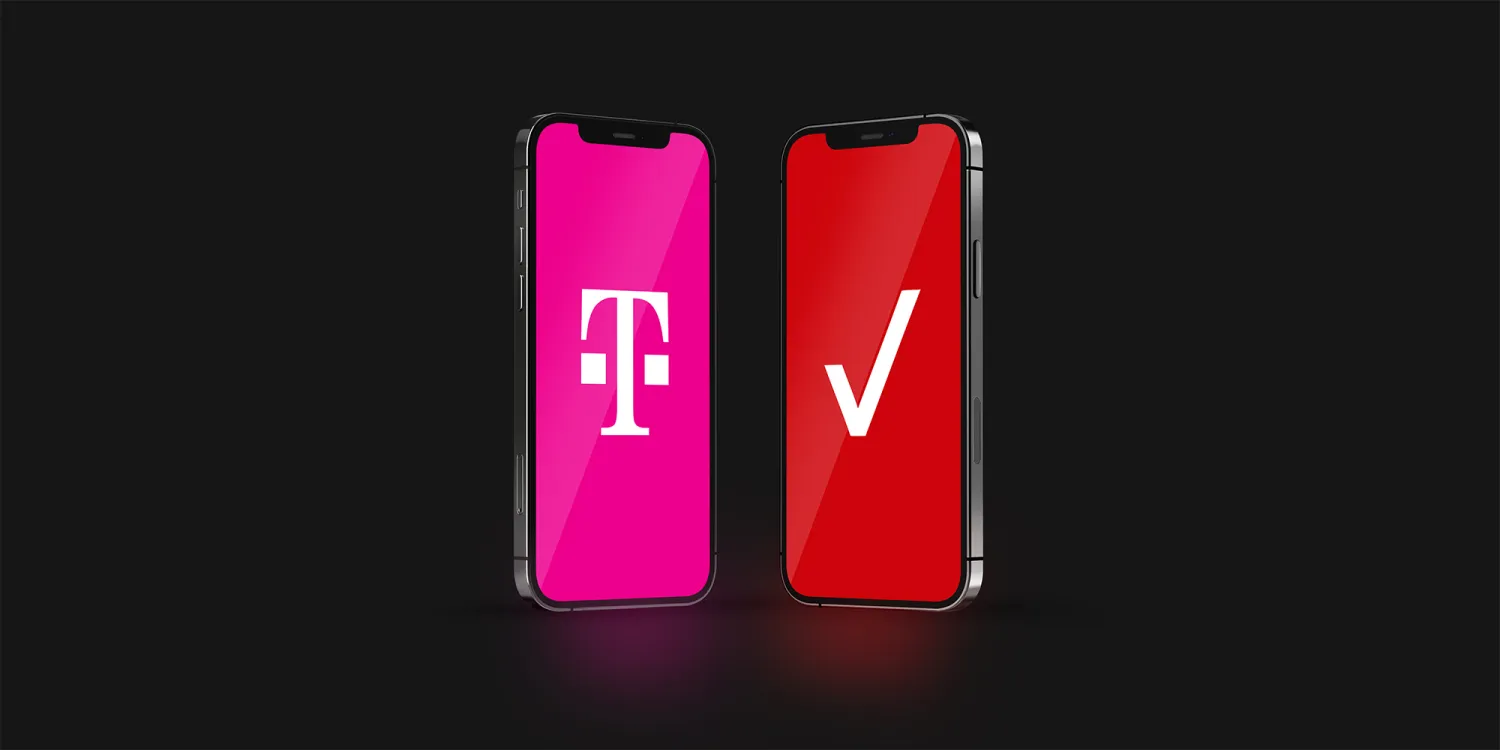
When deciding between Verizon or T-Mobile, the best choice depends on whether you prioritize T-Mobile's expansive 5G coverage and international perks or Verizon's reliable 4G LTE footprint and high-speed 5G Ultra Wideband in cities. T-Mobile is the stronger pick for most travelers and budget-conscious users, while Verizon remains a solid option for those who need consistent rural coverage.
Verizon or T-Mobile: how coverage compares in 2026
T-Mobile's 5G network reaches 305 million people across 1.7 million square miles, making it America's largest 5G network by both population and geographic area. Verizon's 4G LTE network covers over 99% of the U.S. population, and its 5G Ultra Wideband network is available in hundreds of cities and continues to expand. If you live in or frequently travel to rural areas, Verizon's 4G LTE footprint offers a safety net that T-Mobile's 5G-focused buildout may not match everywhere. However, for urban and suburban users, T-Mobile network and coverage (T-Mobile Network Coverage and Service Quality) provides a broader 5G signal that keeps you connected in more places.
Network speeds: 5G and 4G performance side by side
T-Mobile's extensive 5G footprint delivers fast download speeds across a wide area, while Verizon's 5G Ultra Wideband offers extremely high speeds but only in concentrated city zones. In real-world use, T-Mobile's 5G gives you consistent streaming and browsing in most locations you travel. T-Mobile's network speeds can vary depending on location, impressive in urban areas but may not be as consistent in rural or remote areas. Verizon's 4G LTE remains exceptionally reliable for calls and data when 5G is not available, making it a strong choice for users who cannot afford dropped connections. The trade-off is simple: T-Mobile gives you more 5G coverage, while Verizon gives you a dependable 4G fallback nearly everywhere.
Data plans and pricing: what you get for your money
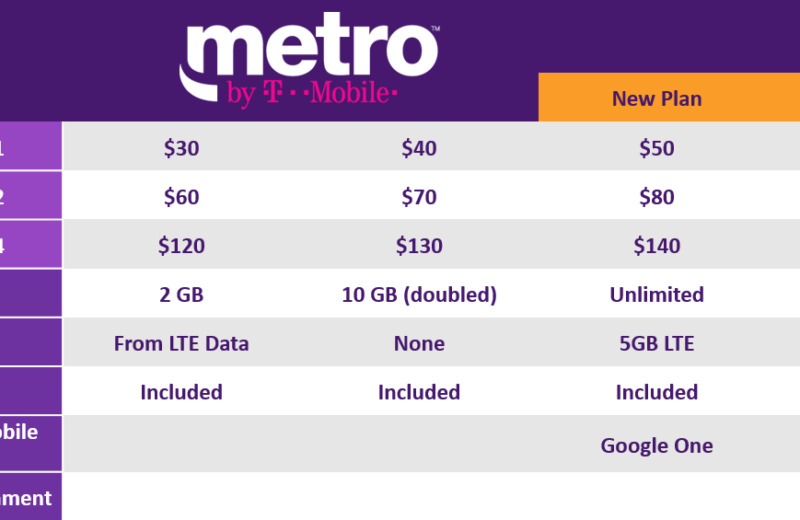
T-Mobile's Essentials plan starts at $60/month for a single line; Magenta plan starts at $70/month for a single line. T-Mobile includes taxes and fees in the plan price. Verizon's Start Unlimited plan starts at $70/month for a single line. Verizon charges device fees for customers who get a new phone. Verizon offers shared data plans for families and individuals who don't need unlimited data. T-Mobile's "Better Value" plan (launched January 2026) includes unlimited premium 5G data, 250GB high-speed hotspot data, unlimited North America data with 30GB high-speed, 30GB high-speed international data, satellite connectivity for text and data via optimized apps, entertainment bundles like Netflix and Hulu on Us, and a five-year price guarantee. Verizon's plan structure offers unlimited options with varying hotspot amounts and premium data tiers, but does not include a similar long-term price lock or satellite texting feature. For users who want predictable costs and generous international data, T-Mobile's plan delivers more built-in value.
International roaming and travel perks
T-Mobile includes international roaming in over 215 countries with data and texting, and Mexico and Canada typically receive full LTE data. This means you can use your phone abroad without buying an extra plan or eSIM. Verizon offers international options through separate add-ons or travel passes, which can add cost for frequent travelers. If you cross borders regularly or vacation overseas, T-Mobile's included roaming is a clear advantage that saves money and hassle.
Customer support hours and satisfaction
T-Mobile offers customer support daily from 4 a.m. to 9 p.m. Pacific Time, with live agent chat in the T-Life app from 4 a.m. to 12 a.m. Pacific Time, and a Team of Experts available from 7 a.m. to 9 p.m. local time. Verizon provides phone support for account and billing from 8 AM to 7 PM PDT Monday through Saturday and 8 AM to 5 PM PDT on Sunday, with technical support from 8 AM to 12 AM PDT every day, plus a 24/7 Verizon Assistant chat. Verizon customer support phone number: 1-800-922-0204. For late-night technical issues, Verizon's extended tech support hours and 24/7 chat give you more flexibility, while T-Mobile's Team of Experts offers a dedicated team for ongoing problems during business hours.
Which carrier should you choose?
Choose T-Mobile if you travel frequently, want the largest 5G network, need international data included, or value a five-year price guarantee and satellite connectivity. Choose Verizon if you live in a rural area where 4G LTE coverage is critical, require the highest possible 5G speeds in a city, or prefer the security of Verizon's 99% population 4G coverage. For most users, T-Mobile's combination of 5G reach, plan perks, and international features makes it the better value, but Verizon remains the safer bet for those who prioritize maximum coverage in remote locations.
Frequently Asked Questions
Which network has better coverage, Verizon or T-Mobile?
Verizon has a reputation for best coverage, fewer dead spots, better signal strength; T-Mobile is closing the gap.
Does T-Mobile work better than Verizon in rural areas?
No. Verizon's 4G LTE network covers over 99% of the U.S. population, which typically provides stronger signals in remote and rural locations compared to T-Mobile's 5G-focused network.
Which carrier has cheaper unlimited plans?
T-Mobile's plans, especially the "Better Value" plan with its five-year price guarantee, generally offer more features for the same or lower cost than Verizon's comparable unlimited tiers.
Can I use my Verizon phone on T-Mobile?
Most modern Verizon phones are unlocked or can be unlocked, and T-Mobile's network uses compatible technology, but you should check your specific device's compatibility before switching.
Which carrier has better customer service ratings?
Verizon has historically ranked higher in customer satisfaction surveys, but T-Mobile's Team of Experts model provides personalized support that many users prefer for ongoing issues.
Does T-Mobile have better 5G than Verizon?
T-Mobile has America's largest 5G network covering 305 million people, while Verizon's 5 G Ultra Wideband offers faster peak speeds but in fewer locations. For broad 5 G access, T-Mobile wins.