




To change Siri's accent on an iPhone, you change the voice variation in Settings > Siri > Voice. This is the primary way to adjust how Siri sounds, and it works independently from changing Siri's language.
How to change Siri accent and voice
Changing Siri's accent is done by selecting a different voice variation. On your iPhone, go to Settings > Siri > Voice. Tap Voice, then choose an option under Variations to change the accent Siri uses. Apple does not have a separate "accent" setting; the available choices are presented as voice variations and voices. You can also ask Siri to change its accent, and it will provide a shortcut to the relevant settings menu.
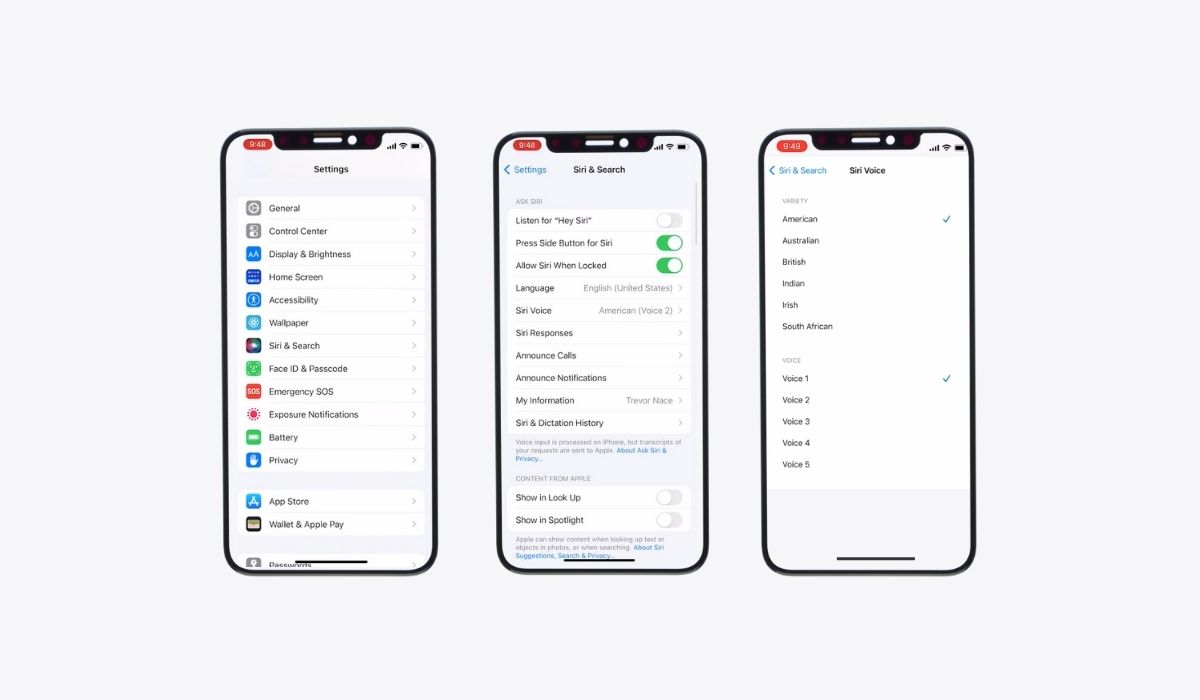
To change Siri's voice itself, follow the same path: Settings > Siri > Voice. Under Voices, select the voice you want Siri to speak with. Each voice has a different character, tone, and speed. The number of available voices depends on the voice variation and language you have set. For example, American English has the most voice options, including a 'passive-aggressive voice' option.
For American and British voices, Apple offers Siri Expressive Voices with additional controls. After going to Settings > Siri > Voice, you can adjust Pace and Expressivity to make Siri speak faster, slower, or with more or less emotional inflection. These controls are currently available only for American and British voices.
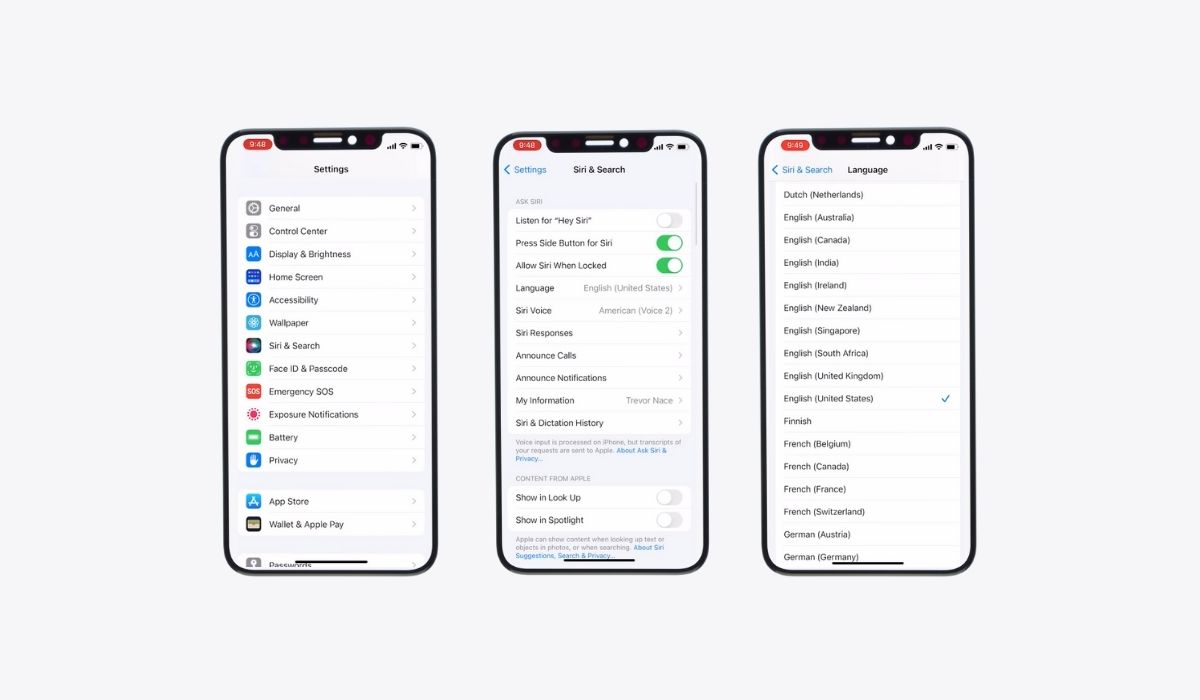
How to change Siri's language
Changing Siri's language is a separate setting from the voice and accent. On your iPhone, go to Settings > Siri > Language. Select a language from the list. Siri can speak 20 different languages: Arabic, Chinese, Danish, Dutch, Finnish, French, German, Hebrew, Italian, Japanese, Korean, Malay, Norwegian Bokmal, Portuguese, Russian, Spanish, Swedish, Thai, and Turkish. This does not affect the voice variation you have chosen; you can have Siri speak English with an Irish accent, for example, or use a completely different language. After changing the language, you may need to retrain "Hey Siri" so it can better recognize your voice in the new language.

Note that changing Siri's accent, voice, or language on one device will also change these preferences across other devices using the same Apple ID.
Frequently Asked Questions
Is there a separate Siri accent setting?
The accent is changed by selecting a voice variation under Voice in Siri settings, alongside the Language setting which is handled independently.
Can Siri voice be changed without changing language?
Yes. Apple documents Voice and Language as separate menu items, so they can be changed independently of each other. You can switch between American, Australian, British, Indian, Irish, and South African voices without altering the language Siri uses. Siri learns your accent over time, but may be imprecise initially if your accent doesn't match the set voice variety.
Are all Siri voice options available everywhere?
No. The expressive controls for Pace and Expressivity are currently limited to American and British voices. Other voice variations may have fewer voice options available.
Can I add custom accents or voices to Siri?
No. You cannot upload custom accents or voices to Siri. The only way to get new accents or voices is when Apple itself adds them through software updates.
How do I change Siri's voice to Jarvis?
You cannot add a custom voice to Siri, so it is not possible to make Siri sound like Jarvis from Iron Man. Siri only uses the voices Apple provides.
Is Siri customization available on Android?
No. Apple's support pages document Siri changes only on iPhone and iPad, not on Android devices. Siri is an Apple-exclusive assistant and its voice, accent, and language settings are not available on other platforms.
For the wider topic, see display and home screen settings.