




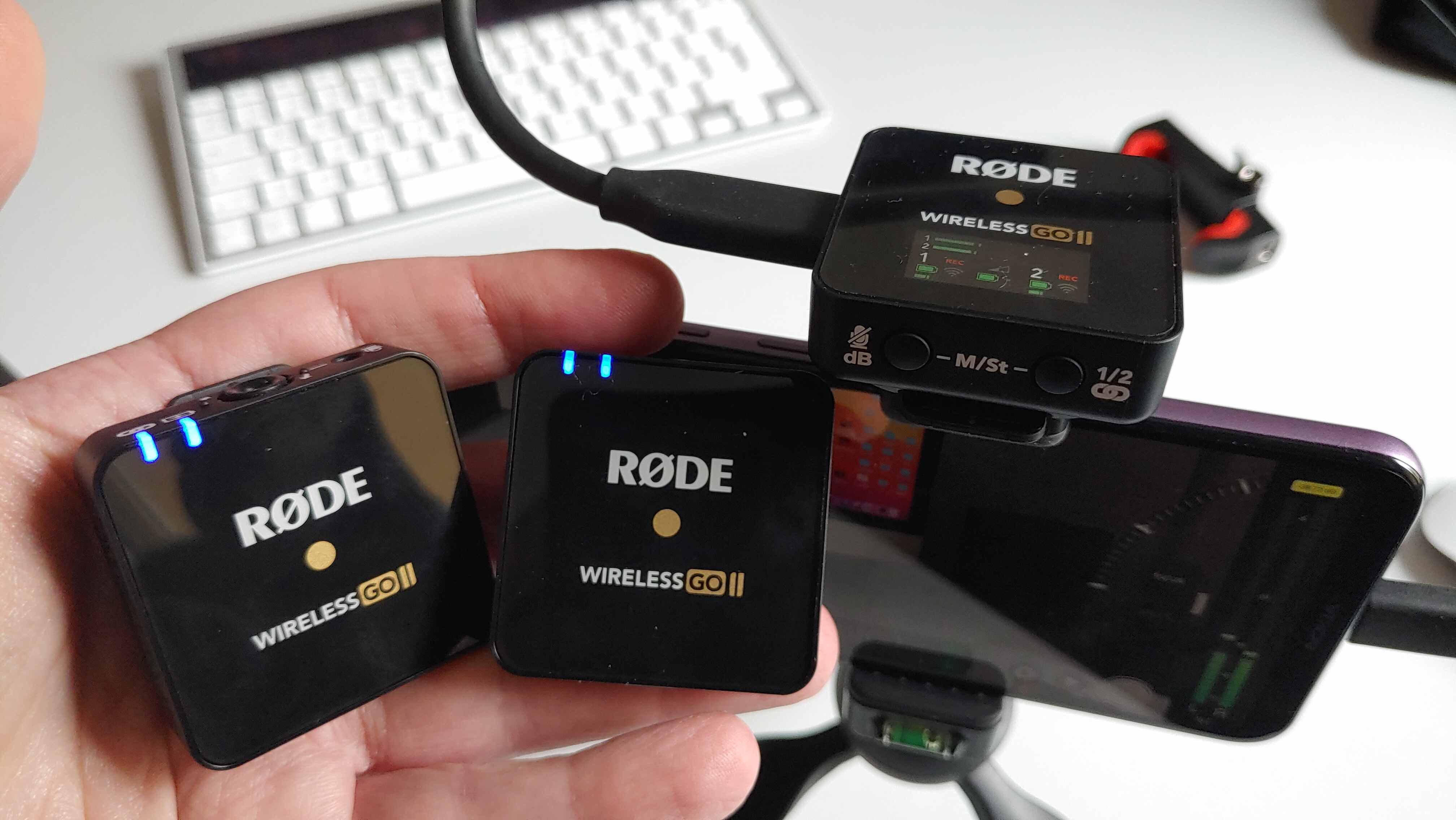
The key to starting a recording on the Rode Wireless Go II is understanding that the transmitter's internal storage is a separate system from the wireless link to the receiver, and you must configure it before you can use it.
The key to starting a recording on the Rode Wireless Go II
Onboard recording on the Rode Wireless Go II is a powerful backup or standalone recording tool, but it is turned off out of the box. You cannot simply press a button on the transmitter to record until you activate the feature. The process requires connecting the transmitter to the RØDE Central app on a computer or mobile device, then selecting one of three recording modes. Once enabled, the transmitter becomes a self-contained audio recorder that stores files internally, independent of the receiver.
Step 1: Install and open RØDE Central on your device
You need the RØDE Central app to configure the transmitter. The app is available for computers and mobile devices. For iPhone and iPad, you must have iOS 14 or later. For Android devices, you need Android 9.0 or later. The Wireless GO II is MFi-certified, meaning it works directly with iPhone, iPad, and iPod touch. Note that RØDE states the Wireless GO II cannot be used as a microphone for Zoom or Microsoft Teams on mobile devices, so the app is purely for configuration. Launch RØDE Central on your computer or RØDE Central Mobile on your phone or tablet to begin.
Step 2: Connect your transmitter and enable onboard recording
- Open RØDE Central or RØDE Central Mobile.
- Select the Wireless GO II TX or the specific transmitter you want to configure.
- Locate the Onboard recording section in the app.
- Set the Record option to one of the available modes: Always, Backup, or Button.
- If you choose Button mode, you must also set the Ø Button to Record in the same app.
- Apply the changes. The transmitter is now ready to record according to the mode you selected.
Understanding the recording modes: Always, Backup, and Button
Each mode changes how the transmitter starts and stops recording. In Always mode, recording begins as soon as you switch the transmitter on and continues until you switch it off. This is ideal for long shoots where you want a continuous backup without any manual intervention. In Backup mode, recording starts automatically when the transmitter connects to the receiver and stops when the receiver is switched off. This mode is designed to capture audio as a safety copy while you record wirelessly through the receiver. RØDE Central's Record setting also includes a Backup option alongside Always and Button modes. In Button mode, you control recording manually. After setting the Ø Button to Record in RØDE Central, pressing the transmitter's Ø Button once starts recording, and pressing it again stops recording. This gives you precise control over when to capture audio.
How to actually start and stop your recording
Here is a quick-reference guide for each mode:
- Always: Switch the transmitter on to start recording. Switch it off to stop.
- Backup: Connect the transmitter to the receiver; recording begins on connection. Turn off the receiver to stop recording.
- Button: Press the transmitter's Ø Button once to start, and press it again to stop.
Important limits and specifications for onboard audio
Each Wireless GO II transmitter has internal storage capable of holding over 40 hours of compressed audio or seven hours of uncompressed audio. If you record in uncompressed mode, the audio is captured at 48 kHz, 24-bit quality, and stored in file blocks with a maximum recording length of 30 minutes and 44 seconds per block. Uncompressed mode stores audio in 30 minute 44 second blocks. This means a long recording will be split into multiple files, each 30 minutes and 44 seconds long. The transmitter automatically creates a new file block when the limit is reached, so no audio is lost. These limits are per transmitter, so you have independent storage on each unit.
Frequently Asked Questions
Can I use the Rode Wireless Go II as a standalone recorder without the receiver?
Yes. Once you enable onboard recording in RØDE Central and select Always or Button mode, the transmitter records internally without needing the receiver. You can later transfer the audio files to your computer via USB.
How do I get the audio files off the transmitter after recording?
Connect the transmitter to your computer via USB. It will appear as a mass storage device, allowing you to drag and drop the WAV or compressed audio files directly to your hard drive. You can also use RØDE Central to export the files.
What happens if I run out of internal storage while recording?
When the internal storage is full, the transmitter will stop recording. Monitor your available space, especially for long sessions in uncompressed mode, which fills the seven-hour capacity faster than compressed mode.
Does the onboard recording work while I am also transmitting wirelessly to the receiver?
Yes. The transmitter can record internally and send audio to the receiver simultaneously. This is the primary use case for Backup mode, where the wireless feed goes to your camera while the internal recording serves as a safety copy.
Why would I use Button mode instead of Always mode?
Button mode gives you manual control, which is useful when you want to avoid recording long periods of silence or unwanted audio. Always mode records everything from power-on to power-off, which can create many files you do not need. Button mode is also helpful for troubleshooting wireless earbuds or other audio setups where you want to isolate specific moments.
Can I change the recording mode after I have already started recording?
No. You must connect the transmitter to RØDE Central and apply a new mode before the next recording session. Changing modes while recording is not supported. Stop the current recording, reconfigure in the app, and then start again.
Related reading: How To Set Up A Wireless Router Without A Computer and How To Use The Sharper Image Wireless Headphones.