




To set up new email on iPhone, open Settings > Apps > Mail > Mail Accounts > Add Account, then tap your provider (like iCloud, Google, or Microsoft Exchange) or choose from a list if it isn’t shown. Enter your email address and password, then tap Next or Save when prompted, Mail handles the rest automatically for most major services.
Adding an email account automatically
Apple’s current path for adding an email account is Settings > Apps > Mail > Mail Accounts > Add Account. This works for providers that Mail recognizes, including iCloud, Google, Microsoft Exchange, and Yahoo, which only require your email address and password to configure themselves.
- Open Settings and tap Apps.
- Tap Mail, then tap Mail Accounts.
- Tap Add Account.
- Select your provider from the list. If you don’t see it, tap Other or choose from a list under the email address field. Apple’s current support page also says you can tap choose from a list under the email address field, or tap Other if your service is not listed.
- If the email provider is listed, tap it, then enter the email address and password and follow the prompts; if Mail shows Next, tap it, and if it shows Save, tap Save.
Once added, the account appears in the Mail app and you can start sending and receiving messages immediately. You can repeat the same steps to add multiple accounts, whether they are personal or work-related.
Adding an email account manually
If your provider is not listed or automatic setup fails, you can configure the account by hand.
- Go to Settings > Apps > Mail > Mail Accounts.
- Tap Add Account, then tap Add Other Account.
- Tap Mail Account.
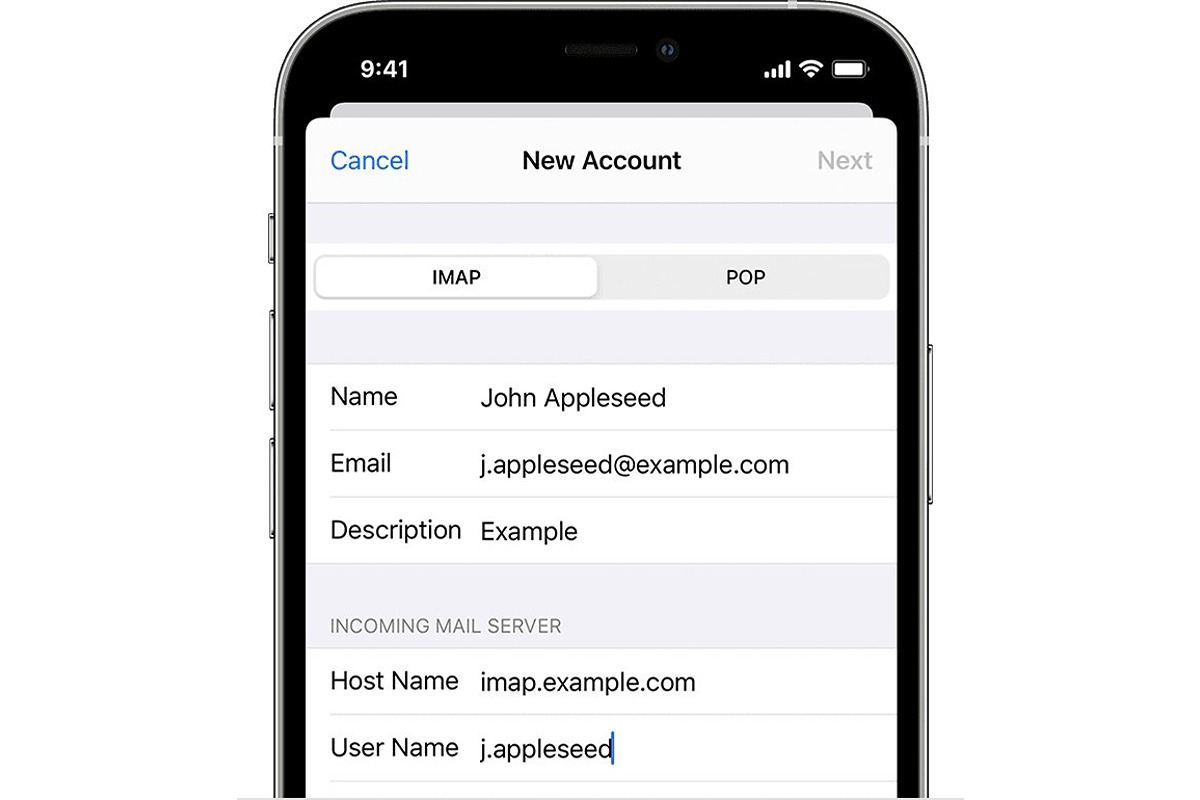
- Enter your name, email address, password, and a description for the account.
- Tap Next. If Mail still cannot find the settings, Apple says to choose IMAP or POP, then enter the Incoming Mail Server and Outgoing Mail Server details, and tap Next.
If you do not know your server details, you must contact your email provider, Apple does not provide these settings. Apple says that if you do not know these settings, you must contact the email provider. The description field is only a label for your own reference, so you can use any name you recognize, like “Work” or “Personal.”
Troubleshooting email setup issues on iPhone
Most setup problems come down to a few known limitations. Apple documents these points directly, so check them in order before doing anything else.
- If Mail cannot find your settings automatically, you will need to enter manual server details for the incoming and outgoing mail servers.
- If you are unsure whether to use IMAP or POP, Apple says to contact the email provider.
- If the account settings are incorrect, iPhone asks you to edit them before finishing setup.
- If the problem persists, the issue is likely on the provider side, not the phone. Contact the email provider directly for the correct server names, ports, and authentication methods.
The current Apple guide is under iOS support content and shows the path in the Settings app using Apps and Mail. Keeping up with updating iOS and operating systems helps avoid compatibility issues, but the setup path itself stays the same across recent versions.
Frequently Asked Questions
What if my email provider isn't listed?
You will need to enter your name, email address, password, and server details manually, which your provider can supply.
What's the difference between IMAP and POP?
IMAP syncs your email across multiple devices, so messages stay on the server and changes appear everywhere. POP downloads email to your iPhone and typically removes it from the server, which makes it harder to keep other devices in sync.
Can I add a work email account the same way?
Yes, if your employer uses Microsoft Exchange, select it from the provider list and enter your work email and password. If your work email uses a different system, use the manual setup path with the server details your IT department provides.
Why does Mail ask me to edit settings after I enter my password?
That means the information you entered did not match what the server expects. Check the email address, password, and server fields for typos, then try again; if it still fails, contact your provider for the correct settings.
For Android, Google’s official account-add flow is Settings > Passwords & accounts or one of the variant paths Google lists if that menu is named differently on the device: Users & accounts, Passwords, passkeys & autofill, Password, passkeys & accounts, or Manage accounts. Then tap Add account and choose the account type. Google says the supported account types include: Google, Meet, Exchange, Personal (IMAP), Personal (POP3). Google also says this is the path for adding an account to an Android phone or tablet, and that you may need to enter your device pattern, PIN, or password for security. In the Gmail app on Android, Google says you can add another account by opening Gmail, tapping your Profile icon at the top right, then tapping Add another account and selecting Google for a Gmail address. Staying current with the best & latest updates on mobile operating systems [Android, iOS, KaiOS] ensures you see the most accurate menu names on your device.