




Getting started with Xfinity Mobile services
Understanding Xfinity Mobile services helps set realistic expectations before you place an order: the service is available only to Xfinity Internet customers, and you will want to confirm your current phone is unlocked and compatible. Understanding how does Xfinity Mobile work means knowing the service prioritizes WiFi connections and shifts to 5G when you leave range. The Xfinity Mobile network provider is Verizon, and your speeds may be temporarily slowed if you exceed 20 GB of data in a billing cycle. To switch to Xfinity Mobile, start in the Xfinity app or on the Xfinity Mobile activation page, then choose whether the phone was purchased from Xfinity or brought from another carrier, and have your prior carrier account number and transfer PIN ready if you plan to keep your number. When you are ready to activate Xfinity phone, power on the device and follow the on-screen instructions or use the Xfinity app; for eSIM, you may need to add it manually via your device settings using an activation code or SM-DP+ Address. If you need to activate Xfinity Mobile SIM card for a physical SIM, simply insert it before turning the phone on and follow the on‑screen prompts to complete setup.
Managing your account and billing
Managing your monthly bill starts with knowing where your payment settings live. When you need to update your card or decide to turn off Auto pay on Xfinity Mobile, sign into the app or website with a Primary or Manager’s Xfinity ID and navigate to the billing overview. Before you adjust your plan, it helps to know exactly how much data you have already used so you can avoid slower speeds after 20 GB. To check data usage on Xfinity Mobile, look behind the sign-in screen under the Activity section, as the detailed tracker is not surfaced on the main billing settings page. If you find yourself consistently bumping against that threshold, you might want to add unlimited data to Xfinity. Securing your home connection is a different task entirely. To change password on Xfinity wireless router, open the Xfinity app and go to the WiFi tab to edit and save your WiFi details, or use the Admin Tool under Gateway settings, remembering this applies to your internet equipment and not your mobile service line.
Moving your phone number
Bringing your current number with you means gathering a few details from your old carrier before you start. The process lives entirely inside the Xfinity app under the Services tab, not in your phone’s own settings. Once you tap Activate more devices and select your new line, you will be asked for the prior account number, a transfer PIN, the primary account holder’s name, the last four digits of the account holder's SSN, and the billing address on file. The field that most often trips people up is the port-out PIN, which your old provider may label as a security PIN, temporary port-out PIN, or number transfer PIN depending on their terminology.
When you need to move a line the other direction, you can get transfer PIN from Xfinity Mobile through the app or website before giving anything to your new carrier. Requesting it starts on the Devices tab by selecting the line and choosing the option to transfer your number and cancel the line. A confirmation code is sent to the phone before the PIN appears, and it expires after 24 hours. If the online flow does not work, forum guidance points toward an in-person identity check at a retail store. Once you have that credential in hand, you can follow the steps to port number from Xfinity Mobile through whichever provider you are joining next.
If you simply want a fresh local prefix without leaving the service, to change Xfinity phone number on an active line, the account holder, primary user, or a manager needs to call in directly. Keep in mind that the 20 GB threshold for potential slowdowns follows the line, not the digits attached to it, so swapping numbers does not reset your data usage for the cycle.
Using Xfinity hotspots and Wi-Fi
When you are away from your home network, your phone, tablet, and a handful of other devices can tap into millions of Xfinity WiFi hotspots. On most modern devices, connection to secure hotspots is automatic; you can also manually select the network named xfinitywifi from the available list. The first time you connect, a sign-in page should appear automatically in your browser. If it does not, simply open a new tab and try to visit any website to trigger the login prompt where you enter your Xfinity ID and password. On an iPhone or iPad, the fastest repeat access comes from the automatic connection built into the operating system; Xfinity Internet customers can also open the Xfinity app, go to the WiFi tab, and enable the auto-connect feature. This remembers your credentials and joins known hotspots without interrupting you. Android users follow the same general pattern, but there is a key distinction between the two platforms for the more secure network option. For Xfinity Mobile customers using an iPhone with iOS older than 17.1, the secure profile requires you to manually select the Xfinity Mobile SSID. The equivalent step on a device running Android 10 or older requires connecting to the open xfinitywifi network instead, as secure hotspots are not accessible. If you want to connect Wii to Xfinity Wi-Fi hotspot, you will need to follow the console-specific steps for entering network credentials. Similarly, to connect smart TV to Xfinity hotspot, you must navigate to the TV’s wireless settings and select the xfinitywifi network. For Roku users, the process to connect Roku TV to Xfinity hotspot involves using the on-screen menu to find and join the hotspot. In all cases, learning how to connect to an Xfinity hotspot ensures your non-mobile devices can also enjoy reliable internet access when away from home.
Managing hotspot and network settings
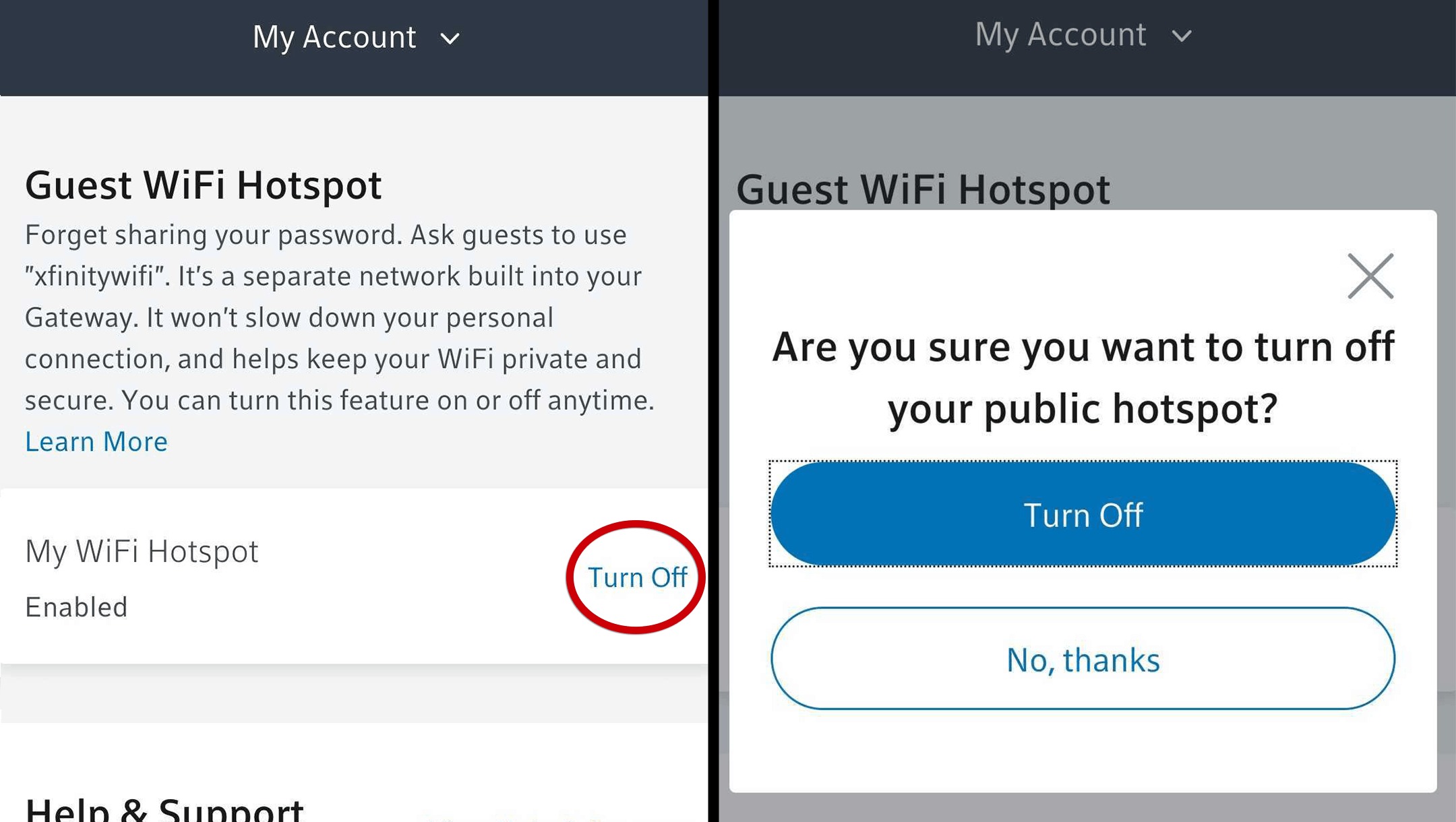
When you want to turn off Xfinity hotspot broadcasting from your home gateway, the control lives in your account or the Xfinity app rather than in your phone’s carrier settings, and a primary, manager, or member-level login can reach the setting under the WiFi tab by navigating to View WiFi equipment, then Advanced settings, and toggling the Xfinity WiFi hotspot network off. The same change is also available through your account settings, and the confirmation takes effect immediately. Because the toggle is tied to your Xfinity ID and not to a specific device model, anyone with the right permissions can make the adjustment. To get Xfinity wireless cable box hardware you would need to consult the TV equipment support directly. Review your specific platform’s security menu to confirm which behavior applies to your line.
Streaming and casting from your phone
When the show playing on your handset deserves a larger display, the quickest path is to stream Xfinity from a phone to TV using the equipment already connected in your living room. If you have an X1 TV Box or Xfinity Flex streaming box, the phone must be connected to the in-home network. You check the casting permission by pressing the Xfinity button on the remote for X1 or the home button for Flex, using the arrow buttons to the gear icon, pressing OK for Settings, going to Privacy, then Mobile Video Casting. Flex ships with the feature turned on, while X1 keeps it off until someone in the household enables it. On an iPhone or iPad, open the Xfinity Stream app, choose the show or movie, tap the cast icon near the top right, then choose AirPlay and select the receiving device. Android owners can watch live TV inside the app over any WiFi or cellular connection by opening the app, going to the menu at the bottom, selecting Live TV, tapping the program title, and tapping Watch. Whichever route you take, remember that every active stream counts toward the device cap, which may shrink for simultaneous screens out of the home or with NOW TV and streaming.
Troubleshooting, security, and records
When your phone suddenly shows no bars at home, the cause often sits closer than you think. Before assuming a failure, open the Xfinity app and check for any alerts on your line. A local gateway glitch or a billing hold can mimic larger Xfinity Mobile service outages. If the line looks clean, the next hurdle many people hit is the 60-day active-service rule when they try to unlock an Xfinity phone. The device also needs to be fully paid off and the account must carry no past-due balance before the carrier code prompt will even appear after you insert a different provider’s SIM.
For billing questions that a self-service tap cannot solve, you can find the telephone number of Xfinity inside the app rather than hunting through a search engine. When you need a paper trail of your activity, you can get phone records from Xfinity Mobile by signing into your profile on the web, selecting the Activity tab, then choosing 'Manage Plan' for the desired line. The last three months of call and text logs sit ready to view there. Just keep in mind that while those logs show dates and numbers, the content of the messages is never stored. You cannot get text message transcripts from Xfinity Mobile through the portal or anywhere else.