




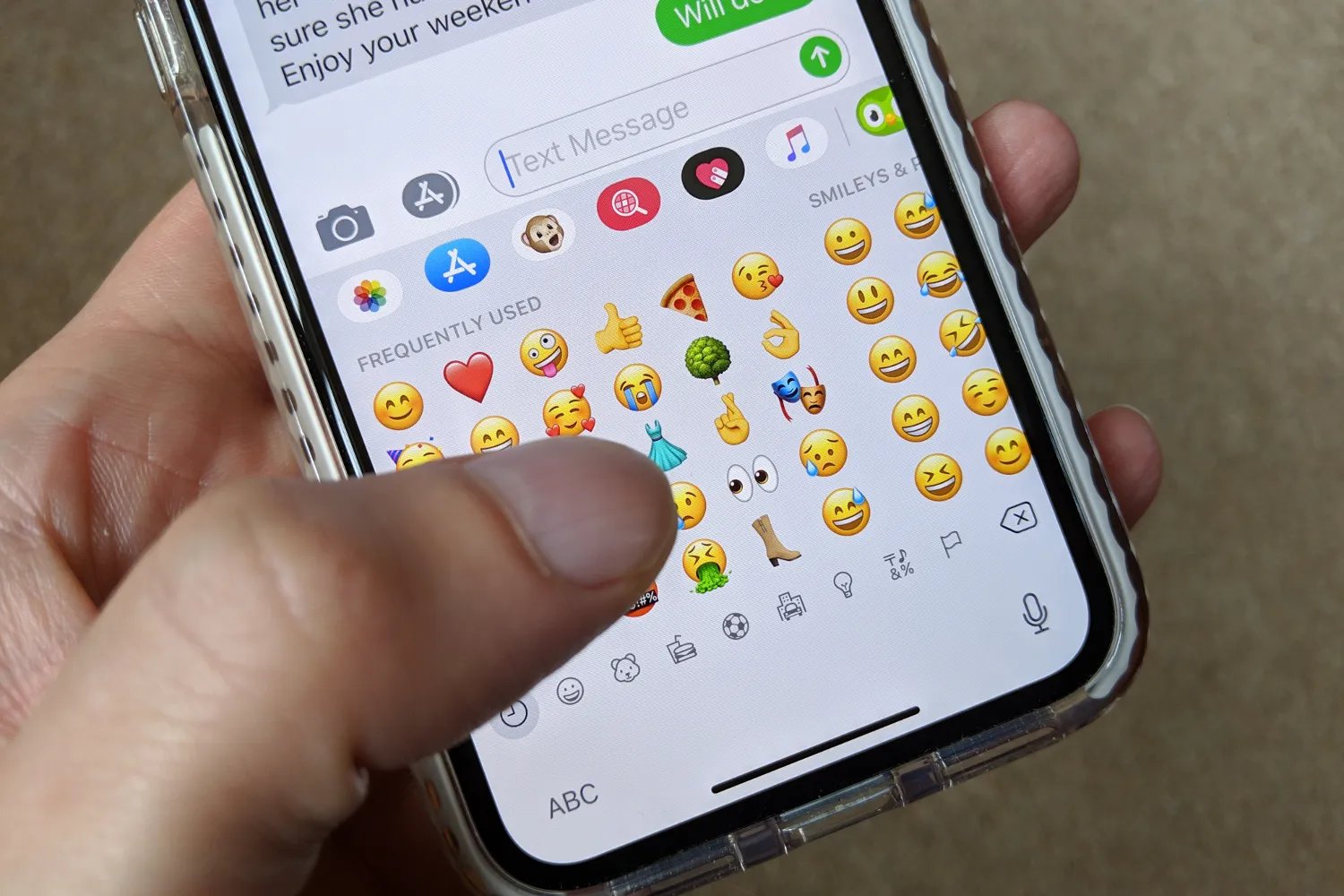
To change emoji skin tones on your iPhone or iPad, touch and hold any supported emoji on the built-in emoji keyboard, then tap the skin-tone variant you prefer. You can also use the Search Emoji field to quickly find a specific emoji, or tap the clock icon to see your recently used emojis.
How to change emoji skin tones on iPhone & iPad
Apple’s documented method for selecting a skin-tone variant is simple: touch and hold any emoji that supports skin tones, and a row of options appears. Tap the variant you want, and that emoji will be inserted with your chosen tone. To navigate the emoji keyboard efficiently, use the Search Emoji field at the top to type a keyword, or tap the clock icon near the bottom-left corner to access your recently used emojis. This long-press method works for all supported emoji directly within the standard emoji keyboard, there is no separate “diverse emoji keyboard” toggle or menu. To customize multiple emojis at once, press and hold the first emoji, then without lifting your finger, tap other emojis with another hand to select them all before choosing a skin tone.
Enable the emoji keyboard if it is missing
If the globe or smiley icon does not appear on your keyboard, the emoji keyboard may not be enabled. To add it, go to Settings > General > Keyboard > Keyboards > Add New Keyboard > Emoji. After adding it, the emoji keyboard becomes available in any app that uses the standard keyboard, such as Mail or Messages.
Open the emoji keyboard in any app
- Tap a text field to bring up the keyboard.
- Tap the emoji or globe key to switch to the emoji keyboard.
- Swipe left or right through the categories at the bottom, or tap the gray icons (such as smileys and people, animals and nature, food and drink, activities, travel and places, objects, symbols, and flags) to jump directly to a theme.
- Tap any emoji to insert it into your text.
Which emoji support skin tones
Apple documents that only certain emoji offer skin-tone variants. When you long-press a supported emoji, such as a person, hand gesture, or face, you will see a pop-up menu with up to five skin-tone options (ranging from light to dark). Emoji that do not support skin tones will simply insert the default yellow emoji when long-pressed. Apple does not publish a complete list of supported emoji, nor does it specify a maximum number of tones per emoji or a required iOS/iPadOS version.
What skin-tone choices look like to others
If you send a custom skin-tone emoji to someone using an older device or software version, they may see the default yellow emoji instead of your chosen skin tone. The customized tone is only visible to recipients whose devices and software support the same emoji variants. This applies to all platforms, including Android and Google’s Gboard, where a similar one-tap skin-tone preference is available but also depends on the recipient’s system compatibility.
Frequently Asked Questions
Can I set a default skin tone for all emoji?
On iPhone and iPad, there is no built-in setting to apply a default skin tone to every emoji. You must long-press each supported emoji individually to select a variant. On Android, Gboard introduced a one-tap preference that applies to all compatible emoji, but Apple’s keyboard does not offer this feature.
Do all emoji with people or hands have skin-tone options?
No. Only certain emoji, such as those depicting people, hand gestures, or body parts, offer skin-tone variants. Emoji like animals, objects, or symbols do not support skin tones. Apple does not provide a full list, but you can test any emoji by long-pressing it to see if options appear.
Why can’t I see the skin-tone options when I long-press an emoji?
If no skin-tone menu appears, the emoji you selected does not support skin tones. Alternatively, ensure the emoji keyboard is properly enabled (see the “Enable the emoji keyboard if it is missing” section above) and that you are using a supported app like Messages or Mail.
Will my custom skin-tone emoji show correctly on Android or older iPhones?
Not always. The emoji will display correctly only if the recipient’s operating system supports the same skin-tone variant.
Can I use third-party apps to add custom emojis to iPhone?
Yes. While the built-in emoji keyboard only supports Apple’s emoji set, you can download third-party keyboard apps from the App Store that offer additional emojis and custom keyboards. These apps may provide extra skin-tone options or entirely new emoji designs, but they operate separately from Apple’s standard keyboard.
Can I install the Emoji Keyboard on my iPhone and iPad?
Yes, the Emoji Keyboard is already built-in with your iPhone and iPad.
How do I manage emojis and custom keyboards in settings?
To manage all installed keyboards, go to Settings > General > Keyboard > Keyboards. Here you can add new keyboards (including third-party ones), reorder them, or remove ones you no longer use. The emoji keyboard is listed alongside any custom keyboards you have added.