




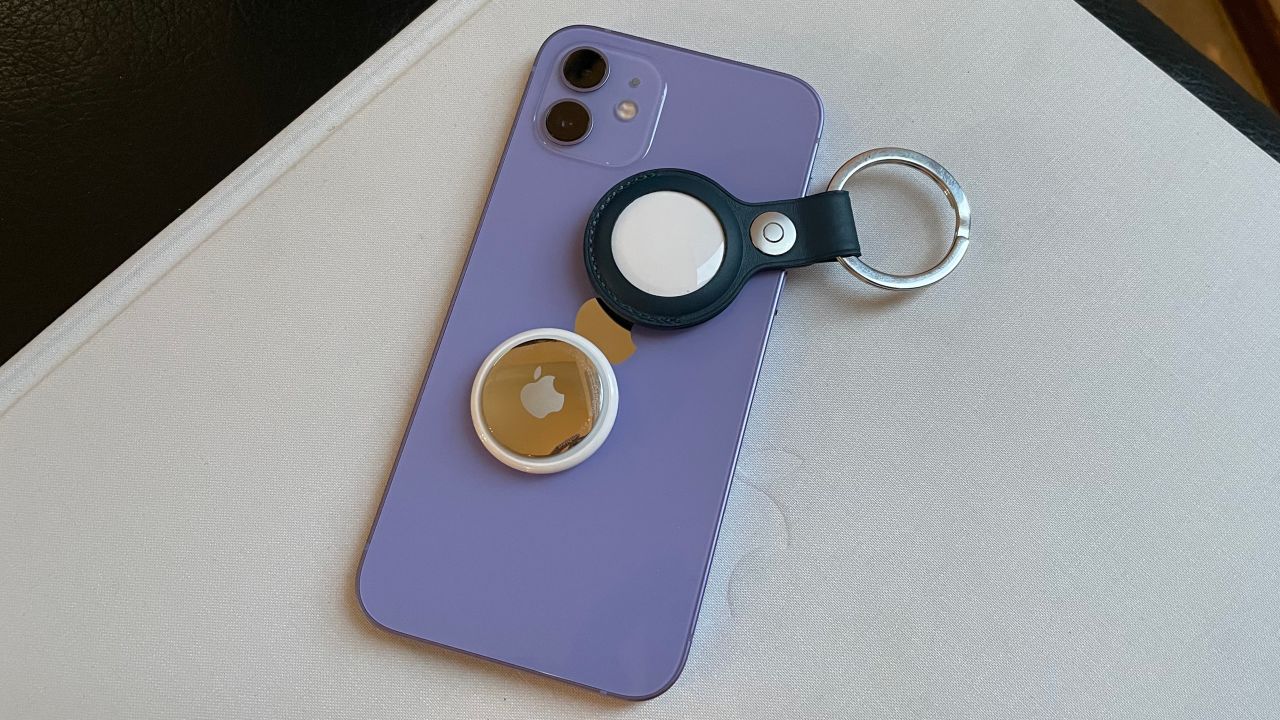
You don't actually need to attach an AirTag to your phone because your iPhone already has built-in Find My tracking, but if you want a secondary tracker on a non-Apple device or a case, here's how to physically attach an AirTag to your phone using adhesive stickers, built-in slots, or universal holders.
Do you need to attach an AirTag to your phone?
AirTags are designed to help you keep track of personal items like keys, wallets, bags, or backpacks, not to track an iPhone itself. AirTags are small, lightweight devices. Your iPhone already has built-in tracking capabilities through the Find My app, which can locate your phone even when it's offline or in a lost state. So if your goal is to find a lost iPhone, you don't need an AirTag at all; the phone's own Find My network already does that job. AirTags exist for things that don't have their own tracking, which is why attaching one to a phone is usually redundant.
When attaching an AirTag to a phone makes sense
There are a few edge cases where attaching an AirTag to a phone is logical. Another case is when you carry your phone in a case that also holds other items like cards, cash, or a passport; in that scenario, an AirTag helps you track the whole case, not just the phone. If you frequently switch between a phone and a tablet or use a dedicated device for work, a secondary AirTag can provide an extra safety net without relying solely on the phone's own tracking.
How to physically attach an AirTag to your phone
Once you've decided that attaching an AirTag to your phone makes sense for your situation, you have three main physical attachment methods to choose from. Each works differently, so pick the one that fits your phone case and daily use. Ensure the AirTag is securely attached so that it doesn't accidentally detach while you're on the move. Ensure that the AirTag is not obstructing any ports, buttons, or other essential features of your phone.
Using adhesive stickers
Adhesive stickers are the simplest way to attach an AirTag to the back of your phone or its case. If using an adhesive sticker, peel off the backing and stick the AirTag to the back of your phone or its case. Make sure the surface is clean and dry before applying, and press firmly so the AirTag doesn't come loose. This method works best with a slim case, but be aware that the AirTag will protrude slightly, which may affect wireless charging or make the phone wobble on flat surfaces.
Using a case with a built-in AirTag slot
Many phone case manufacturers now make cases with a dedicated slot or recessed compartment designed to hold an AirTag. These cases are often built specifically for a particular phone model, so the AirTag sits flush and doesn't interfere with ports, buttons, or cameras. Simply insert the AirTag into the slot, and it's securely held in place. This is the most reliable method because the AirTag is protected and won't fall off, but it does require you to buy a new case that's compatible with your phone.
Using a universal holder
Universal holders are small accessories that clip, loop, or slide onto your phone or case. They typically use an adhesive backing or a loop that goes around the AirTag, and then you attach the holder to your phone's back, side, or even a lanyard. Some universal holders come with a keyring or carabiner, letting you attach the AirTag to a phone strap or a case with a lanyard hole.
Regardless of which method you choose, always verify that the AirTag is securely attached and that it doesn't obstruct any essential features of your phone. A loose AirTag is more likely to fall off and get lost, which defeats the purpose of tracking.
How to set up your AirTag after attaching it
After you've physically attached the AirTag to your phone, you need to pair it with your Apple device so it appears in the Find My app. This process is the same regardless of what you attached the AirTag to, and it takes just a minute.
Before you start
Make sure your iPhone is running iOS 14.5 or later; for a 2nd generation AirTag, you'll need iOS 26.2.1 or later. Go to Settings and confirm that Bluetooth is turned on. Then, open Settings > Privacy & Security > Location Services and ensure that Location Services is enabled. Scroll down to Find My and make sure it has access to your location, ideally with Precise Location turned on for the most accurate tracking.
Pairing your AirTag
To pair the AirTag, remove its product wrapping and pull the battery tab. Hold the AirTag near your unlocked iPhone's Home Screen, and a setup animation will appear. Tap "Connect" when the animation shows on your screen. Next, choose a name for your AirTag from the provided list, or select "Custom Name" to type a name and choose an emoji. Then, tap "Agree" or "Continue" to link the AirTag to your Apple Account, and finally tap "Done" or "Finish." Once paired, the AirTag appears in the Find My app under the Items tab, and you can see its location on a map.
If you ever need to re-pair the AirTag with a different phone, you'll first have to remove it from your Apple Account in the Find My app, since an AirTag can only be registered to one Apple Account at a time.
Limitations to know before you attach
Before you attach an AirTag to your phone, there are a few limitations you should understand. Second, Precision Finding, which gives you exact distance and direction to the AirTag, requires an iPhone with Ultra Wideband technology, specifically an iPhone 11 or later. If you have an older iPhone, you'll still be able to see the AirTag's location on a map, but you won't get the arrow-guided precision. On a non-Apple phone, you can only use the AirTag if you have an Apple device to pair it with, and even then, you won't get features like Precision Finding or the full Find My network integration. Full functionality of AirTags, such as precision tracking features, may not be available on non-Apple devices. AirTags have long battery life. AirTags have built-in privacy features to prevent unauthorized tracking.
If you're wondering how to connect my AirTag to my phone on a non-Apple device, the answer is that you can't do it directly; you need an Apple device for setup. For battery maintenance, check the official AirTag battery life details in the Find My app, and when it's time to replace it, you'll need to know how to change an AirTag battery, it uses a standard coin-cell battery that you can swap out yourself. Keep these limitations in mind so you know exactly what to expect from your AirTag before you commit to attaching it.
Frequently Asked Questions
Will an AirTag damage my phone's wireless charging?
Attaching an AirTag to the back of your phone can interfere with wireless charging, especially if the AirTag sits directly over the charging coil. Use a case with a built-in slot that positions the AirTag away from the coil, or remove the AirTag before charging wirelessly.
Can I use an AirTag to track my phone if it's stolen?
An AirTag can help you locate your phone if it's lost, but it won't prevent theft. If a thief removes the AirTag or resets your phone, the AirTag's tracking stops. For stolen phones, rely on the built-in Find My feature, which is more integrated and harder to disable.
Does attaching an AirTag void my phone's warranty?
However, if the adhesive or holder causes physical damage, that damage may not be covered under warranty.
Can I attach an AirTag to a phone without a case?
Yes, you can attach an AirTag directly to a phone without a case using an adhesive sticker or a universal holder. Just be aware that the AirTag will be exposed and may get scratched or damaged over time, and it might interfere with wireless charging.