




The best file upload apps for iOS send your photos, videos, and documents directly to cloud servers where they are stored securely and accessible from any device. Unlike peer-to-peer transfer tools that move files between devices over a local network, true file upload apps for iOS connect to services like Google Drive, Dropbox, or iCloud to permanently save your data online.
1. Apple Files app: Your iPhone's built-in upload hub
The Apple Files app is the central location on your iPhone for managing all your uploaded files. It seamlessly integrates with third-party cloud storage services like Google Drive, Dropbox, OneDrive, Box, and MEGA, allowing you to access and manage files from these services in one place. This means you can upload a file to any connected cloud service directly from the Files app without opening each provider's separate app.
2. iCloud Drive: Seamless uploads across Apple devices
Apple's iCloud Drive stores, organizes, and allows collaboration on files and folders, with changes syncing automatically across all your Apple devices. You can share files and folders in iCloud Drive with specific people or anyone with a link, setting permissions for viewing or editing. This makes it ideal for managing and transferring photos between your iPhone, iPad, and Mac without any manual steps.
3. Google Drive: 15GB of free space for all your uploads
Google Drive offers 15GB of free storage shared across Drive, Gmail, and Google Photos, and supports uploading documents, images, audio, and video files. To upload files via the Google Drive app, tap the "Add" (+) icon, then "File upload," select your files, choose a location, and tap "Upload." If you need to transfer photos from phone to computer, uploading them to Google Drive first makes them instantly available on your desktop.
4. Microsoft OneDrive: Auto-upload your camera roll
OneDrive provides 5 GB of free cloud storage and features an automatic camera backup option, which can be enabled in Settings > Camera Upload. A critical warning: OneDrive cannot upload photos optimized for iCloud; users must disable "Optimize Storage" in iOS Settings > iCloud > Photos for successful uploads. If you want to disconnect Google photos from iPhone and switch to Microsoft's ecosystem, OneDrive's camera roll backup is the direct replacement.
5. pCloud: 10GB of free storage with automatic backups
pCloud offers up to 10 GB of free storage upon registration and includes an "Automatic upload" feature to back up all photos and videos from your device. However, a common user complaint for pCloud is that the app often needs to remain open for downloads and uploads to complete in the background, so you should keep the app active while large uploads finish.
6. MEGA: Secure, encrypted uploads with 20GB free
MEGA provides 20 GB of free encrypted cloud storage with a focus on end-to-end zero-knowledge encryption, ensuring only the user can access their files. This makes it the top choice for uploading sensitive documents or private photos where you want absolute control over who can view your data.
7. Documents by Readdle: A powerful file manager with cloud integration
Documents by Readdle acts as a comprehensive file manager, integrating with various cloud services, allowing direct file creation (PDFs, text files, scans), and featuring a built-in browser for downloads. You can upload files from the web directly to cloud storage, create new documents, and manage everything across multiple accounts in one interface.
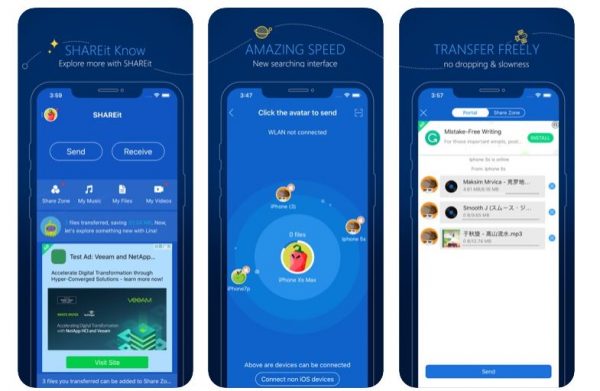
8. SHAREit
Price: Free. A file upload app list wouldn't be complete without SHAREit. It's one of the most popular and reliable file-sharing apps for both iOS and Android devices. Through this file upload app, there's no need for you to use your mobile data when file-sharing. You have the option to connect to a WiFi or mobile hotspot. SHAREit is compatible with all types of files and allows you to search for specific files. Once file-sharing is completed, users can have a preview of all the files through its built-in player. It is integrated with share zone and group sharing. SHAREit also supports more than 20 different languages.
9. Send Anywhere
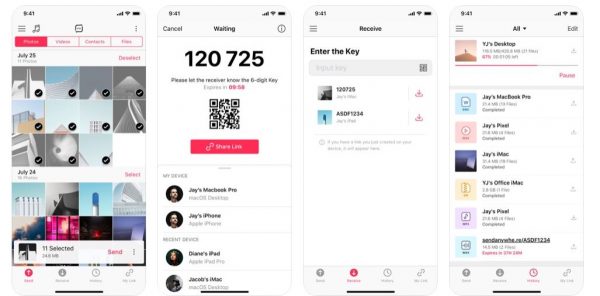
Price: Free | Premium: $4.99. Send Anywhere is a file upload and sharing app that features robust security when it comes to file-sharing. It is compatible with a diverse range of platforms, ranging from Android to Mac devices. For data privacy and security, the Send Anywhere app generates a six-digit code when sharing files with someone. That said, the receiving end must input the six-digit security code from the sender first before file-sharing starts. Also, Send Anywhere allows file-sharing through a generated link for uploading and downloading specific files. In terms of connectivity, Send Anywhere works if both sender and receiver are connected to an active internet connection.
Final word on choosing your iOS file upload app
For most users, the built-in Apple Files app combined with iCloud Drive offers the simplest experience for staying within the Apple ecosystem. OneDrive excels at automatic photo backups, while Documents by Readdle is best for power users who need a full file manager with cloud integration and document creation tools.
Frequently Asked Questions
Can I upload files to multiple cloud services at once?
No single iOS app natively uploads the same file to multiple cloud services simultaneously. You must upload the file separately to each service, though the Apple Files app lets you access all your connected services in one view.
Do file upload apps compress my photos or videos?
iCloud Drive also keeps the original file. Always check each app's settings for an "upload quality" option to confirm.
What happens if I run out of free storage space?
Uploads will fail until you free up space by deleting files or upgrade to a paid plan. Each service notifies you when storage is low, and you can manage files through the app or Apple Files.
Can I upload files from my iPhone to a cloud service without using mobile data?
Yes. Most cloud upload apps have a setting to restrict uploads to Wi-Fi only. In Google Drive, go to Settings > Data usage. In OneDrive, go to Settings > Camera Upload and toggle "Upload using cellular data" off.
For the wider topic, see managing and transferring photos.