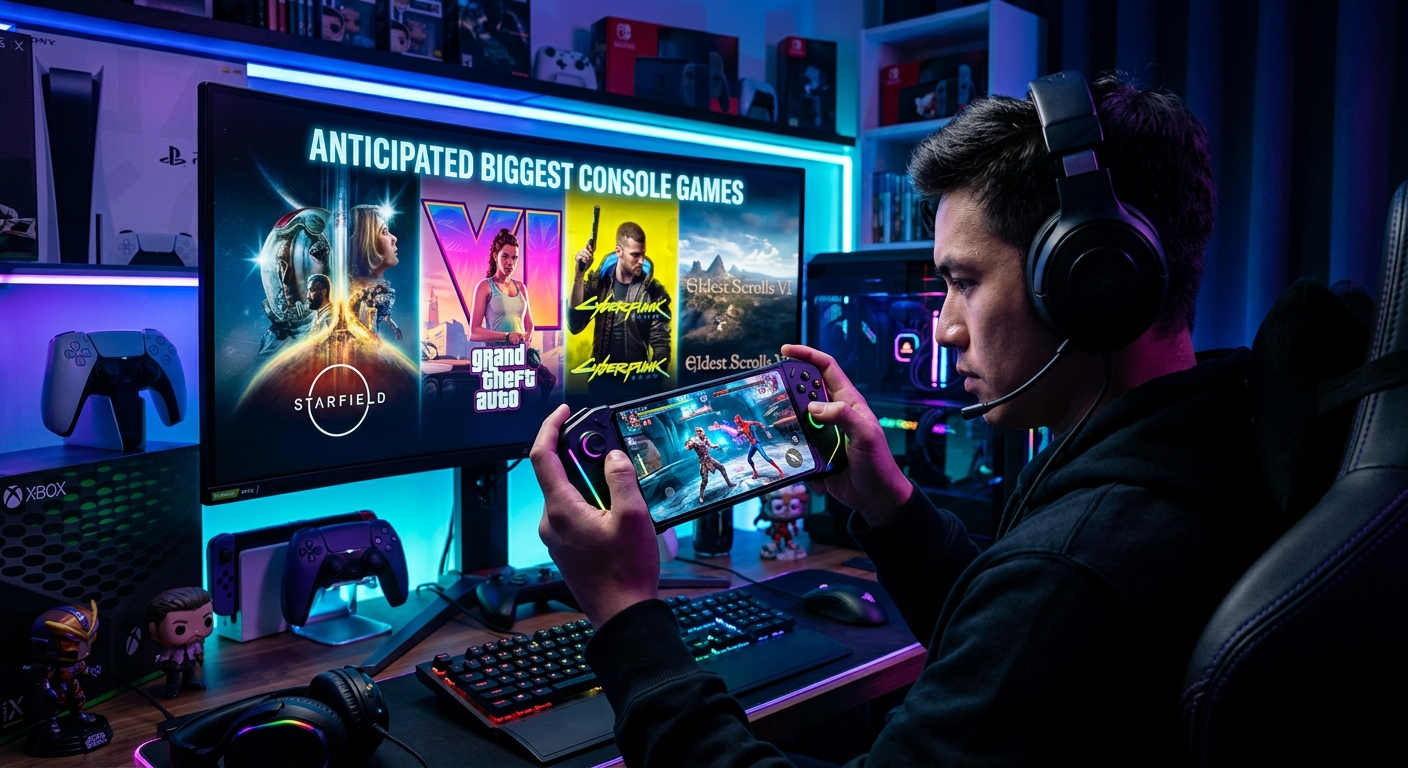
The next wave of major game releases is closing in fast. Titles that have been in development for years are approaching their launch windows, and the demand they will place on mobile hardware is real. If you have been putting off upgrading your phone, now is the time to stop waiting and start comparing. The phones that handle today's demanding mobile ports and cloud gaming clients are also the ones ready for what is coming next.
Gamer's Cheat Sheet
- A 120Hz or faster display is the single upgrade you will feel on every swipe, shot, and scroll.
- At least 12GB of RAM keeps open-world games running without stutters or dropped sessions.
- Thermal performance separates phones that hold peak speed for an hour from ones that throttle within minutes.
Why 2025 Is the Year to Get Serious About Mobile Gaming Hardware
Mobile gaming is no longer a casual side category. It has grown into a serious platform that attracts console-level productions, cloud streaming clients, and cross-platform multiplayer. Titles like Genshin Impact, Diablo Immortal, and Call of Duty Mobile already push mid-range phones to their thermal limits. The next generation of releases will demand even more.
The push is happening on both sides. Chip makers are shipping more powerful mobile processors than ever before, and game studios are taking full advantage of that. The combination creates a widening gap between phones released two or three years ago and what is on shelves today. If your device predates 2023, you may already be missing textures, frame rates, and effects the game was designed to show.
The Specs That Separate Gaming Phones From Everything Else
Not all specs matter equally for gaming. A phone marketed as "gaming-ready" can still disappoint if the manufacturer cut corners in the wrong places. Here is what to actually prioritize before you buy.
Display refresh rate is the most immediate upgrade you will feel. The difference between 60Hz and 120Hz is visible the moment you start moving on screen. At 120 frames per second, animations appear crisp, aiming feels responsive, and the entire experience feels physically faster. Some phones now reach 144Hz or even 165Hz. The reason this matters comes down to display refresh rate fundamentals: a screen that redraws more times per second reduces the perceived blur between frames, especially during fast lateral movement.
RAM is the next priority. Modern mobile games are not small applications. Open-world titles can load several gigabytes of assets into memory at once, and background app activity competes for that space. A phone with 8GB of RAM will struggle during multitasking or after extended play sessions. Twelve gigabytes is the comfortable minimum for 2025 titles. Sixteen gigabytes or more is ideal if you plan to keep your phone for two or three years.
Battery and thermal performance go together more than most buyers realize. A phone that throttles its processor after 20 minutes of gameplay is not truly a gaming phone. The best options on this list maintain peak performance through long sessions and back that up with batteries of 5000mAh or larger. Vapor chamber cooling, larger graphite heat spreaders, and software-level power management all play a role in keeping chips running at their rated speeds.
The Best Android Gaming Phones Available Right Now
Android gives you more variety at more price points than any other platform. These three picks represent the top of what the market offers heading into late 2025.
ASUS ROG Phone 9 Pro
This is the most focused gaming phone on the market right now. ASUS built it from the ground up for performance and nothing else. The 185Hz AMOLED display is faster than any competing device in its class. The 24GB of RAM means no loading hiccups regardless of what you have running in the background, and the vapor chamber cooling system keeps the Snapdragon 8 Elite chip running at full speed across long sessions. Physical shoulder triggers add a tactile dimension to shooters that touchscreen-only designs simply cannot replicate. The trade-off is size and weight. This phone is heavy and tall, and it makes no pretense of being a discreet everyday device.
Samsung Galaxy S25 Ultra
If you want one device that handles gaming and everything else at the same high level, the Galaxy S25 Ultra is the pick. Its 120Hz Dynamic AMOLED display is calibrated beautifully across brightness levels, and the Snapdragon 8 Elite chip inside handles every current mobile title without hesitation. Samsung's thermal management improved significantly with this generation compared to its predecessors. Battery life at roughly 5000mAh comfortably covers extended gaming sessions with charge left over. The S Pen is a bonus for productivity, and it does not interfere with the gaming experience at all.
OnePlus 13
The OnePlus 13 punches well above its price point. With a 6000mAh battery and the same Snapdragon 8 Elite chip found in phones costing several hundred dollars more, it offers exceptional value for serious players. The 120Hz LTPO display adjusts its refresh rate dynamically, saving power during menus and low-motion scenes before jumping back up when the action demands it. Thermals are solid for a non-gaming-branded device, and real-world throttling tests show it performs admirably across hour-long sessions.
Top Gaming Phone Specs at a Glance
| Phone | Display Refresh Rate | RAM | Battery | Best For |
|---|---|---|---|---|
| ASUS ROG Phone 9 Pro | 185Hz | 24GB | 5800mAh | Dedicated gamers |
| Samsung Galaxy S25 Ultra | 120Hz | 12GB | 5000mAh | All-rounder |
| OnePlus 13 | 120Hz LTPO | 16GB | 6000mAh | Value seekers |
| iPhone 16 Pro Max | 120Hz ProMotion | 8GB | ~4685mAh | Apple ecosystem users |
The iPhone Options for Gamers Staying in the Apple Ecosystem
Apple's gaming story is different from Android's, but it is not weaker. The App Store carries a strong selection of premium titles, and Apple Arcade gives subscribers access to games that never appear on Android. More importantly, Apple's A-series chips remain among the most capable mobile processors available anywhere.
iPhone 16 Pro Max
The A18 Pro chip inside the iPhone 16 Pro Max was built specifically with gaming in mind. Apple added hardware-accelerated ray tracing to this processor, which means supported titles render lighting and reflections at a level that rivals dedicated handhelds. The 120Hz ProMotion display adjusts its refresh rate intelligently, preserving battery life during slower scenes and then snapping back up when motion picks up. Thermals have always been a strong point for Apple's flagship line, and the 16 Pro Max holds up across extended gaming sessions without significant performance drops. The 6.9-inch screen also gives you real estate that feels closer to a portable console than a traditional smartphone.
The iPhone 15 Pro for Budget-Conscious Gamers
If the 16 Pro Max is out of reach, the iPhone 15 Pro remains a strong buy. It runs the A17 Pro chip, which handles every game currently available on iOS without complaint. The 120Hz ProMotion display feels identical in everyday use to the newer model. Battery life is shorter and the display is smaller, but for casual to mid-core gaming it holds up well. Buying refurbished or secondhand drops the cost considerably, making it one of the best value-per-performance options in the entire phone market right now.
GTA 6 and Why It Changes the Phone Buying Calculus
No upcoming release has generated more discussion about platform readiness than Rockstar's next major open-world title. The game is shaping up to be the most graphically demanding release in years, and while the initial launch targets consoles, the mobile follow-through matters enormously for anyone thinking ahead. Checking the confirmed GTA 6 platforms helps you map your hardware decisions against where the game is actually heading and whether a high-end phone already in your pocket fits into that picture via cloud streaming or a future mobile release.
Cloud gaming bridges the gap between mobile hardware and console-level titles right now. Services like Xbox Cloud Gaming and NVIDIA GeForce Now already let you stream graphically demanding games to a phone over Wi-Fi or a strong 5G connection. For those experiences to feel smooth, you still need a device with a fast display, low-latency touch response, and a stable radio. That is why even cloud gaming rewards owning a flagship phone rather than settling for mid-range.
How to Match Your Phone to the Games You Already Play
Your buying decision should start with the types of games you play most, not the spec sheet with the biggest numbers.
- Competitive shooters (PUBG Mobile, Call of Duty Mobile): Prioritize refresh rate above everything else. The ASUS ROG Phone 9 Pro's 185Hz panel gives a measurable edge in fast-paced combat where every millisecond of response matters.
- Open-world RPGs (Genshin Impact, Honkai: Star Rail): RAM and thermals matter most. The OnePlus 13's 6000mAh battery and solid cooling system make it ideal for multi-hour sessions without throttling or constant charging breaks.
- Cloud gaming (Xbox Cloud, GeForce Now, PS Remote Play): Any flagship from this list handles streaming comfortably. Focus on display quality and confirm you have access to a reliable 5G connection or fast home Wi-Fi.
- Apple Arcade and iOS exclusives: The iPhone 16 Pro Max is the only mobile device with hardware-accelerated ray tracing. Games that support it look noticeably better on this phone than on any other.
- Casual gaming with occasional big titles: The Galaxy S25 Ultra handles everything without forcing you to make trade-offs. It remains the safest all-around pick if you want a single phone that excels across every use case.
Your Move Before Gaming's Biggest Season Arrives
The phones on this list are not just ready for what is available today. They are built to handle what is coming over the next twelve to eighteen months. The titles generating the most excitement in gaming right now will demand more from your hardware than anything currently sitting on mobile app stores. Getting ahead of that means you will not find yourself mid-session on a game you care about, watching frames drop, your phone throttle, and your battery drain faster than expected.
Buy the phone that fits the games you actually play, not the one with the flashiest promotional campaign. Check the display refresh rate against the types of games you prefer. Confirm the RAM is at or above 12GB. Read real-world thermal reviews from sources that test sustained performance, not just peak benchmarks. The right choice today translates directly into fewer frustrations and more time actually playing when the biggest releases of the year finally land in your hands.