



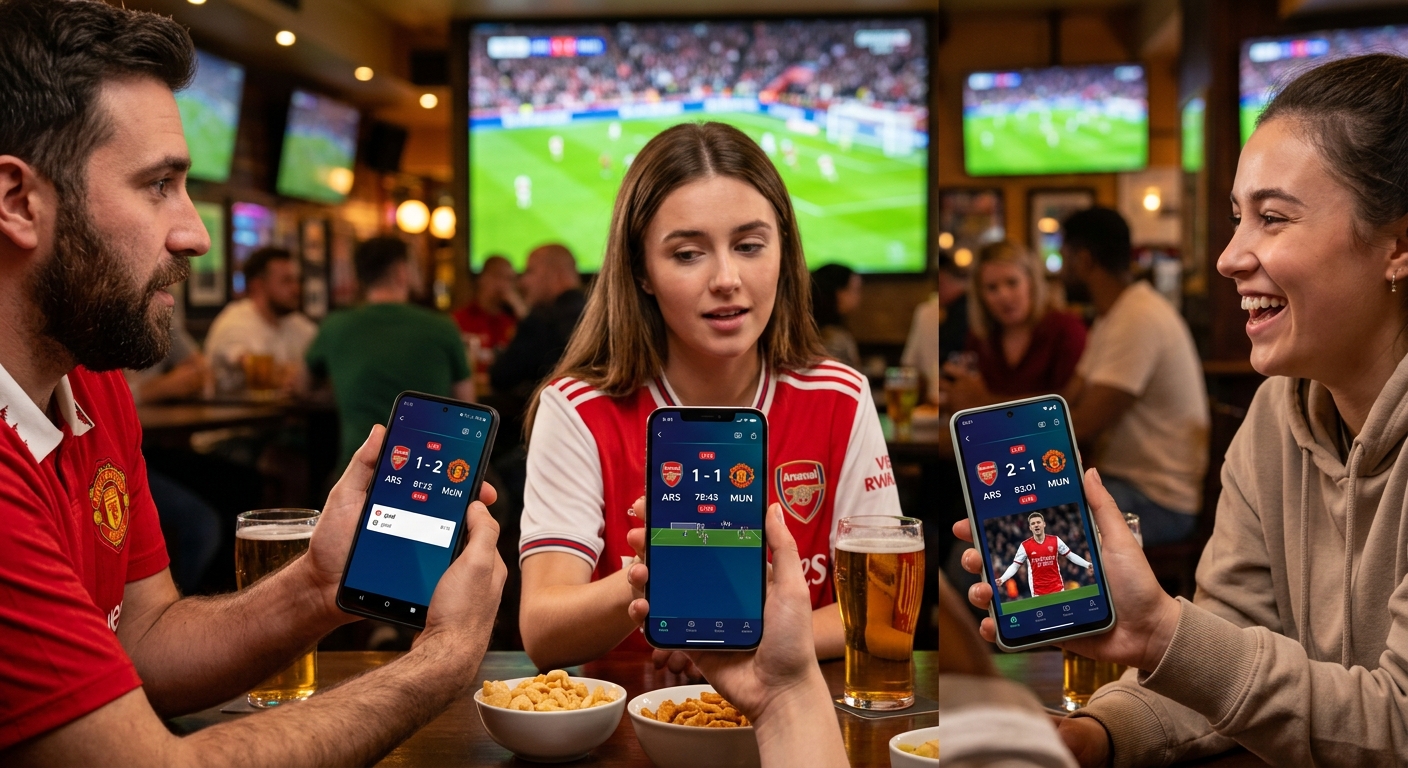
You and your friend are watching the same game from the same couch. Your app says the home team is up by three. Their app says two. Neither of you touched your settings. This is not a glitch. It is not one app lying to you. It is the reality of how live sports data travels from a stadium to billions of smartphones, and the explanation involves a chain of handoffs that almost nobody stops to think about.
Score Gap Explained: Key Takeaways
- Live sports data travels through multiple providers before reaching your screen, and each step adds delay.
- Push notification systems on iOS and Android throttle and batch alerts, so they never land at the same moment on every phone.
- Background refresh settings on your device control how often an app checks for new information when you are not looking at it.
- Different sports apps subscribe to different data feeds that may refresh on different schedules.
- No live score update is ever fully instantaneous, even when it feels that way.
The Score on Your Screen Has Already Aged
A lot has to happen between the moment a player scores and the moment you see it on your phone. A human operator or automated system at the venue logs the event. That data travels from the venue to a sports data company. The data company cleans it, verifies it, and distributes it to every app that pays for their feed. Each app then pushes it to your device. Every one of those handoffs takes time.
Even under ideal conditions, the stadium-to-screen journey rarely takes less than five seconds. On a busy match day with millions of concurrent requests, it stretches to 15 or 30 seconds without much difficulty. If your friend's app subscribes to a different data provider with a faster pipeline, their screen updates first. Both apps are technically correct. They are just running on different clocks.
Push Notifications Are Not as Fast as They Look
Most sports apps alert you the moment a score changes. That process sounds immediate. It is not.
Push notifications on Apple devices pass through Apple's Push Notification service, known as APNs. On Android devices, they travel through Google's Firebase Cloud Messaging platform. Both platforms are built for massive scale, which means efficiency takes priority over raw speed. They can hold notifications briefly, group them together, or deprioritize them when your device is conserving battery power.
Google's cloud messaging documentation notes explicitly that delivery timing is not guaranteed, and that factors like device battery state and network availability affect when a notification actually arrives. Apple says the same thing in its own developer guidance.
Now layer on two different phones, two different carriers, two different apps, and two different data providers. The chance of both screens showing the same score at the same second drops to nearly zero.
Background Refresh Changes What Your Phone Actually Knows
Here is the part most people overlook. Even when you are not looking at your sports app, that app is supposed to be quietly checking for updates in the background. Your phone controls when and how often that happens, and the default settings vary dramatically between devices.
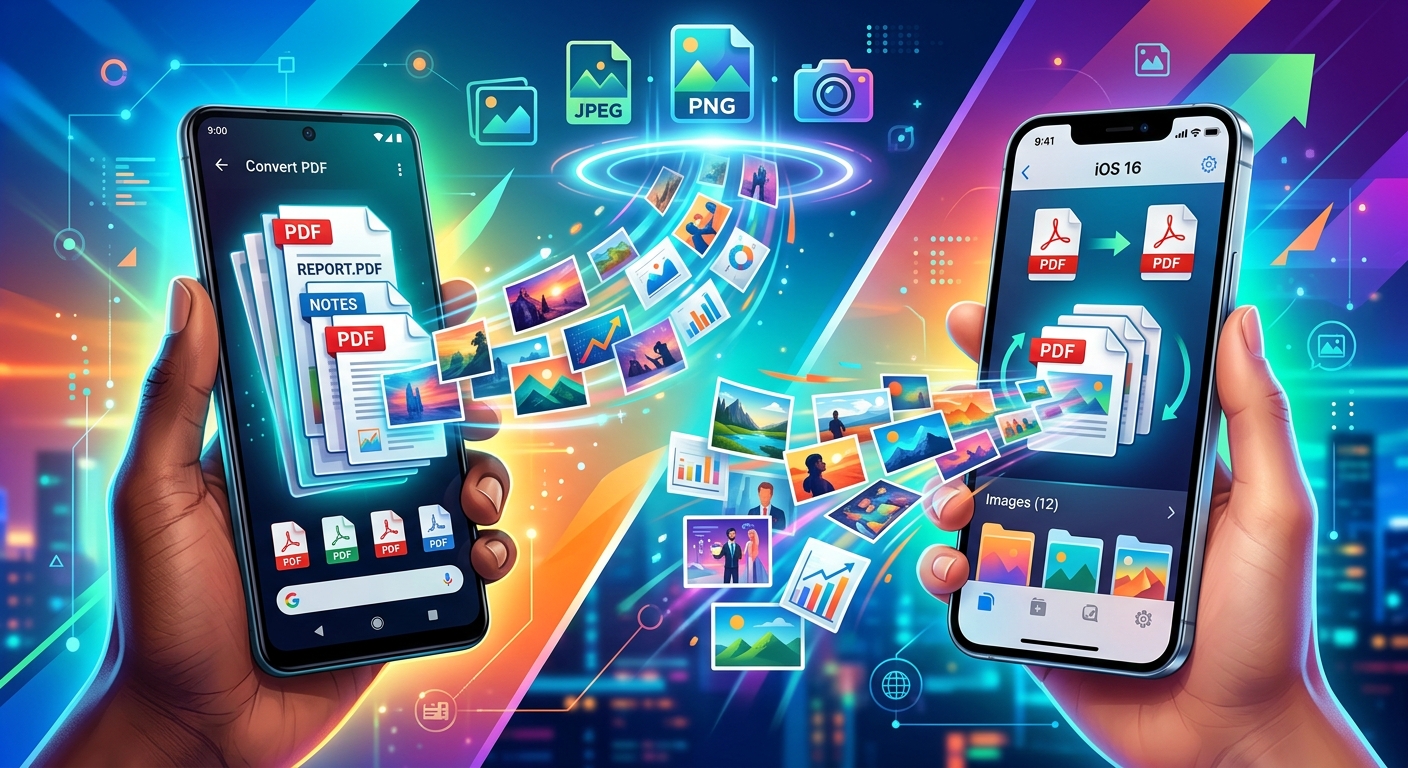
On iOS, background app refresh can be switched off entirely. When it is off, your app only pulls fresh data when you physically open it. If you glance at the score widget on your lock screen a minute after a goal, you might still see the old number because the app was never given permission to fetch the updated one.
Android adds another layer of complexity. Manufacturers like Samsung, OnePlus, and Xiaomi apply their own battery optimization systems on top of Android's native behavior. Those systems can restrict background activity aggressively, especially for apps you have not opened recently. An app that refreshes cleanly on a stock Google Pixel might update sluggishly on a budget device with heavy power-saving defaults baked in by the manufacturer.
That gap in background behavior is one of the main reasons that understanding live scores delayed gets more complicated the deeper you look. The delay is not just about the data itself. It is also about whether your phone was even allowed to go fetch it in the first place.
The Data Provider Chain Behind Every Sports App
Every sports app has a contract with a data provider. These companies collect statistics from leagues and competitions and sell access to their feed. The biggest players in this space include Sportradar, Stats Perform, and Genius Sports. Each has its own collection methods, verification layers, and distribution speeds.
Some apps pay for a premium tier that updates in near real time. Others license a cheaper feed that refreshes a bit less often. The difference between the two might be ten seconds on a quiet Tuesday night match. During the final minute of a playoff game with millions of simultaneous data requests, that difference can stretch further.
Verification adds its own timing layer. Before a data company pushes a score update downstream, it typically runs a check to confirm the event is not a duplicate or a processing error. That check is usually fast. During peak moments when the pipeline is under maximum load, it can introduce an extra pause before your app ever receives the number at all.
How iOS and Android Handle Score Freshness Differently
The difference between iPhone and Android in this context is less about which platform is faster and more about how each one decides when background activity is allowed to happen at all.
iOS uses a machine learning approach. It observes when you typically open each app and pre-fetches data just before that window. This is clever design. It is also unpredictable during a live game when your usage pattern breaks from the norm. You might check your sports app every thirty seconds during an exciting match, and iOS might not have prepared for that frequency based on your past behavior.
Android gives apps more flexibility by default. With the right permissions, an app can maintain a persistent connection and receive data the instant it arrives from the server. The catch is fragmentation. The behavior Google allows at the system level can be quietly overridden by a phone maker's battery manager, sometimes without any visible setting for the user to change.
Apple publishes detailed guidance on background task scheduling for developers who want to build apps that update reliably, but those guidelines are advisory. The system still has final say on timing.
How to Pick the Most Reliable Sports App for Your Phone
Once you understand what causes the discrepancy, you can make smarter choices about which app to trust and how to set up your phone for the best results. Work through the following steps in order.
- Identify the data provider. Check the app's about section, help page, or official website for mentions of their statistics partner. Apps that license from Sportradar or Stats Perform are typically connected to faster, more accurate official feeds with tighter update windows.
- Turn on background app refresh. On iOS, open Settings, tap General, then Background App Refresh, and confirm your sports apps are enabled. On Android, go into each app's battery usage settings and set it to "Unrestricted" rather than "Optimized" or "Restricted."
- Disable notification batching on Android. Some Android manufacturers group alerts and deliver them in bunches to save battery. Check your phone's notification settings and turn off batching for any app where exact timing matters to you.
- Prefer apps that use live connections. Apps that maintain a persistent WebSocket connection rather than checking periodically are faster by design. Major broadcaster apps and some dedicated sports platforms use this approach. Tech reviews of specific apps will sometimes flag this as a selling point.
- Run two apps side by side during a live game. Test your top two contenders simultaneously for a few minutes. You will see which one delivers updates first on your specific phone and your specific network. No review article can replicate that real-world test for your exact device.
- Open the app rather than reading the widget. Lock-screen and home-screen widgets update on their own schedule, which is almost always slower than the full app. During tight moments, open the app directly for the freshest number available.
Your Network Connection Matters More Than You Think
A fast app on a weak signal will always lag behind a slower app on a strong connection. If you are sitting in a stadium with 60,000 other fans, every single one of them is competing for bandwidth on the same nearby towers. Score updates will be slow for everyone in that crowd, regardless of which app they use.
Stadium Wi-Fi can help in theory, but those networks are also overwhelmed at the exact moments a score changes, which is when everyone reaches for their phone at once. One test worth trying: toggle airplane mode off and back on before a big moment in a game. This forces your phone to reconnect and often clears a backlog of queued notifications that were waiting to deliver.
Being aware of your signal strength is practical. If you are consistently getting scores later than others around you, the issue may be your network rather than your choice of app.
The Score Gap Is a Feature of How Live Data Works, Not a Bug
The infrastructure behind live sports data was built for reliability and global scale, not for perfectly synchronized delivery across every device on earth at the same millisecond. That is an engineering trade-off baked into the system at every layer, from the venue's network all the way to your notification tray.
What you can control is how close you get to the front of that delay. Choosing an app with a premium data feed, enabling background refresh, letting push notifications through without batching, and staying on a strong network will put you as close to real time as consumer technology currently allows.
The next time your score is different from the person sitting next to you, you will know it is not anyone's fault. It is just the long, complicated road that every goal, basket, and touchdown has to travel before it lands in your pocket.