




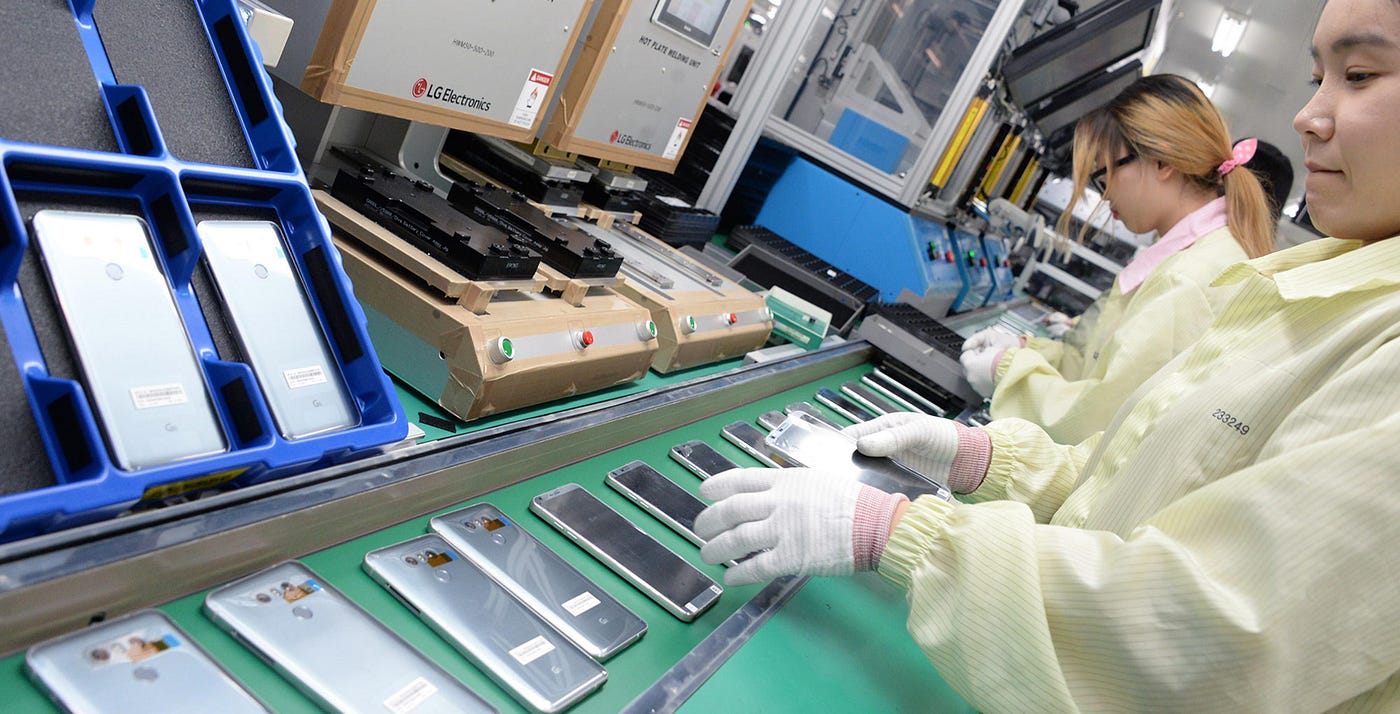
If you’re wondering where are cell phones made, they are primarily assembled in East and Southeast Asian countries, with China, India, and Vietnam serving as the major manufacturing hubs for the world's most popular brands. While components are sourced from over 40 countries globally, the final assembly of devices you use every day is concentrated in a handful of nations, a reality that shapes everything from device cost to availability, making this knowledge essential for understanding your own cell phone facts and usage.
Where are cell phones made: the global picture
The global cell phone manufacturing industry is concentrated in East and Southeast Asia. China remains the dominant force, but India and Vietnam have rapidly grown into critical production centers. Components for these devices travel a complex global supply chain, originating from over 40 countries including Taiwan, South Korea, Japan, Germany, and the United States. A common misconception is that mainstream smartphones like the iPhone or Google Pixel are fully made in the USA; while design and research and development occur in the US, the physical assembly of nearly all mass-market devices takes place overseas, driven by scalability and cost-efficiency.
Where are iPhones made?
Apple iPhones are designed in California but are primarily assembled in China by manufacturing partners like Foxconn and Pegatron. Foxconn's Zhengzhou factory in China, sometimes called "iPhone City," is a significant assembly site capable of producing up to 500,000 iPhones daily. Apple has been increasing iPhone assembly in India through partners including Foxconn, Pegatron, and the Tata Group, with roughly one in four iPhones now assembled there. Some lower-tier iPhones are assembled by Foxconn in Brazil to avoid high import fees. Apple conducts regular assessments (756 in 30 countries in 2017) to ensure its suppliers adhere to the company's high standards.
iPhone components are sourced from a global network. Apple's A-series chips (Apple Silicon) are designed in California but manufactured by TSMC in Taiwan. Displays come from companies like Samsung and LG Display, based in South Korea and Japan. Other parts originate from various countries, including the U.S. (Corning for glass), South Korea, Japan, Germany (e.g., Bosch Sensortech), Thailand, Malaysia, the Czech Republic, Singapore, and the Philippines. Apple publishes an annual Supplier Progress Report detailing efforts to improve working conditions and ensure responsible sourcing. All iPhone final assembly sites globally have achieved zero waste to landfill certification, and Apple has committed to achieving carbon neutrality across its entire footprint, including supply chain emissions, by 2030.
Where are Samsung Galaxy phones made?
Samsung closed its last smartphone factories in China in 2019 and now manufactures the majority of its Galaxy devices in Vietnam and India. The company also operates manufacturing facilities in South Korea, Brazil, and Indonesia, mainly for local or regional markets and component production. This shift reflects a strategic move to diversify production away from China while maintaining proximity to key consumer markets and leveraging established supply chains.
Where are Google Pixel phones made?
Google Pixel phones are designed in the United States but are manufactured in China, Vietnam, and India. Google is actively shifting the bulk of Pixel phone production and development out of China to Vietnam and India due to geopolitical factors and tariffs. This ongoing transition aims to reduce supply chain risk and align with changing trade policies.
Where are Xiaomi and Huawei phones made?
Xiaomi and Redmi phones are primarily manufactured in China, with significant assembly operations in India. Xiaomi also has some assembly operations in Indonesia, Vietnam, and Brazil to meet local market demands and regulations. Huawei, a Chinese multinational technology corporation, primarily manufactures its smartphones in China.
The major contract manufacturers behind your phone
Major contract manufacturers like Foxconn (Hon Hai Precision Industry), Pegatron, and Wistron are responsible for assembling many popular cell phone brands. Wistron was a major contract manufacturer alongside Foxconn and Pegatron for popular cell phone brands. Foxconn, a Taiwanese company, has its largest factory in Zhengzhou, China, and also operates facilities in India, Brazil, Vietnam, Europe, Mexico, and the United States. Pegatron, headquartered in Taiwan, has manufacturing plants in Taiwan, China, Indonesia, Vietnam, India, the Czech Republic, and Mexico, and opened its first US manufacturing facility in Georgetown, Texas, in late 2025. Wistron, a Taiwanese electronics manufacturer, has facilities in Taiwan, Vietnam, China, Malaysia, Mexico, and the Czech Republic, and opened a smart manufacturing facility in Fort Worth, Texas, in 2026.
Why cell phones are made where they are
The concentration of cell phone manufacturing in East and Southeast Asia is driven by several key factors. Lower labor costs make mass assembly economically viable. Established supply chains, built over decades, provide access to every required component from processors to glass. Favorable government policies, including tax incentives and special economic zones, attract manufacturers. Finally, proximity to major consumer markets in Asia and the ability to ship efficiently to the rest of the world keeps logistics costs manageable.
Frequently Asked Questions
Are any cell phones actually made in the United States?
While no major smartphone brand fully assembles its flagship devices in the US, some contract manufacturers like Pegatron and Wistron have opened facilities in Texas. Apple also has an Advanced Manufacturing Center in Houston, which is set to begin manufacturing Mac mini products. However, the physical assembly of iPhones, Pixels, and Galaxy phones remains overwhelmingly overseas.
Why does Apple assemble iPhones in China instead of the US?
China offers a combination of massive manufacturing infrastructure, a skilled workforce, and a deeply integrated supply chain that allows Apple to produce iPhones at the scale and speed required for global demand. The cost and logistical challenges of replicating this ecosystem in the US are currently prohibitive for mass-market devices.
Does Samsung make its own phone components?
Yes, Samsung is unique among major smartphone brands because it manufactures many of its own components, including displays, memory chips, and processors, through its various divisions. This vertical integration gives Samsung significant control over its supply chain and production costs.
Is it true that some iPhones are made in India?
Yes. Apple has been steadily increasing iPhone assembly in India through partners like Foxconn, Pegatron, and the Tata Group. India now accounts for approximately one in four iPhones produced globally, serving both the domestic Indian market and export markets.
How many countries supply components for a single smartphone?
A single smartphone can contain components from over 40 countries. For example, the processor might come from Taiwan, the display from South Korea, the camera sensors from Japan, the glass from the United States, and the sensors from Germany, all before final assembly in China, India, or Vietnam.