



The practical reality is that the extra thickness and any metal in the PopSocket can interfere with the electromagnetic field, so charging may be slow or may not work at all depending on your specific phone wireless charging setup and the PopSocket's design.
Can you use a wireless charger with a PopSocket?
The direct, honest answer is that no official compatibility is documented between PopSockets and wireless chargers. If the PopSocket contains metal components or magnetic materials, it can disrupt the electromagnetic field entirely. Most standard PopSockets are made without metal, but the added thickness alone is often enough to prevent reliable charging.
Why a PopSocket might block wireless charging
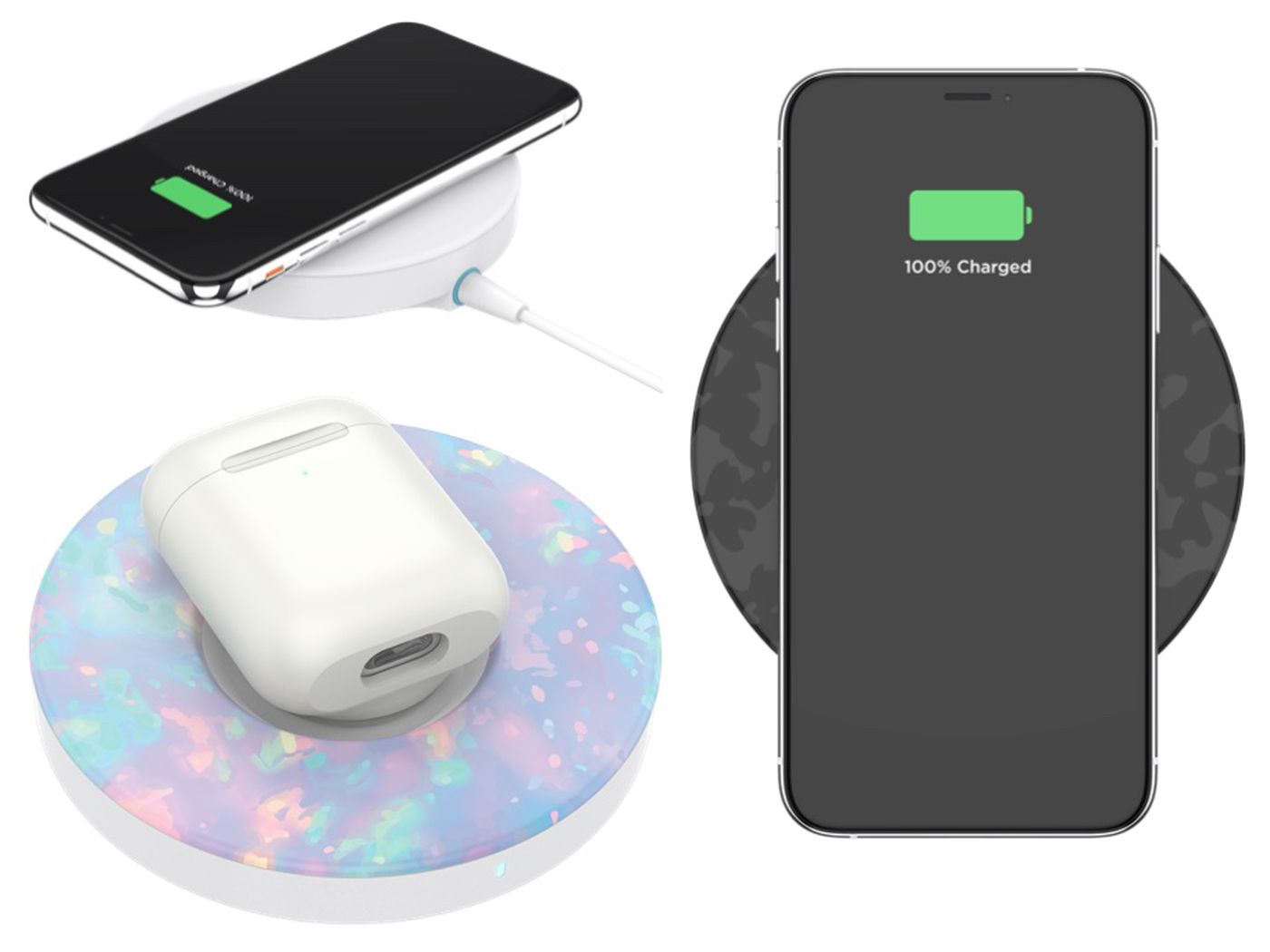
The physics of the problem is straightforward. Wireless charging relies on a tight electromagnetic connection between two coils, one in the charger and one in your phone. A PopSocket creates extra distance between these coils, weakening the energy transfer. If the PopSocket has any metal (such as a metal grip or decorative plate), it can interfere with the magnetic field and stop charging altogether. This is why Apple's official MagSafe setup instructions specify keeping the charging surface clear of metal objects or other foreign material. PopSocket adhesive is reusable and washable, allowing removal, cleaning, and repositioning without losing stickiness.
How to position your phone for the best chance of charging
- Place your phone on the wireless charger so the PopSocket is off-center, preferably near the bottom edge of the phone.
- If charging does not start, slide the phone slightly to find the sweet spot where the coil alignment is best.
- Remove any thick case, as the combination of a case and a PopSocket adds too much distance for reliable charging.
- Allow adhesive to set for a few hours after attaching Popsocket before use.
- Remove Popsocket when charging vertically for stronger connection and faster charging.
- Some wireless chargers have a built-in stand or raised charging pad designed to accommodate Popsockets.
Apple's official MagSafe charger setup
For iPhone users with a compatible model, Apple documents a specific setup for the MagSafe Charger. Connect the USB-C connector to a recommended 30W or greater Apple USB-C power adapter or a compatible third-party USB-C adapter, or to a USB-C port on a Mac or PC. Place the charger face up on a flat surface clear of metal objects or other foreign material. Then place the iPhone on the charger. The MagSafe Charger can deliver up to 25W of peak wireless power, and the fastest charging applies to iPhone 12, iPhone 13, iPhone 14, iPhone 15, iPhone 16, iPhone 17, iPhone 17 Pro, iPhone 17 Pro Max, iPhone 17e, iPhone Air, and iPhone 18 Pro/Pro Max models.
What to do when wireless charging fails with a PopSocket
If your phone does not charge wirelessly with a PopSocket attached, try these troubleshooting steps in order:
- Remove the PopSocket entirely and try charging again to confirm the PopSocket was the cause.
- Take off any phone case, especially thick or rugged cases, which add more distance between coils.
- Switch to a wired cable as a reliable alternative, this bypasses all alignment and interference issues.
- Monitor phone temperature while wireless charging with Popsocket attached, as trapped heat can affect charging efficiency or damage device.
- Keep charger and phone back clean, including area where Popsocket attaches, as dust and debris can disrupt charging.
- Take breaks from wireless charging with Popsocket attached; occasionally use wired cable instead.
Frequently Asked Questions
Can you use a wireless charger with a PopSocket?
It depends on your phone's support for wireless charging and the PopSocket's thickness and materials. Some Popsocket manufacturers offer wireless charging-friendly options with thinner profile or removable base.
How do you use a wireless charger on iPhone?
Connect the MagSafe Charger to a 30W-or-greater USB-C adapter, place it face up on a flat surface, and set the iPhone on it. The iPhone must be a compatible model (iPhone 12 or newer) for MagSafe charging.
How do you turn on wireless charging on Android?
Most Android phones with Qi wireless charging work automatically when placed on a compatible charger.
Is it & is your phone qi-enabled?
Qi Charging: What It Is & Is Your Phone Qi-Enabled is a key question. A phone must support Qi or Qi2 wireless charging to work on a standard wireless charger. Apple documents Qi-certified charging on iPhone, and Android phones that support wireless charging also use Qi. Check your phone's specifications to confirm.
Which is faster wireless charging or wired?
Which Is Faster Wireless Charging Or Wired depends on your device. Wired charging is generally faster because it delivers power directly without the efficiency losses of electromagnetic transfer. Wireless charging, even at peak 25W on MagSafe, is typically slower than a wired connection.