




Check what sensors your phone actually has
Before you trust a compass app or a motion-controlled game, run a phone sensor check to confirm your device actually contains the required hardware. However, the component is frequently absent from budget handsets, which is why you would want to read about budget phones with a gyroscope to avoid buying a model that can’t support AR or VR experiences. On Android, the most reliable test is to install a sensor-checking app that queries the system directly. If the device lacks the physical part, Google’s APIs simply report that gyroscope-based motion sensors are not available. OnePlus includes the gyroscope and proximity sensor on the Nord, Nord N10 5G, and Nord CE5, so owners of those phones can step into VR or augmented-reality apps without worry. If you need to enable proximity sensor in OnePlus Nord and notice the screen stays lit during calls. On iPhone, open a motion-aware app. Apple’s Core Motion framework will either deliver data or remain silent, signalling that the gyroscope is absent on that model.
Measure your environment
Your phone lacks a dedicated thermometer, and there is no built-in way to check temperature with phone hardware because the heat that rises whenever you charge or use the processor heavily will drift far from the actual air around you. Apple itself states the iPhone is only designed to operate in ambient temperatures between 0°C and 35°C, and a temperature warning screen appears if the device itself gets too warm. Sound measurement follows a similar pattern of approximation, and there is no built-in way to measure decibels on iPhone. For altitude, the hardware is more direct. When you want to check elevation on iPhone, open the Measure app inside the Utilities folder, tap Level, and hold iPhone against an object until the screen turns green, though Apple says the level readings are approximate. No official Android support page documents native environmental gauges here, and the same cautions about missing sensors and rough estimates apply across platforms.
Measure distance, direction, and vehicle data
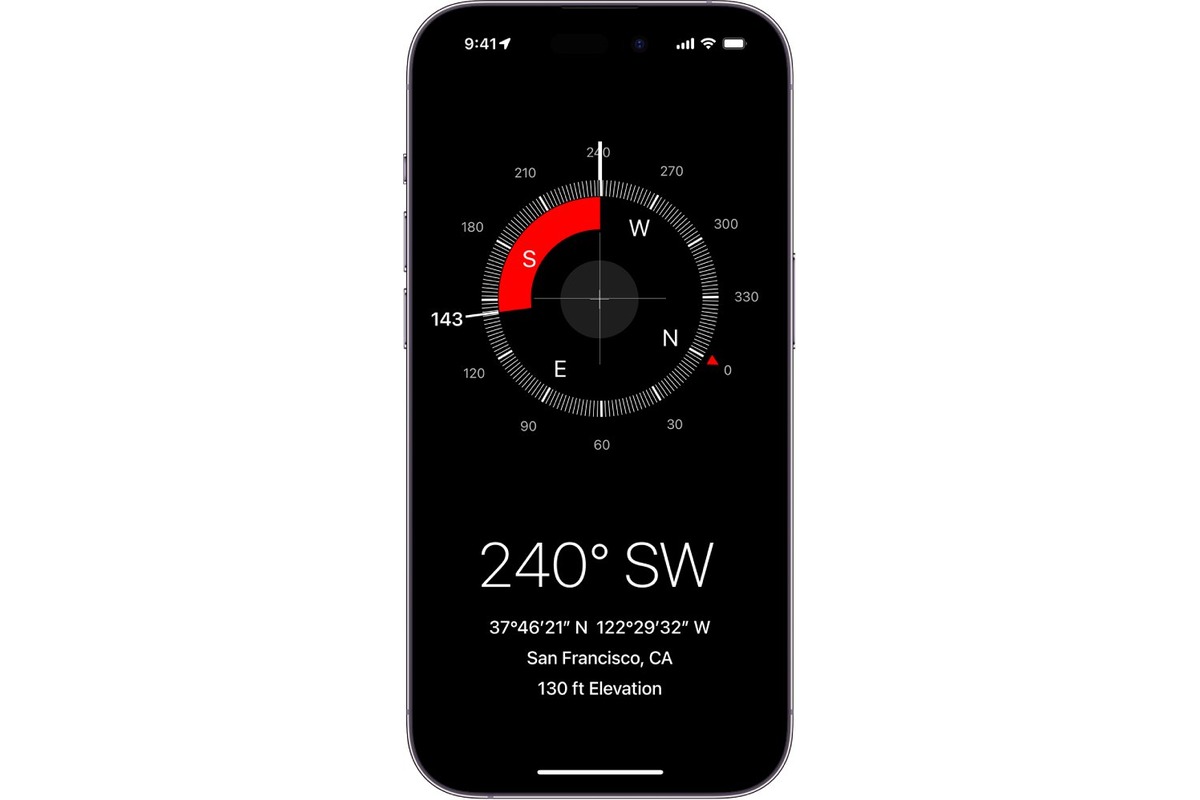
When you need a practical bearing, open the Compass app on iPhone and hold the device flat so the crosshairs align at the center of the dial; the screen then shows direction, coordinates, and elevation provided location services are turned on. Swipe left to use the compass and level app as a digital bubble level for checking if a shelf or picture frame is straight. For longer outdoor distances, fitness apps let you measure a mile on your phone by sampling GPS coordinates as you move, though tree cover and tall buildings will degrade the track. Similarly, you can measure 100 meters with your phone using the same satellite-based method, which works best in open areas away from reflective glass. In a vehicle, the phone becomes a different kind of window when you read live data on a scan tool: a Bluetooth adapter plugged into the OBD-II port broadcasts engine RPM, coolant temperature, and fault codes to a dashboard app on the screen. And while it is not a measurement, the practical reality of carrying a device everywhere means you sometimes need to get phone past metal detector at a venue entrance, which comes down to understanding that the handset itself is a slab of conductive material and battery that any calibrated security arch will flag immediately.
Frequently Asked Questions
Does the OnePlus Nord N10 5G have a barometer sensor?
Yes, OnePlus lists a barometer sensor on the Nord N10 5G specs page alongside the gyroscope and proximity sensor. The other Nord models covered here do not document a barometer in their official specs.
What is the iPhone operating temperature range?
Apple states the iPhone is designed to work in ambient temperatures between 0°C and 35°C (32°F to 95°F). If the device exceeds normal operating temperatures it may stop charging, dim the screen, show a temperature warning, and close some apps.
How do I check if my Android phone has a gyroscope in code?
Use SensorManager.getDefaultSensor(Sensor.TYPE_GYROSCOPE) to query the sensor directly. Google says that if a device lacks the physical gyroscope, gyroscope-based motion sensors do not show up and are not available for use.
How do I use the level tool in the iPhone Compass app?
Open the Compass app and swipe left to reach the digital bubble level. Hold iPhone against an object and rotate both until the screen turns green, though Apple notes the level readings are approximate.
What sensors does the OnePlus Nord CE5 include?
OnePlus lists a gyroscope and a proximity sensor on the Nord CE5 specs page. Owners of that model can use VR or augmented-reality apps without worry about missing motion hardware.