




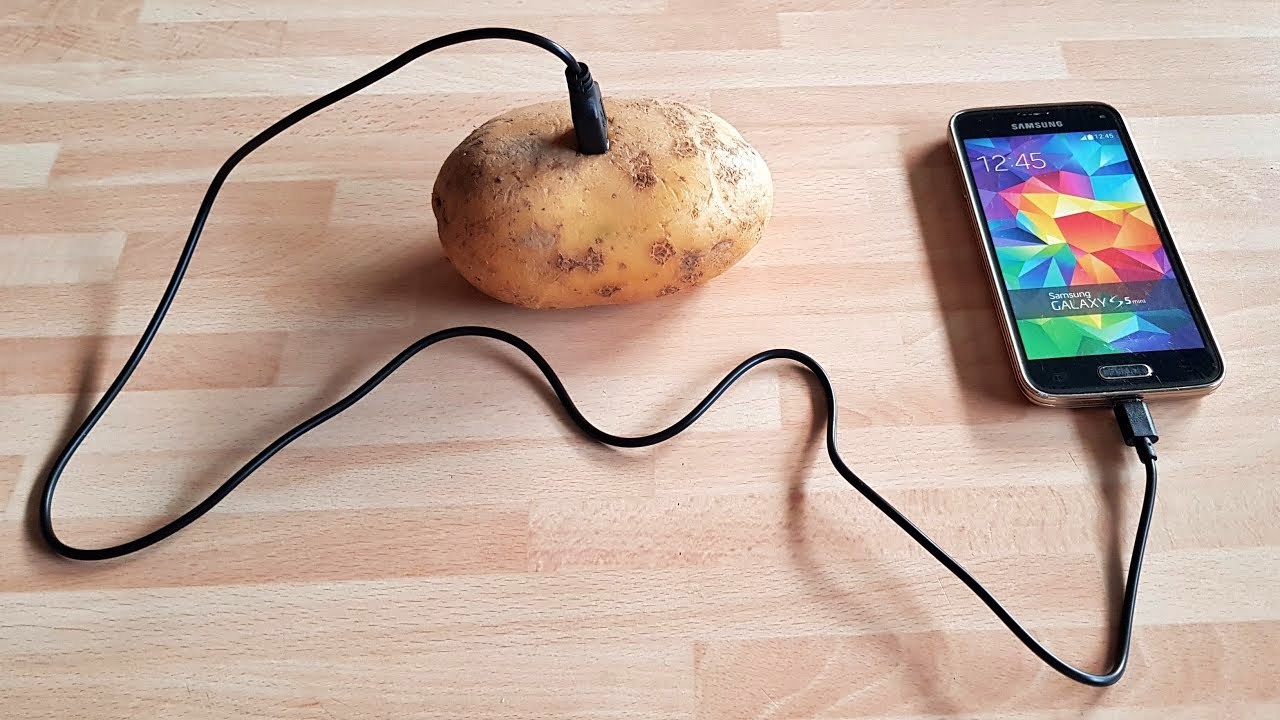
You cannot charge a modern smartphone with a potato, but the classic potato battery experiment is a real and educational way to demonstrate basic electrochemistry. While the science is sound, the tiny voltage and milliwatts of power a potato produces are far below what any phone needs to even begin charging.
Can you really charge a phone with a potato?
The honest answer is no, not in any practical sense. A potato battery generates a very small electric current, but a modern smartphone requires a stable power supply of at least 15 watts (via USB Power Delivery) to trigger its charging circuits. The potato experiment is real, but it is a science demonstration, not a genuine off-grid charging solution.
The science behind the potato battery
A potato acts as an electrolyte, a medium that allows ions to move between two different metal electrodes. When you insert a copper electrode (positive) and a zinc electrode (negative) into the potato, a chemical reaction occurs. The potato’s acidic and phosphate-rich interior facilitates the transfer of electrons from the zinc to the copper, creating a simple electrochemical cell. This produces a tiny voltage, typically less than one volt per potato, which is enough to power a small LED or digital clock, but nowhere near enough to charge a phone.
What you need for the potato battery experiment
- A fresh potato (firm, not sprouting or rotting). Use a regular Idaho potato or a Russet potato, as they have a higher starch content which facilitates the flow of electric current.
- A copper coin or a piece of copper wire
- A galvanized nail (zinc-coated)
- Two alligator clip wires
- A USB cable (for demonstration purposes only)
How to set up the potato battery step by step
Follow these steps as a science experiment, not as a method to actually charge your phone. Your phone will not receive a meaningful charge.
- Insert the galvanized nail into one side of the potato, deep enough to contact the flesh.
- Insert the copper coin or wire into the opposite side of the potato, ensuring it does not touch the nail.
- Attach one alligator clip to the copper electrode and the other end to the positive terminal of your USB cable.
- Attach the second alligator clip to the nail and the other end to the negative terminal of the USB cable.
- Plug the USB cable into your phone (phone should be off to avoid any erratic behavior).
- Monitor the phone, you may see a brief flicker or a “not charging” indicator, but no actual battery gain.
- When finished, disconnect the clips and dispose of the potato.
Why a potato cannot actually charge your phone
Modern phones require specific power standards to begin charging. For example, Pixel phones need a USB Power Delivery adapter rated for 15W or more, and Samsung Galaxy devices require a 25W or 45W adapter for Super fast charging. iPhones from iPhone 8 onward can fast charge with an 18W or greater USB-C Power Adapter. A potato battery produces milliwatts, thousands of times less power than even the slowest wall charger. The phone’s charging controller simply will not activate at such low voltage and current. Additionally, phones rely on stable, regulated power; a potato’s output fluctuates and drops quickly as the chemical reaction depletes. Do not expect full charge; this method can be useful in emergency situations, but it is not a long-term solution.
What actually works for emergency phone charging
If you need to charge your phone without a wall outlet, use a portable power bank, a car charger, or a solar charger. For Pixel users, Extreme Charging Mode is available on Pixel 11 and later devices, it activates when the battery is 50% or lower and can be turned on from Quick Settings, battery settings, or the lock screen. Samsung Galaxy users can enable Fast charging or Fast wireless charging in Settings > Battery > Charging settings. Understanding your phone charger types and cables is essential: Pixel phones charge via USB-C to USB-C or USB-A to USB-C (slower), iPhones 15 and later use USB-C, and earlier iPhones use Lightning. For wireless charging, note that wireless charger charging times vary, older Qi1.x chargers deliver up to 5W, while Qi2-certified chargers like the Pixelsnap Charger offer faster speeds. A wall outlet is always the most reliable source. Fast charging may not work in extremely cold or hot conditions. Wireless charging uses magnetic induction, so avoid placing anything between the iPhone and the charger, as this can reduce performance or damage magnetic strips or RFID chips. For iPhone 17, 17 Pro, and 17 Pro Max, a 40W adapter or higher can charge up to 50% in around 20 minutes. Wireless fast charging for iPhone 16 or later requires a MagSafe Charger and an Apple 30W or greater USB-C Power Adapter, or a comparable third-party USB-C power adapter that supports USB Power Delivery (USB-PD). Pixel 10 and later devices support Qi2, a magnetic charging technology, and won't charge wirelessly with Pixel Stand 1st or 2nd gen. Charging optimization can be enabled to make the battery last longer by learning charging habits or limiting charging to 80%. To turn on Charging optimization: Open Settings, tap 'Battery,' 'Battery health,' 'Charging optimization,' then 'Use charging optimization.' Wireless PowerShare allows compatible Galaxy phones to charge other devices like smartwatches or earbuds by placing them on the Galaxy phone. For optimal charging speed and safety, use original Samsung travel adapters and USB cables.
Frequently Asked Questions
How many potatoes would it take to charge a phone?
In theory, you would need hundreds of potatoes wired in series and parallel to reach the voltage and current a phone requires. Even then, the arrangement would be impractical, bulky, and the chemical reaction would deplete quickly.
Does any fruit work better than a potato?
Lemons and other citrus fruits can produce slightly higher voltage due to their higher acidity, but the difference is marginal. No fruit or vegetable produces enough power to charge a modern phone.
Can I use a potato battery to charge a small device like an LED light?
Yes. A single potato battery can power a small LED or a low-power digital clock. That is a classic science fair project and works well as a demonstration of electrochemical cells.
Will adding salt to the potato improve the charge?
Salt can increase conductivity temporarily, but it also corrodes the electrodes quickly and may damage your phone if any salt solution reaches the charging port. It is not recommended.
Is it safe to plug a potato battery into my phone?
There is a small risk of voltage spikes or unstable current that could confuse the phone’s charging circuitry. It is safer to use a multimeter to measure the output before connecting anything to your phone, and never leave the setup unattended.
For the wider topic, see phone charger types and cables.