




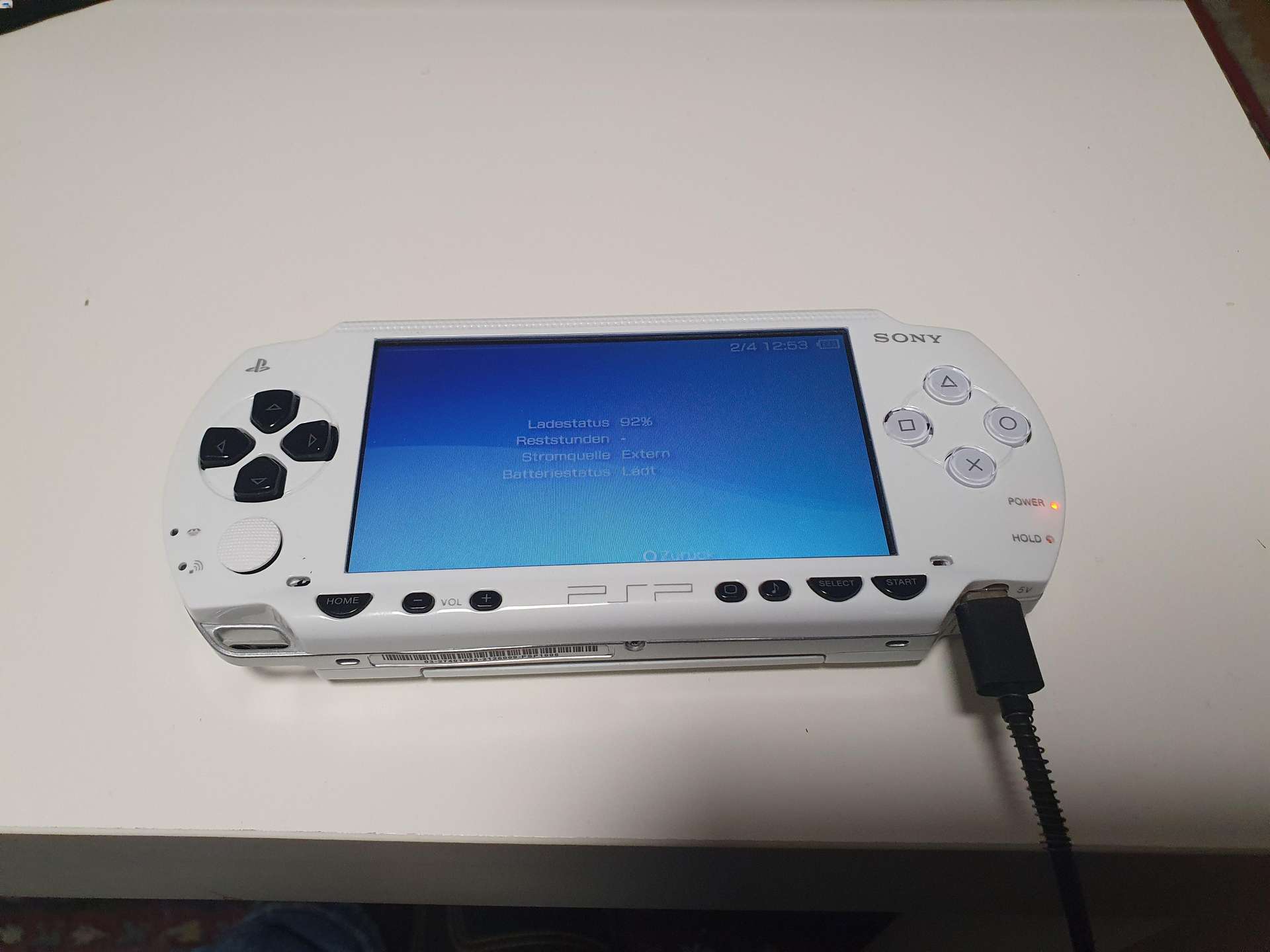
Yes, you can charge a PSP with a phone charger, but only if the charger supplies power through a USB cable to the PSP’s USB port or compatible connector. Sony’s manuals confirm the PSP begins charging when it is turned on and connected to a device with a USB connector, and the POWER indicator lights orange while “[USB Mode]” appears on screen.
What you need to charge your PSP via USB
To charge a PSP with a phone charger, you need three items: a PSP system (supported models include PSP-E1002/E1003, PSP-3004, and PSP Go), a phone charger with a USB output that provides a high-power USB port, and a compatible USB cable. The PSP typically operates at a voltage of 5V, so make sure the phone charger you are using also outputs 5V. Additionally, check the amperage rating of the phone charger. The PSP usually requires a charging current of around 1A, so ensure that the phone charger can provide at least that amount of current. Sony documents that the USB cable is sold separately on some PSP documentation pages, so you may need to buy one if you do not already own a cable that fits both the charger and the PSP.
Step-by-step guide to charging your PSP
- Turn on the PSP system. The PSP must be powered on for USB charging to start.
- Connect the USB cable to the PSP and the phone charger’s USB power output.
- Plug the phone charger into a wall outlet.
- Confirm the orange POWER light and “[USB Mode]” on the screen. The POWER indicator lights orange and the screen shows [USB Mode] during charging.
If needed, on supported PSP models you can select (Settings) > (USB Connection) to switch to USB mode manually.
Important charging limitations and tips
You cannot charge the PSP using a USB device while playing a game or performing other operations; use the AC adaptor in those situations. Sony’s manuals state that USB charging stops during gameplay, so the PSP must be idle for the battery to charge. Always use a high-power USB port rather than a low-power port or USB hub, as a low-power USB port may not charge the battery. Using a charger with higher voltage or current specifications can potentially damage your PSP or its battery. Using a low-quality or counterfeit charger may pose a risk of electrical hazards. If you notice any unusual behavior such as excessive heat or unusual sounds, unplug the charger immediately and seek professional assistance. After a full charge, unplug the PSP from the charger to protect the battery from overcharging, which can reduce battery lifespan. If you need to understand which chargers work best, consult a phone charger types and cable guide to match the correct output with your PSP’s requirements.
Frequently Asked Questions
Can I charge my PSP while playing games?
No. Use the AC adaptor if you need to play and charge at the same time. Charging and playing games at the same time may cause the PSP to heat up, so it's advisable to take breaks or reduce the gaming intensity to prevent overheating.
Why isn’t my PSP charging?
The most likely cause is a low-power USB port or USB hub that cannot deliver enough current. Sony’s manuals indicate the issue is usually the power source, not a menu setting on the phone. Ensure the charger provides a high-power USB port and that the PSP is turned on.
Can I use any phone charger to charge my PSP?
Does charging work on all PSP models?
Sony documents USB charging for PSP-E1002/E1003, PSP-3004, and PSP Go (PSP-N1004). Sony’s manuals do not provide a model-by-model compatibility matrix for every PSP revision, so check your specific model’s manual if you are unsure.
How do I know when my PSP is fully charged?
The orange POWER light and [USB Mode] on screen indicate charging is active. Once the battery is full, the light may turn off or change color depending on the model. Sony recommends unplugging the charger after a full charge to protect the battery.
For the wider topic, see phone charger types and cables.
Related reading: How To Tell If Phone Is Charging and How To Get Liquid Out Of Phone Charger.