




To change mobile data IP address, the documented method is to use a VPN, which routes your traffic through a VPN server so websites see that server's IP address instead of the one your carrier assigned. On an iPhone, you can add a VPN configuration manually in Settings, and on Android, Google Fi and Pixel devices document VPN setup under Privacy & security.
How to change mobile data IP address with a VPN
A VPN is the most documented way to change the public IP address your phone presents over mobile data. When you connect, your traffic is routed through a VPN server, and websites and services you visit see the VPN server's IP address rather than the carrier-assigned IP address. Apple states that a VPN can hide your IP address from websites and services you visit, and Google Fi says its VPN replaces your real IP address with a Google server IP address. This is what makes a VPN useful for bypassing geo-blocking or reducing IP-based tracking, but it does not change the IP address your carrier assigns at the network level.
Resetting network settings can cause a device to obtain a new IP address from the service provider, though it also removes saved Wi-Fi networks and Bluetooth connections.
Enabling Airplane Mode disconnects from the mobile network and can result in a new IP address upon reconnecting.
Restarting the device forces a network disconnect and can assign a new IP address when it reconnects.
Contacting the mobile service provider may be an option to request a new IP address or troubleshoot connectivity issues.
Using a proxy server acts as an intermediary and can make traffic appear from a different IP address, though it may not provide the same security as a VPN.
Change your IP address on iPhone
Apple documents manual VPN configuration for iOS, iPadOS, and visionOS devices. The setting path is:
- Open Settings.
- Go to General.
- Tap VPN & Device Management.
- Tap VPN.
- Select Add VPN Configuration.
After you add the configuration, your iPhone will route mobile data traffic through the VPN, and websites will see the VPN server's IP address instead of the one from your carrier.
Apple also documents a separate control for limiting IP address tracking on mobile data. This applies when iCloud Private Relay or IP masking is involved, and it is separate from the VPN configuration itself. The documented path is:
- Open Settings.
- Tap Mobile Data.
- Tap Mobile Data Options.
- Turn on Limit IP Address Tracking.
This setting is documented for iPhone and iPad, and it limits how websites track your IP address over mobile networks.
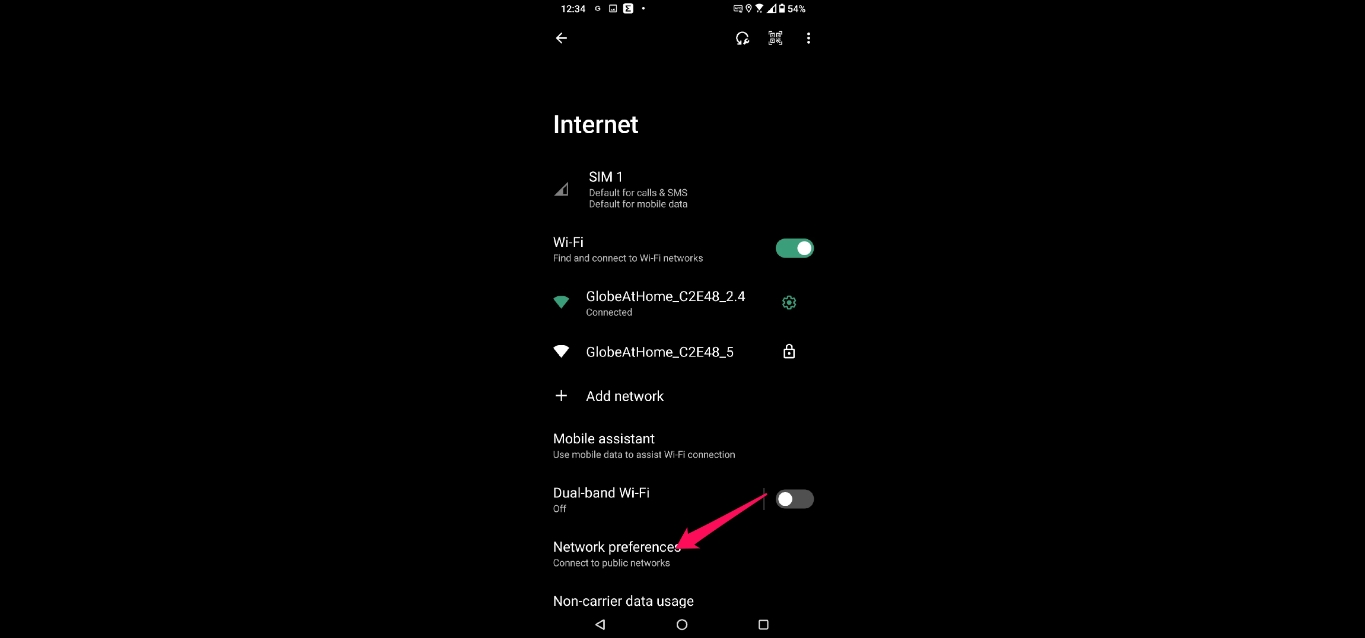
Change your IP address on Android
Google Fi's Android help documents VPN setup under the phone's Privacy & security settings. Google Fi's VPN page says the VPN prevents websites from using your IP address to find your location, and Google's Pixel support says VPN by Google routes traffic so your IP address is not associated with your account or identity. The documented path is:
- Open Phone settings.
- Go to Privacy & security.
- Enable the VPN option.
The documented steps are specific to Google Fi and Pixel support pages, so if you use a different Android device or carrier, check whether your provider offers a similar VPN feature in your phone's network settings.
What a VPN changes vs. your carrier IP
A VPN changes the IP address that websites and online services see, but it does not change the IP address your mobile carrier assigned to your connection at the network level. The VPN masks your carrier IP from the websites you visit, which is why it works for geo-blocking and privacy. If you turn off the VPN, Google Fi documents that the VPN-provided IP masking stops, and websites will again see your carrier-assigned IP address. Google Fi also notes that it retains traffic metadata like connection speed for 14 days, but not your online activity, which is separate from what the VPN itself changes.
Frequently Asked Questions
Can I change my IP without a VPN?
Not as a documented setting on mobile data. The documented methods for changing the IP address websites see over mobile data involve a VPN or IP-tracking controls, not a direct carrier-level IP change.
Does iPhone have a built-in VPN?
The Limit IP Address Tracking setting is separate and only limits tracking, not your visible IP address.
Will a VPN change my IP address on every website?
Yes, while the VPN is connected, websites and services you visit will see the VPN server's IP address instead of your carrier IP. The change applies to all traffic routed through the VPN.
Does changing my mobile data IP address affect my carrier-assigned IP?
No. A VPN changes what websites see, but your carrier still assigns the underlying IP address to your mobile data connection. The VPN masks it rather than replacing it at the carrier level.
Can a VPN change my IP address for specific apps only?
A VPN with split tunneling can change the IP address for specific apps only, routing selected app traffic through the VPN while leaving other traffic unaffected.
For the wider topic, see changing names and labels on mobile.