




To set up emergency contacts on iPhone, you add them through the Health app's Medical ID feature, which lets first responders or bystanders view them from your lock screen without unlocking your device. This ensures that in a medical emergency, someone can quickly reach your loved ones even if you cannot speak or unlock your phone, making it a vital part of your personal safety setup. Emergency services can also contact these individuals directly without unlocking your device.
How to set up emergency contacts on iPhone
Emergency contacts are managed entirely within the Medical ID section of the pre-installed Health app on your iPhone. This is not a separate settings screen; it is a digital medical card that can display your emergency contacts, medical conditions, and other critical information on the lock screen. Setting this up means that in an emergency, anyone can access your designated contacts and critical health details without needing your passcode, which is essential for getting you the right help quickly.
Step 1: Open the Health app
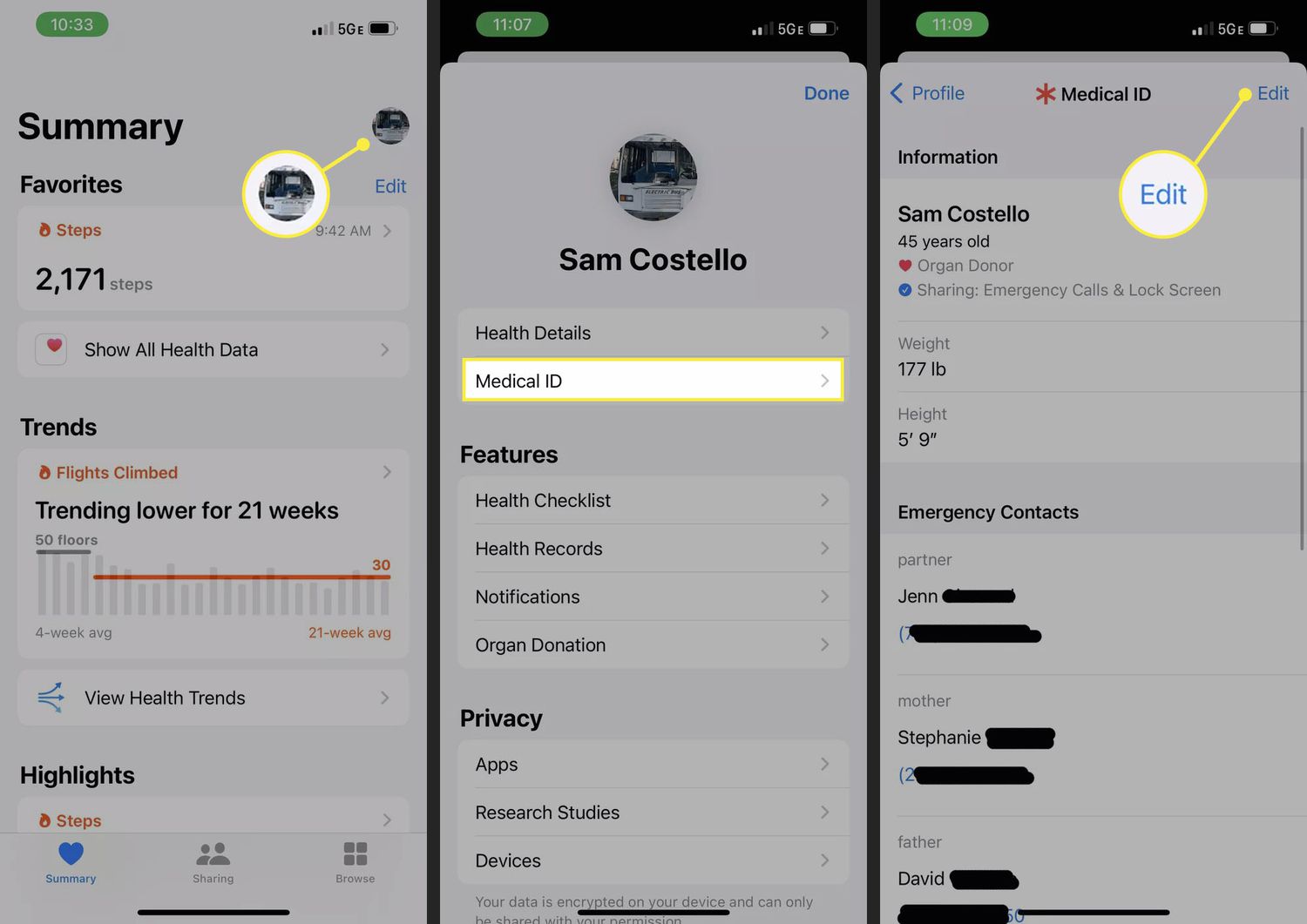
Begin by locating and launching the Health app on your iPhone. This app is pre-installed on all iPhones and is identified by a white icon with a red heart in the center. You can find it on your home screen or by swiping down and using the search function.
Step 2: Tap your profile picture and go to Medical ID
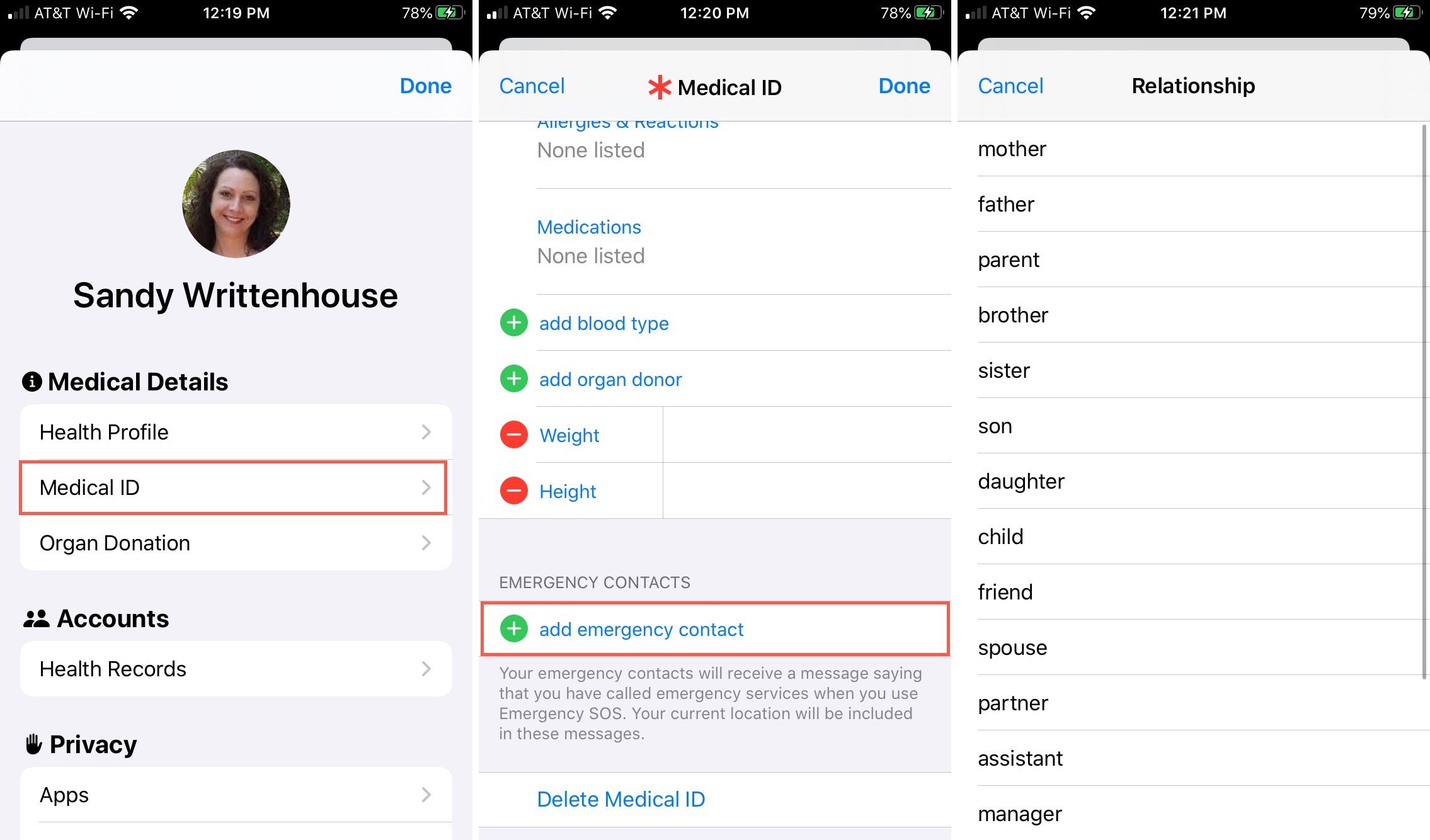
Once the Health app is open, tap your profile picture in the top-right corner of the screen. From the list of options that appears, select Medical ID to access the screen where you can manage your medical information and emergency contacts.
Step 3: Tap Edit and scroll to emergency contacts
On the Medical ID screen, tap the Edit button in the top-right corner. This will put the screen into edit mode, allowing you to make changes. Scroll down to find the Emergency Contacts section, where you can add, remove, or modify your listed contacts.
Step 4: Add an emergency contact and set their relationship
- In the Emergency Contacts section, tap Add Emergency Contact.
- Select a person from your address book, or tap Create New Contact to manually enter a contact's information.
- After selecting the contact, specify their relationship to you, such as spouse, parent, or sibling.
You can repeat this process to add multiple emergency contacts, as there is no documented limit to how many you can include.
Step 5: Tap Done to save your Medical ID
After you have added all desired emergency contacts and made any other changes to your Medical ID, tap Done in the top-right corner of the screen. This saves all your changes, ensuring your new emergency contacts are stored and available for use.
How to access emergency contacts from the lock screen
For emergency contacts to be visible on your lock screen, you must first ensure that Show When Locked is enabled in your Medical ID settings. This option is toggled on from the Medical ID edit screen. Once enabled, anyone can view your Medical ID without unlocking your phone by following these steps:
- Wake your iPhone by pressing the side button or lifting it.
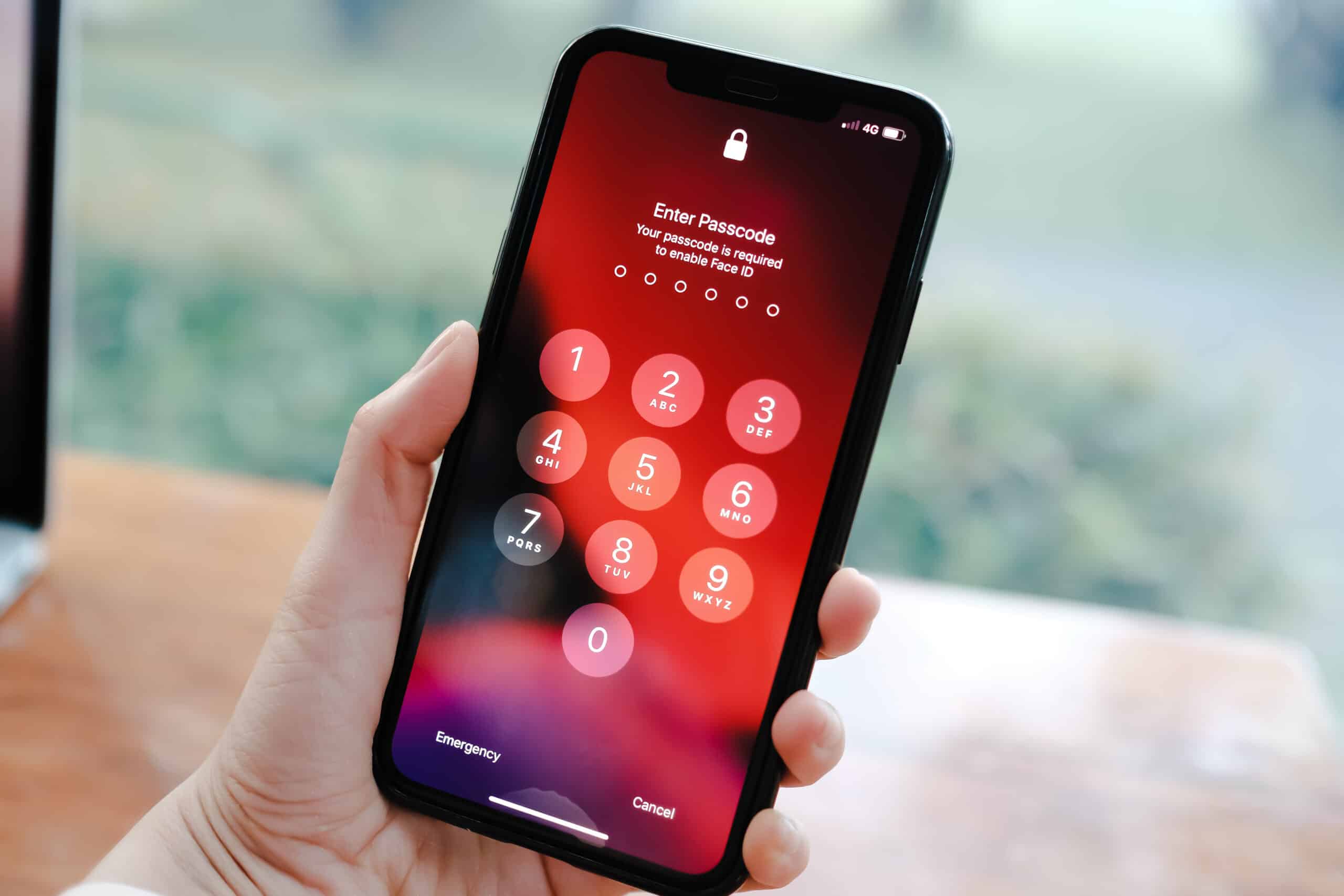
- Swipe up or press the Home button to get past the lock screen's main view. Alternatively, swipe right on the lock screen to reveal the passcode entry screen.
- Tap Emergency in the bottom-left corner.
- Tap Medical ID in the bottom-left corner of the emergency call screen.
This will display your Medical ID, including your emergency contacts, which can then be called directly from that screen.
How to manage and remove emergency contacts
To edit or delete existing emergency contacts, return to the Health app and navigate to your profile picture, then Medical ID, and tap Edit. To remove a contact, tap the red minus control next to their name and then confirm by tapping Delete. You can also swipe left on a contact's name and tap Delete. To change a contact's details, such as their relationship to you, tap on their name to edit the information. Remember to tap Done to save any changes you make.
What happens when you use Emergency SOS
When you use Emergency SOS and make a call to emergency services, your iPhone can automatically send a message to your emergency contacts after the call ends, unless you cancel it. This message includes your location and lets them know you are in an emergency. Note that automatic Medical ID sharing during an emergency call is limited to the U.S. and Canada. Additionally, if you are in an area without cellular or Wi-Fi coverage, Emergency SOS via satellite can share your Medical ID and notify your emergency contacts, but this feature must be set up in advance before you travel to such locations.
Frequently Asked Questions
Can I add multiple emergency contacts?
Yes, you can add multiple emergency contacts to your Medical ID. There is no documented maximum number of contacts you can add, so you can include as many family members or trusted friends as you wish.
Can I reorder my emergency contacts?
Yes, you can reorder your emergency contacts. In the Health app, go to Medical ID, tap Edit, and then drag the contacts up or down using the handle icon to set your preferred order.
Do emergency contacts need to be in my address book?
Yes, emergency contacts must be selected from your existing contacts in the Contacts app. You cannot type in a phone number manually; you must choose a person from your address book.
Are emergency contacts notified when I make an emergency call?
Emergency contacts are not automatically notified when you make an emergency call. They only receive a message with your location if you have enabled the 'Share During Emergency Call' feature.
How can I edit or remove emergency contacts on my iPhone?
To edit or remove emergency contacts, go to the Health app, tap your profile picture, select Medical ID, and tap Edit. You can remove a contact by tapping the red minus control and then Delete, or by swiping left on the contact's name and tapping Delete. Tap Done to save your changes.
For the wider topic, see phone numbers and calling help.
Related reading: How To Delete Emergency Contact On IPhone and How To Track Run On IPhone.