




This ranked comparison of the 10 best phone carriers helps you quickly find the right balance of network performance, plan flexibility, and value.
| Carrier | Network Used | Best For | Key Feature |
|---|---|---|---|
| AT&T | AT&T | Nationwide coverage and 5G performance | Coast-to-coast 5G with premium streaming perks |
| Consumer Cellular | AT&T and T-Mobile | Seniors and low-data users | AARP discounts and flexible, budget-friendly plans |
| Google Fi | T-Mobile and US Cellular | International travelers and light data users | Pay-for-what-you-use model with international texting and data |
| Metro by T-Mobile | T-Mobile | Budget unlimited plans | Affordable unlimited data with 5G access on T-Mobile's network |
| Mint Mobile | T-Mobile | Low-cost multi-month commitments | Low rates with a yearly commitment for the best price |
| T-Mobile | T-Mobile | Top all-rounder with fast speeds and extensive 5G | Wide variety of plans from budget prepaid to premium unlimited |
| US Mobile | T-Mobile and Verizon | Customizable, budget-friendly plans | Build your own talk, text, and data mix |
| Verizon | Verizon | Best-in-class reliability and speed | Premium streaming perks with Hulu, Disney+, and ESPN+ |
| Visible Wireless | Verizon | Simple, straightforward prepaid | Single unlimited plan on Verizon's network with capped data speeds |
| Xfinity Mobile | Verizon | Xfinity internet customers | Cost-saving bundling with home internet service |
Best phone carriers for coverage: AT&T
AT&T is one of the best phone carriers in the USA, offering far-reaching network coverage and continuously expanding 5G performance. Third-party firms have ranked it just behind T-Mobile in terms of 5G performance, and it covers coast-to-coast 5G with a reach similar to Verizon. However, AT&T's plans are not always competitive compared to rivals, its more affordable unlimited plans are not as strong as those from T-Mobile or Verizon, though each unlimited plan includes 5G at no extra cost. Family plans have become more flexible, allowing you to choose from different unlimited tiers.
2. Consumer Cellular
Consumer Cellular is the best phone carrier for budget-conscious shoppers, especially seniors, offering reasonably affordable plans if you don't need much data or talk time. You can change your monthly data allowance on the fly, and if you exceed your minutes or data, you are automatically upgraded to the next plan instead of paying overage charges. Consumer Cellular automatically upgrades you to the next plan tier instead of charging overage fees when you exceed monthly minutes or data. Consumer Cellular also allows you to lower your monthly cost by sharing a plan, and it offers discounts to AARP members. Consumer Cellular charges $20/month for the first additional line and $15/month for each line after that. Since it uses both AT&T and T-Mobile networks, you get extensive coverage and 5G performance overall.

3. Google Fi
Google Fi provides competitive plans for those who don't need much data, with a pay-for-what-you-use model that includes unlimited calls and texts for a low base rate plus a per-GB data charge. Google Fi's base plan costs $17 monthly for unlimited calls and texts, with data charged at $10 per GB used. It is a great option for frequent travelers because it offers the ability to text and access data from other countries, though this feature is lost on downgraded plans. To activate Google Fi on an iPhone using an eSIM, follow these steps:

- Connect to Wi-Fi.
- Sign into the Google Account tied to the phone number you want to use.
- Open the Google Fi app and follow the in-app instructions to set up the number and download an eSIM.
If you are using a physical SIM, you must order a SIM card, insert it, install the Google Fi app, and finish the setup prompts in the app.
4. Metro by T-Mobile
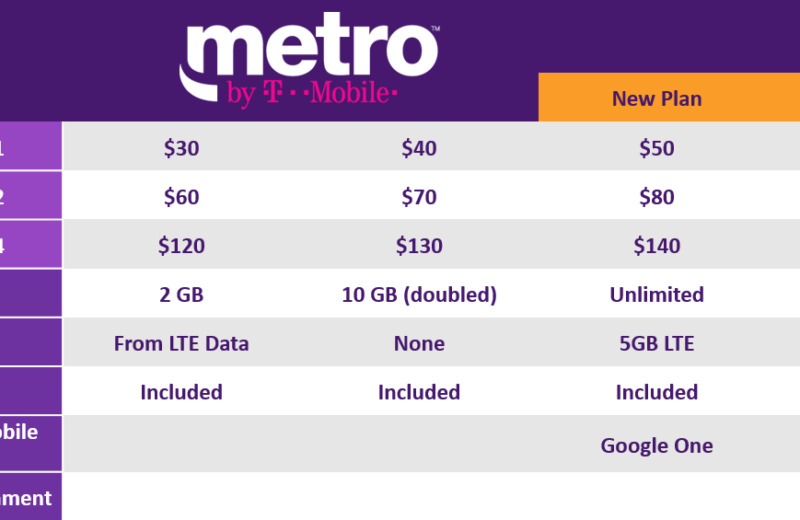
Metro by T-Mobile offers low-cost cell services with competitive unlimited plans that include free music streaming for over 40 services. Metro by T-Mobile's $40 plan includes 10 GB of data. It provides a good set of smartphone options with numerous discounts. However, Metro can slow your data service when the network is congested due to data deprioritization, though this rarely happens. Its prepaid plans are not always attractive compared to other carriers offering more data for the same price. Metro by T-Mobile's $50 and $60 plans offer individual benefits like a hotspot or Amazon Prime membership.
5. Mint Mobile
Mint Mobile is a budget-friendly carrier that requires a multi-month commitment to retain its low prices, making it a good option only if you are certain you will not break the contract. Mint Mobile's $15 monthly plan provides 4 GB of LTE data. Because Mint Mobile uses T-Mobile's network, you get fast and extensive coverage with 5G access if your plan and phone are compatible. Mint Mobile also offers an extensive set of both iPhones and Android handsets.
6. T-Mobile
T-Mobile strikes a great balance among all the important factors that make a great mobile network, including extensive coverage, numerous perks, and a wide variety of plans. It offers some of the fastest download speeds in the country in both LTE and 5G, with coast-to-coast 5G coverage included in all monthly plans. T-Mobile also provides solid prepaid low-data plans in 2.5 GB and 5.5 GB brackets and premium unlimited options with perks like coverage abroad. T-Mobile's $70 Magenta plan offers coverage abroad with no added taxes and fees. Its acquisition of Sprint has led to even better 5G coverage. The T-Mobile network and coverage are among the most reliable in the country, making it a top choice for speed and reach.
7. US Mobile
US Mobile is a budget-friendly carrier for savvy consumers who want to customize their usage. You can tweak your talk time, texts, and data allowance according to your needs, paying only for what you consume. US Mobile's unlimited texts-only plan costs as little as $9 monthly. US Mobile utilizes both T-Mobile and Verizon networks, so you can expect extensive overall coverage and 5G access.
8. Verizon
Verizon is well known for being consistent in its delivery of speed, coverage, and reliability, with a vast 5G network. Its mobile plans come with extras like access to Hulu, Disney+, and ESPN+. However, all this quality comes at a cost, and Verizon offers some of the most expensive plans in the industry, starting at around $70/month for a single line and going as high as $90 depending on your needs. Verizon is recommended only if you can afford its high rates.

9. Visible Wireless
Visible Wireless offers a single, simple unlimited plan at $40/month with unlimited calls, texts, and data, but with a cap of 5 to 12 Mbps depending on your location. It is a great choice if you need simple connectivity with a bit of data to get by, but it is not the best for heavy-duty data consumption because it caps data speeds and does not provide a 5G plan. Visible uses Verizon's network, guaranteeing coverage almost anywhere in the USA, and offers a great selection of phones including the latest flagships from Apple and Samsung.

10. Xfinity Mobile
Xfinity Mobile saves you money by bundling home and cell services in one package, offering 5G access at a lower cost than other large carriers. Xfinity Mobile's 5G plan costs $45/month. It uses Verizon's network for mobile, providing fast and far-reaching coverage, and offers a wide variety of phones. However, to access Xfinity Mobile's plans, you must be an existing Xfinity internet customer.

How to pick the right carrier for you
To choose the best phone carrier, start by identifying your primary need. If you need the best coverage, choose Verizon or AT&T for their far-reaching networks. If you want the best value, consider Mint Mobile for low multi-month rates or Visible Wireless for a simple, affordable unlimited plan. If you want the best features and fastest speeds, T-Mobile offers the best balance of perks, speed, and plan variety. For optimal performance on your iPhone, you can update carrier settings to add support for features like 5G or Wi‑Fi Calling. To check for updates, go to Settings > General > About; if an update is available, an on-screen prompt appears, and the carrier version is shown next to Carrier. You can also see carrier-provided satellite controls in Settings > Cellular > Cellular Data Options, or under your carrier or phone number if you have multiple SIMs.
Frequently Asked Questions
Which phone carrier has the best coverage in rural areas?
Verizon and AT&T generally have the most extensive rural coverage due to their large networks of cell towers. However, T-Mobile has been expanding its rural 5G coverage significantly since acquiring Sprint.
Can I keep my phone number when switching carriers?
Yes, you can port your existing phone number to a new carrier. Most carriers provide instructions during the activation process to transfer your number from your old provider.
What is the difference between prepaid and postpaid plans?
Prepaid plans require you to pay upfront for service each month, often with no credit check or long-term contract. Postpaid plans bill you at the end of the month and may require a credit check, but often include perks like device financing and premium streaming subscriptions.
Do all carriers offer 5G?
Most major carriers now offer 5G, but coverage and speed vary. T-Mobile has the most extensive 5G coverage, while Verizon focuses on high-speed mmWave 5G in dense urban areas. AT&T offers coast-to-coast 5G on its mid-band spectrum.
How do I know if my phone is compatible with a new carrier?
Most carriers also allow you to check compatibility during the ordering process before you commit to a plan.
Related reading: The Best Unlimited Data Plan You Can Get in 2022.