




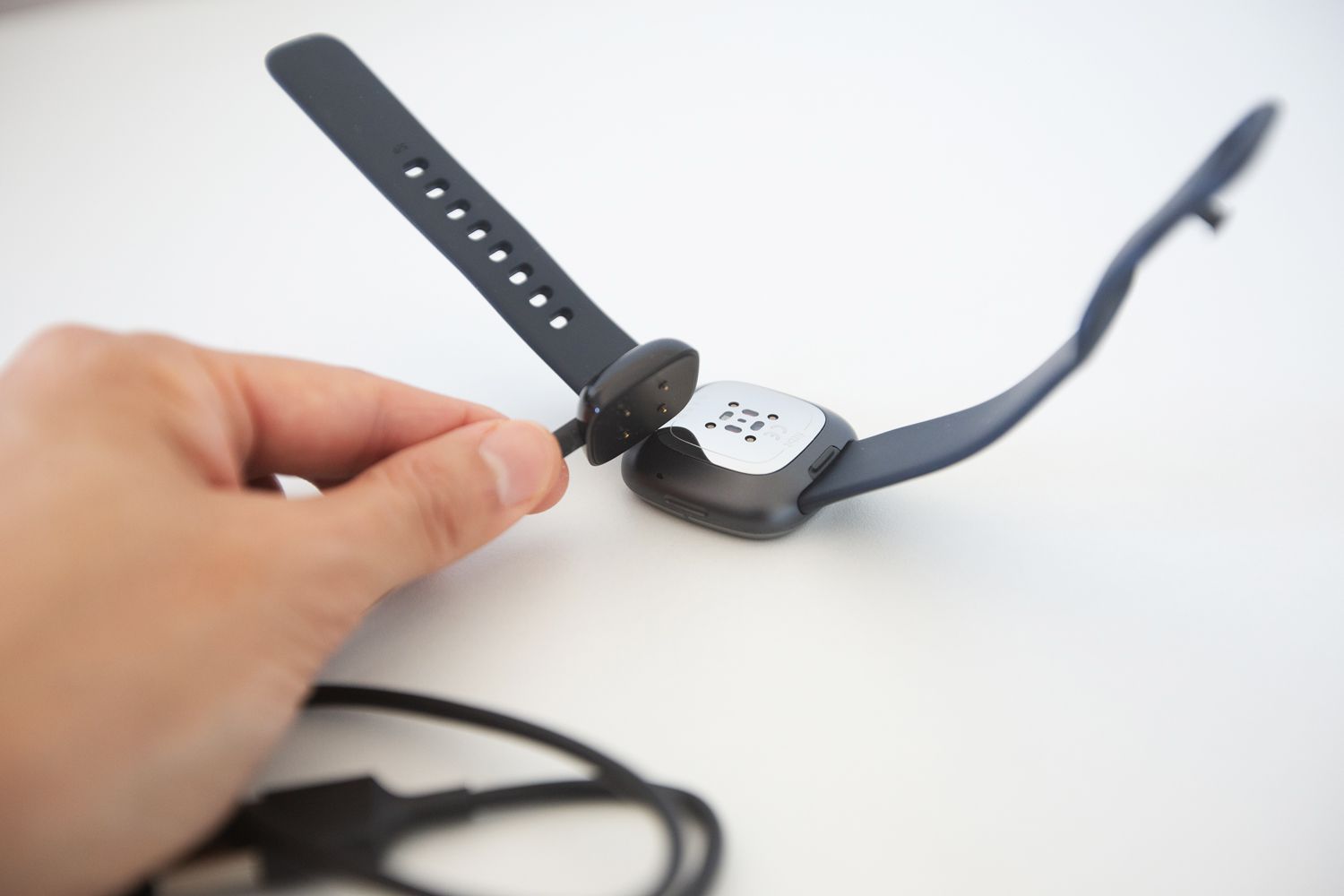
Fitbit battery life and setup
Understanding your Fitbit battery life starts at the charger, because the device needs enough power to complete the pairing process. For most models, you will plug the included cable into a computer USB port or a safety-certified wall adapter, then attach the tracker until the battery icon appears on the screen. The official steps to set up my Fitbit charge begin in the Fitbit app, where you either log in or create an account and follow the prompts to add a new device. While the tracker charges, a double-tap on the screen will often wake it so you can check the level, and the sequence to turn a Fitbit on varies by design.
If you need to turn on Fitbit Inspire 3, connecting the charging cable is the essential first action that brings the screen to life, as there is no dedicated power button to press. The process to turn on a Fitbit charge 4 follows the same principle: you clip the cable to the back of the pebble and wait for the vibration confirming it is awake. On larger smartwatches, you might need to hold a button after charging. For example, you turn on my Fitbit Versa 3 by first connecting it to the charging cable, and similarly, to turn on my Fitbit sense, attach the magnetic charger and look for the logo to appear, which signals the watch is ready to be added in the app on an iPhone or Android phone.
Charging your device
To power up your device, you will typically plug the included cable into a USB port on a computer or a safety-certified wall adapter. Then you attach the other end to the tracker. The way you charge Fitbit depends on the model. For most watches, the cable clicks or magnetically snaps onto contacts on the back of the pebble. If you need to charge Fitbit Ionic, attach the charging cable to the back of the watch. For a completely different design, you charge a Fitbit Zip using its own charging accessory.
While the battery refills, you can check progress in the Fitbit app. Open the Today tab, tap the devices icon, and read the percentage next to your device name. A common question is how to know if my Fitbit Sense is charging. Attach the magnetic puck to the back of the watch. The screen will briefly show the battery level. Should you ever misplace your cable, you can buy a charger for a Fitbit to ensure compatibility and safe charging speeds.
Checking the battery level
Most models let you check progress right on the screen while the cable is attached. For a Charge 6, you can press the button to wake the screen and read the current percentage, while many other wrist-worn devices and watches respond to a quick double-tap on the screen. If you open the Fitbit app instead, tap the Today tab and then the devices icon to see the battery level next to your device's name. To tell if Fitbit is fully charged, look for the indicator documented for your model, such as a solid battery icon or a reading that holds at 100%. The exact visual cue depends on which wearable you own. Owners of the original Flex should know when Fitbit Flex is fully charged. Its successor, Flex 2, uses a green light followed by all five LEDs shining briefly before the panel goes dark. It is equally important to know if Fitbit charge HR is fully charged. One confirmation method is logging into Fitbit.com and checking the battery level from the gear icon in the corner. If a device stubbornly refuses to reach that solid icon, remember that the battery itself is sealed inside and a careful cleaning of the metal contacts with a toothpick and rubbing alcohol often restores a steady charging connection.
Charging problems and fixes
When a tracker shows no sign of life, the most common culprit is a dirty connection. Skin oil or dried sweat on the gold contacts can block the trickle of power. Wiping both the charging cable and the back of the device firmly with a cotton swab dipped in rubbing alcohol often solves the problem immediately, and you should dry them thoroughly with a cloth or tissue before reattaching the cable.
If the screen remains black, plug the charger into a safety-certified wall adapter, because a computer port can sometimes supply too little current to wake a fully depleted battery. With the fitness band attached to its cable, locate the small button on the flat end of the connector, press it three times pausing one second between each press, and then wait roughly ten seconds for the logo to appear on the panel.
Should that fail, leave the device undisturbed on the wall charger for a full hour before trying again. A battery drained to zero percent or left unused for months may need at least thirty minutes before it can even begin to respond.
Making the battery last longer
How often you need to top up depends heavily on which features stay active. Adjusting a few habits can dramatically change your Fitbit charging frequency, which is why you would want to read an article about how often you have to charge a Fitbit. The biggest single drain on modern color-screen models is the always-on display. You can disable this feature on many Fitbit devices to claw back extra days between plug-ins. You can also dim screen brightness on a Fitbit by lowering the level manually in the device’s quick settings, which is why you would want an article explaining why the light on your Fitbit is dim. This reduces the power the panel draws every time you raise your wrist.
Heavy use of built-in GPS for runs or walks forces the gadget to work much harder. Using your phone's GPS instead of the built-in GPS lightens the load considerably. If you own a Sense or Sense 2, the most direct way to make Fitbit Sense battery last longer is to turn off the always-on display, which is why you would want an article on how to make Fitbit Sense battery last longer. You should also avoid using GPS when it is not needed. You might seek a guide to disable that Fitbit LED, yet turn off the green light on a Fitbit isn’t a single-toggle option in the settings. Instead, you can turn off heart-rate tracking on supported devices as a battery-saving measure. This stops the flashing green lights and preserves power when you do not need pulse data. Charging the device outside the safe temperature range of 32°F to 113°F can degrade performance. Always connect the cable in a cool, dry spot.
Adjusting screen brightness
You control how easy it is to read your fitness band outdoors and how much power the screen consumes from the same menu. The exact wording depends on which model is on your wrist. If you need to increase brightness on Fitbit Inspire 2, open the Settings app on the band itself and look for display or brightness options. Owners of other devices often ask how to brighten my Fitbit screen so they can see their stats clearly in direct sunlight, and on some models you may be able to adjust brightness from a quick-settings tile without diving into menus. The official advice to turn up brightness on Fitbit charge 4 points you to the Settings app on the device, where you can adjust the brightness manually.
- increase brightness on Fitbit Inspire 2
- turn up brightness on Fitbit charge 4
- brighten my Fitbit screen
Powering down and restarting
If you plan to store your device for more than a few days, knowing how to turn a Fitbit off properly helps preserve the battery, but this option isn't universal. On some models, the settings menu only offers a restart that forces the screen to go dark briefly before rebooting rather than entering a true powered-down state, though Versa series devices do include a Shutdown option. Owners of older Charge bands often search for a way to turn off Fitbit charge, yet the official documentation points only to the restart function with no separate shutdown command available on the band itself. The exception is the Surge, where you can shut off Fitbit surge using its Shutdown option, which fully powers down the GPS watch. For any other model that becomes unresponsive, holding the physical button for a full 10 to 15 seconds triggers a forced restart that clears temporary glitches without wiping your data.
Other devices and comparisons
If you wear a different brand on your wrist, the power behavior you are used to may not apply here. If you want to know how long your device lasts between charges, the Whoop battery duration fundamentally changes how often you need to reach for a cable compared to a color display. On the budget side, if you need to revive a dead tracker, the steps to turn on Xiaomi Mi band are straightforward if the tracker has shut itself down from a dead battery: connect it to the charger and wait for it to automatically power back on once the battery reaches the power-on state. You can also use the band's settings menu to control shutdown manually.
Other everyday tasks vary by model too. If you need to extend your device's life, how to replace a Fitbit battery or how to set an alarm on a Fitbit may require consulting additional resources if you want to wake up without your phone. Customization follows the same rule, and if you want to personalize your display, how to change the face on my Fitbit sense may require consulting additional resources.
- change the face on my Fitbit sense
- replace a Fitbit battery
- set an alarm on a Fitbit
- Whoop battery duration
- turn on Xiaomi Mi band
Frequently Asked Questions
How do I turn off always-on display on my Fitbit Sense 2?
Swipe down from the clock face to open quick settings and tap the always-on display icon to toggle it off. Disabling this feature is the most effective way to extend battery life between charges.
What does a solid green light mean on my Fitbit Flex 2 charger?
A solid green light followed by all five LEDs shining briefly means the Flex 2 has reached 100% charge. The lights then turn off, signaling the battery is full and the tracker is ready to wear.
How long does a Fitbit Charge 4 battery last on a full charge?
The Charge 4 battery lasts about 7 to 10 days of normal use before needing a recharge. Actual duration depends on which features remain active, such as built-in GPS or always-on display.
Can I replace the battery in my Fitbit Luxe myself?
The battery inside the Fitbit Luxe is sealed and not designed for user replacement. If the device fails to hold a charge, cleaning the metal contacts with rubbing alcohol and a toothpick often restores a steady charging connection.