




Battery specifications: voltage, capacity and terminology
Understanding battery specifications is essential before you test or buy, because labels mix up size, chemistry, and electrical output, which are not the same thing. Voltage is the pressure pushing current, and that number can be deceptive. A standard alkaline cell is typically 1.5 volts, yet a healthy rechargeable NiMH version often sits at just 1.2 volts, which is why pressure alone doesn't indicate remaining power. A 'dead' AA can still read around 1.0-1.2V with no load while that lower-potential rechargeable might be nearly full, so always test under load or use a dedicated battery tester for meaningful results.
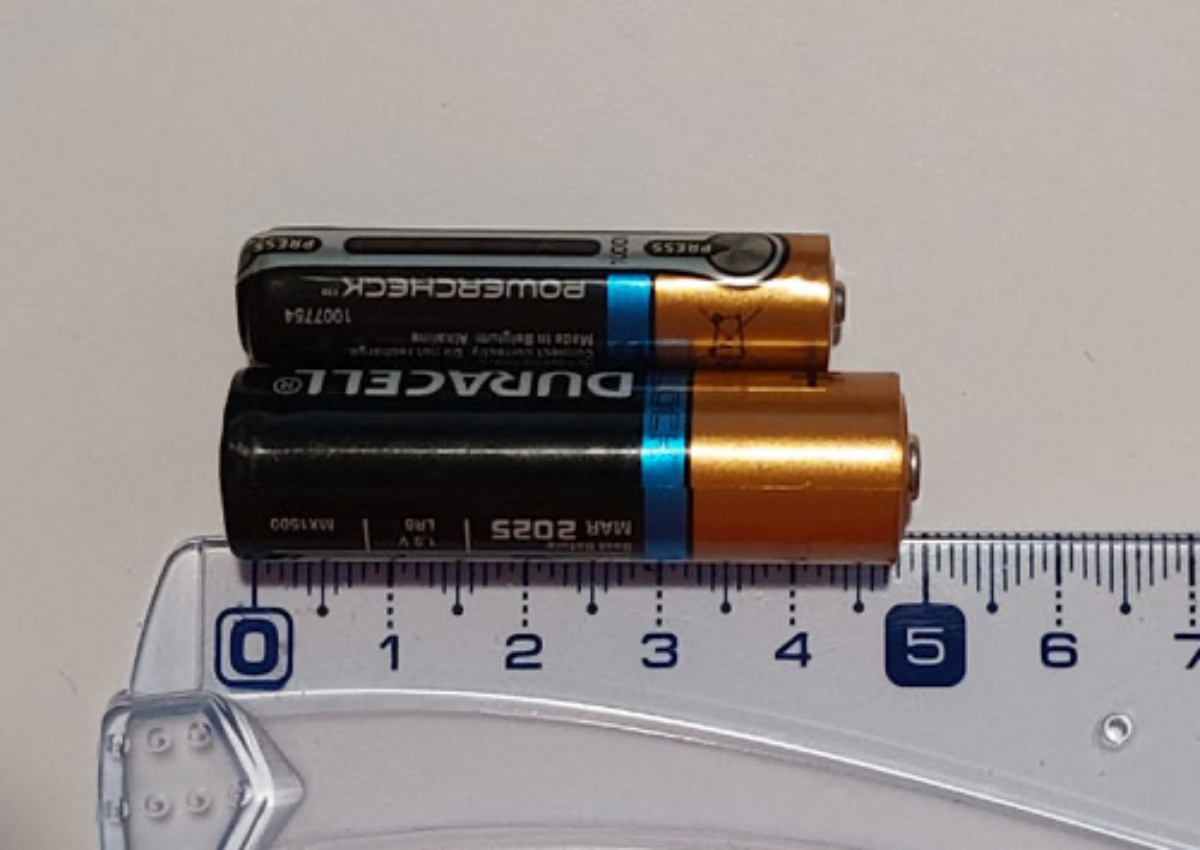
The label on the side ties all of this together. The physical dimensions of an AA battery are fixed at 14.5 mm in diameter and 50.5 mm in length, making it a standard size designation, not a specific chemistry. When you see an AA battery on a store shelf, you are looking at a physical format that can contain alkaline, lithium, or NiMH chemistry, each with different performance characteristics. The capacity rating tells you how much current a cell can deliver over time. Seeing mah mean on a battery refers to milliamp-hours, a unit describing runtime where a higher number generally means the cell lasts longer in the same device. For larger energy storage, Ah mean on a battery defines ampere-hours, where 1 Ah equals 1,000 mAh, a rating you will spot on bigger power packs. Since every gadget requires a specific physical size and potential, the market includes several distinct cylindrical and button-cell formats serving different roles, and choosing among them comes down to matching both the potential requirement printed in the device's compartment and the exact physical dimensions it can accept.
When you grab a standard AA or AAA, you are usually holding a 1.5 V battery if it is a primary cell. This nominal potential is the baseline for most household gadgets like remotes, clocks, and flashlights. The reason many devices accept the slightly lower 1.2 V from rechargeables is that the discharge curve stays flatter; alkaline chemistry starts high and drops steadily, while NiMH cells hold their working potential longer before falling off a cliff, making the 1.5 V label a starting point, not a constant promise.
Moving beyond the basic cylinder, you encounter the rectangular 9-volt battery format, instantly recognizable by its snap-on connector. This design suits smoke detectors and certain musical instruments because the snap terminal ensures a secure connection even if the device vibrates. Since the internal cells are small, the capacity is lower than you might expect, and a 9 volt battery trades energy density for a compact, high-pressure form factor.
Specialized photography and security gear often rely on a CR2 battery. Its lithium chemistry gives it a long shelf life and strong performance in cold temperatures, and cameras use it because lithium can handle the sudden high drain of a flash. The higher potential also means fewer cells are needed to power complex circuits, so you cannot substitute a 1.5 V alkaline here because the device demands the specific pressure of lithium chemistry.
For tiny electronics, you might need a ag13 battery. It delivers 1.5 V in a compact silver package, and calculators, laser pointers, and small toys depend on this format. You can also find it in silver oxide with a different part number. The physical dimensions are rigidly standardized, and the chemistry choice affects whether the potential drops slowly or stays rock-steady until depletion.
Testing these cells accurately requires the right tool. A basic meter can read resting potential, but that number fools many users because a dead alkaline cell often bounces back to 1.4 V when you remove the load. A loaded test draws a small current to simulate real use, and many digital tools have a dedicated battery mode for this purpose. Without that load, your meter is just guessing, and a high resting potential means nothing if the chemistry collapses under demand.
Capacity ratings are where users get confused by units. The milliamp-hour is a measure of electric charge telling you how long a cell can deliver a specific current; a 2,000 mAh AA can theoretically deliver 2,000 milliamps for one hour, but in reality, the chemistry and drain rate change that math, and high-drain devices reduce the effective capacity. The amp-hour is simply a larger scale, so a 10 Ah pack stores ten times the charge of a 1,000 mAh cell. These ratings let you compare runtime across similar chemistries but do not tell you about the power delivery capability.
Alkaline cells use a zinc and manganese dioxide paste, lithium cells use a metallic lithium anode, and NiMH cells use a hydrogen-absorbing alloy, so each chemistry has a different weight, potential, and discharge profile. The standard size ensures they all fit the same holder, but your device's manual will specify which chemistry works best. Some gadgets cannot run on the lower potential of NiMH, while others are damaged by the higher pressure of lithium, so the physical fit is only the first checkpoint.
When you see mah mean on a battery, you are looking at the runtime promise, the cell's fuel tank size where a higher mAh rating means more stored energy. But the delivery speed matters just as much; a high-capacity cell might struggle with a fast drain, while a lower-capacity cell optimized for high drain might last longer in a digital camera. The mAh number is measured at a specific discharge rate, and changing that rate changes the effective capacity, so always check the fine print for the test conditions.
For larger packs, Ah mean on a battery defines the same concept on a bigger scale. A 12 V lead-acid pack might be rated at 7 Ah, meaning it can deliver 7 amps for one hour, or 1 amp for 7 hours. The amp-hour rating is standard for automotive and backup power, scaling directly from the milliamp-hour since one amp-hour equals 1,000 milliamp-hours.
AA and AAA voltage and capacity specs
When you check a standard alkaline cell, the AAA battery voltage rating is 1.5 volts and the AA battery voltage rating is the same 1.5 volts, while rechargeable nickel-metal hydride versions of both sizes settle at a lower 1.2 volts that is completely normal and not a sign of weakness. A brand-new alkaline AA fresh out of the pack often measures higher, and the healthy AA battery voltage range reaches an open-circuit value from 1.57 to 1.65 volts before settling to its nominal level under load. The typical amperage output of an AA battery is not a single fixed number because the current your cell actually delivers depends entirely on the device drawing power and the internal chemistry of the battery. For capacity, the mAh capacity of an AA battery in alkaline chemistry commonly lands in a span from 1,800 to 3,000 milliamp-hours, while a typical AAA sits in a range from 500 to 1,200 mAh, giving you a clear runtime advantage with the larger cell. The connection linking size and stored energy is straightforward, but the amperage of a standard 9V battery uses a completely different internal construction built for higher potential rather than sustained high current.
How to test a battery with a multimeter
When you need to test AA battery performance, set your multimeter to DC voltage, marked V⎓ or VDC, and insert the red probe into the VΩmA jack and the black probe into COM. For a standard alkaline cell, choose the 2V range if your meter is manual-ranging, or use 20V if that is the next available option. Touch red to the positive terminal and black to the negative terminal, then read the display. A fresh alkaline typically shows around 1.5V, but that number alone does not tell the full story since a depleted cell can still float near 1.0V to 1.2V with no load attached. To learn how to test a 9V battery with a multimeter, follow the same DC voltage procedure but select the 20V range, as 9V batteries require a higher scale for accurate measurement.
To check a battery with a multimeter properly, you must interpret what the potential difference means under real conditions. A healthy AA commonly reads from 1.5V to 1.7V open-circuit, and anything significantly lower suggests the cell is failing. The same principle applies when you check battery voltage on a 9V rectangular battery: set the meter to 20V DC, touch red to the small positive terminal and black to the larger negative terminal, and note the reading. If you test AA battery with multimeter readings and see a value that seems acceptable, remember that a dedicated battery tester applies a load and gives a more honest result. When you test a 9V battery with a multimeter, a reading above 7V may still power some low-drain devices, though sources disagree on the precise replacement threshold.
- test a 9V battery with a multimeter
- check a battery with a multimeter
- test AA battery with multimeter
- check battery voltage
- test AA battery
Testing lithium and rechargeable batteries
Lithium cells and rechargeable power packs behave differently from the alkaline disposables covered earlier. The open-circuit voltage trick that works on a standard AA will mislead you here because a lithium-ion cell discharged to its safe cutoff point may still float near 3.0V, and readings below 3.0V indicate a discharged or damaged battery. To accurately test a lithium battery, you need a meter that applies a controlled load or a device that reports internal resistance, since a simple no-load voltage snapshot is not enough.
On an iPhone, the most reliable health data comes from the phone’s own diagnostics. Apple documents this information in Settings, under Battery and then Battery Health, where supported models show maximum capacity, peak performance capability, and cycle count.
No official source documented exact safe multimeter steps to test a phone charger with a multimeter, and a voltage reading alone cannot confirm whether the charger negotiates fast-charging protocols correctly. A safer approach on Android is to use an app such as Ampere, which displays charging or discharging current after about a 10-second settling period. Another option is ChargerCheck, which detects Qualcomm Quick Charge, USB-PD, and Adaptive Fast Charging once you plug in the adapter; wait 5-10 seconds for the gauge to stabilise.
Battery brands, types and chemistry
When you are standing in the aisle trying to decide which battery is better duracell or energizer, the official product lines from both manufacturers are designed to be interchangeable for standard sizes, and each company even publishes cross-reference charts to match their own stock numbers to the competitor’s equivalents. Beyond the familiar options, specialty chemistries change how a cell behaves under load. A LiFePO4 battery uses a lithium-iron-phosphate composition that delivers a very flat discharge curve, making it a popular choice where stable potential matters more than the slightly higher peak of a traditional lithium-ion cell. If you have ever wondered what does a lithium battery look like when you are sorting through a drawer, you are usually hunting for a metallic label marked “Lithium” or a “CR” code, and the physical form ranges from a coin cell barely larger than a watch battery to a cylindrical cell, a flat prismatic block, or a soft foil pouch. Since these chemistries hold their potential so steadily, a simple meter reading without a load will not separate a nearly spent cell from a fresh one, which is why a dedicated tester is essential for a meaningful result.
Button and specialty cell identification
When you pop open a remote or a child’s toy and find a tiny silver disc, identifying it means looking past the brand name to the engraving on the back. If you have an LR44 battery in your hand, you are holding the alkaline workhorse also sold as AG13, A76, or L1154, typically found powering calculators, digital thermometers, and laser pointers. These button cells hold their potential deceptively well when idle, so a reading from a meter without a load will not reveal whether the cell is nearly exhausted. A dedicated battery tester is a quick way to confirm true remaining capacity before you buy a replacement, a behavior rooted in the cell’s internal chemistry which maintains a high open-circuit value long after the electrolyte has begun to dry out.
Device battery life: cameras and doorbells
When you mount a camera outside, the real question is how often you will need to climb a ladder, and the answer changes dramatically based on the scene you are filming. Google publishes clear estimates that let you plan around your own street, where a device facing a quiet side yard can stretch to roughly six months while a busy front door triggering dozens of clips each day may need a recharge in about a month. Checking the exact forecast for your setup is straightforward once the camera has been running for about 48 hours after charging, and the Home app will surface a personalised estimate under the battery menu. If you own a Nest Camera battery duration will appear there, and that same menu lets you enable the automatic battery saver, which extends runtime by shortening event recordings when charge drops low. The Nest Doorbell battery duration follows the same pattern and the same in-app path, with a doorbell on a typical street often landing around two and a half months between charges. Arlo says Arlo camera battery lifespan typically falls between three and six months with average use, though heavy activity and extreme cold will pull that number toward the shorter end. Ring’s official support pages do not publish a single expected range, so real-world reports on Ring Stick Up Cam battery life vary so widely by motion frequency that a reliable gauge is your own notification log. Similarly, the battery life of a Ring Doorbell depends so heavily on motion zones, Wi-Fi signal strength, and local temperature that two neighbours with the same model can see completely different recharge intervals.
Device battery life: action cams, game consoles and trackers
When you mount an action camera and hit record, the runtime you actually get depends heavily on resolution, frame rate, and whether GPS or stabilisation is running, though a GoPro battery duration may stretch further if you drop to a lower resolution and disable wireless connections. Swapping in a spare pack mid-adventure is the only reliable fix, and checking a partially depleted cell with a battery tester before you pack your bag saves you from carrying one that reads a misleadingly high resting potential.
With a handheld console, your play habits shape what you see far more than a single published figure, and the Nintendo Switch battery life expectancy can vary by model revision and the demands of the game you are playing. Screen brightness, speaker volume, and wireless radios all pull current, so the most practical move is to lower screen brightness and toggle on airplane mode when you are away from an outlet.
For a finder tag that lives on your key ring, the design of the hardware itself dictates what you do when it fades. Tile battery longevity varies by model since some trackers use a user-replaceable coin cell, while slim and sealed models like the Sticker are built with a non-replaceable cell, forcing a full hardware replacement through a reordering program once the charge is exhausted.
Charging vape and specialty batteries
Most vape pen batteries abandon the familiar AA compartment in favor of a built‑in cell and a proprietary charging path, so your first step is identifying which port or connector your device actually uses. When you need to charge Ooze battery models, look at the right side of the pen rather than the bottom; depending on the unit, you will either plug the included micro USB charger into that side port or, on newer designs like the Twist Slim Pen 2.0 and C‑Core line, use a Type‑C cable connected to the side of the battery. The brand’s smart USB chargers take a different approach entirely, screwing directly onto the top 510 thread and relying on an internal chip that detects a full charge to stop the power draw on its own. To charge Stiiizy battery hardware like the BIIIG STIIIZY Battery, the process centers on a built‑in port and the included USB charging cable, though the exact indicator lights and time limits vary between variants. Since these lithium‑ion cells can hold a misleading surface potential at rest, a quick glance at a blinking LED can give you a rough indication of state of charge.
Battery safety: flights, disposal and cleaning
Before you pack any spare cells, check the list of battery types prohibited on flights. The rule that catches people off guard is the hard 100 watt-hour limit for lithium-ion packs without airline approval on passenger aircraft, though most AA, AAA, C, D, and button cells you would toss into a carry-on are perfectly fine. Just cover the terminals with non-metallic tape and keep them in their retail packaging or a dedicated battery case so loose change cannot create a short circuit. If a cell is swollen, dented, or was part of a recall, the safest move is to leave it at home and drop it at a recycling point instead.
When you need to dispose of a lithium battery, never toss it in household trash; a punctured pouch cell in a garbage truck causes a fire that no landfill is equipped to handle. The first step is taping the contacts and locating a certified electronics recycler or a retail take-back bin. When a forgotten alkaline cell leaks inside a flashlight or a remote, the way you clean battery posts depends on the residue you are facing. A cotton swab dipped in white vinegar or lemon juice dissolves the white potassium carbonate crust on alkaline terminals. If you see a darker, oily stain from a lithium primary cell, switch to plain water and a dry cloth to avoid driving the electrolyte deeper into the contacts.
Battery history and product roundups
Long before you twist a battery into a heated jacket, it helps to remember that the voltaic pile was the first battery invented. Alessandro Volta assembled that stack of zinc and copper discs separated by brine-soaked cloth in 1800 to prove a steady current was possible. Today’s lithium packs are far more refined. Yet the same principle holds: you need to know which side of the battery is positive before you seat a connector. Reversing polarity on a heated apparel cell can trip its protection circuit and leave you cold. The cathode side is where reduction occurs during discharge. On barrel-style connectors the inner pin and outer sleeve follow a convention you should match to your gear’s label. When you are shopping for a replacement or a spare, a roundup such as 14 incredible ororo battery for 2024 gives you a side-by-side look at the capacities and physical footprints that fit specific jacket and vest models. A 7.4V slim pack designed for a heated glove liner pocket will not slide into a coat’s dedicated power holster. Always confirm the connector diameter and the electrical potential rating printed on your garment’s tag before you order. Even a pack that looks identical may deliver the wrong output and fail to heat the carbon-fiber elements properly.